
Last Updated: November 15, 2026
Quick Summary
Your truck usually vibrates after a flatbed tow because of how it was secured during transport, not the flatbed itself. Sharp tie-down angles can stress the driveshaft and u-joints, tires can flat-spot from sitting loaded, and brake heat can leave pad deposits that cause pulsation.
- Sharp strap angles can bend a driveshaft or damage u-joints, causing speed-related vibration.
- Tire flat spots usually smooth out after 10 to 20 miles of driving.
- Shake at 50-70 mph often points to driveshaft balance, u-joint, or center bearing.
- Photograph the underside, tires, and tie-down points at drop-off before you drive away.
- Report the vibration to the towing company in writing as soon as you notice it.
Table of Contents
- Why Your Truck Vibrates After a Flatbed Tow
- Driveline and Driveshaft Stress From Tie-Down Angles
- Signs of Suspension Damage After Towing
- Tire Flat Spotting From Transport and Wheel Balance Issues
- Brake Pulsation and Heat From Improper Securing
- Transmission, Transfer Case, and AWD/4WD Concerns
- Troubleshooting Vibration at Specific Speeds
- When to See a Mechanic After a Tow
- Frequently Asked Questions
Why Your Truck Vibrates After a Flatbed Tow
If your truck vibrates after being towed on a flatbed, the cause is usually something that changed during transport: a stressed driveshaft, a flat-spotted tire, or a brake component that took heat. A flatbed is generally a secure way to move vehicles, though no transport method is risk-free.
Vibration after a tow is often linked to how the vehicle was secured rather than to the flatbed itself. The problem is how the truck was tied down, how the straps were routed, and how long it sat loaded.
Below, we walk through the real causes, a speed-based troubleshooting method, and when to stop guessing and see a mechanic.
Driveline and Driveshaft Stress From Tie-Down Angles
The driveline is the most common victim of a bad tie-down.
A driveshaft is the spinning tube that sends power from the transmission to the axles. A u-joint is the flexible coupling at each end that lets it move with the suspension.
Watch out: wrapping straps around the driveshaft or pulling the chassis sideways can bend a shaft or damage a u-joint. That shows up later as a vibration or pulsation that gets worse with speed.
If you want the full prevention playbook, our guide on preventing drivetrain damage during towing covers strap routing and angle limits in detail.
Signs of Suspension Damage After Towing
Suspension damage after a tow usually shows up as a truck that sits differently or steers differently. Look for these signs of suspension damage after towing:
- The truck leans to one side when parked on level ground
- The steering wheel is off-center going straight
- Control arms or sway bar links look bent or freshly scraped
- The ride feels harsh or bouncy over small bumps
- Tires wear unevenly within a few hundred miles
Control arms connect the frame to the wheels and set suspension geometry. Bend one, and your alignment is off. That misalignment can cause a pull, odd steering feedback, and tire howling at speed.
If you spot these symptoms, our safe-towing guide on avoiding towing damage to trucks explains how to prevent them next time.
Tire Flat Spotting From Transport and Wheel Balance Issues
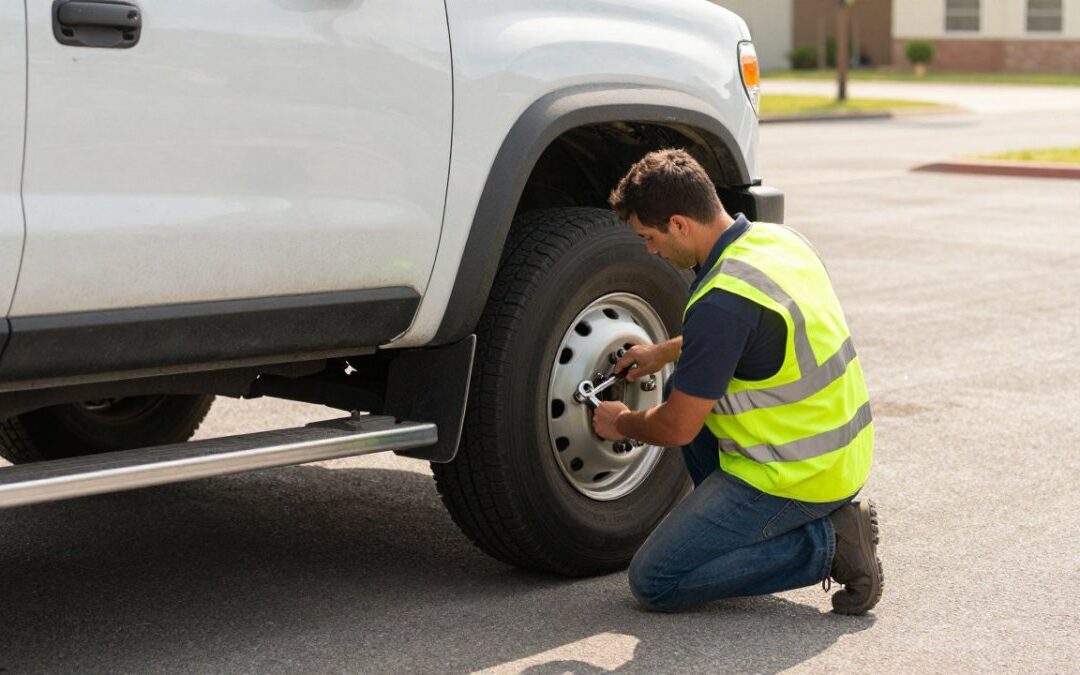
Tire flat spotting from transport is real, and it is often temporary. When a truck sits loaded and strapped for hours, one section of each tire stays pressed against the deck. That flat spot can cause a thump or vibration for the first few miles.
Most flat spots smooth out after 10 to 20 miles of driving. If the shake stays, the cause is likely wheel balance or hub runout instead.
- Wheel balance is how evenly weight is spread around the wheel
- Hub runout is wobble in the hub or wheel as it spins
- A lost wheel weight during transport can throw balance off
A quick test: drive a few miles, then check if the shake fades. If it does, you had flat spotting. If it does not, get the wheels balanced and the hubs checked.
Brake Pulsation and Heat From Improper Securing
Brake pulsation after a tow often traces back to heat and how the truck was held. If the parking brake was set hard during transport, or a strap loaded a brake line or caliper, you can get brake pad deposits on the rotor.
Those deposits create a pulsation you feel through the pedal or steering wheel when braking. It is not usually a warped rotor, despite the common belief. It is uneven material stuck to the surface.
Watch out: a dragging brake from a bent line or a stuck caliper can overheat and cause mechanical failure if ignored. If one wheel is hot to the touch after a short drive, stop and get it checked.
Transmission, Transfer Case, and AWD/4WD Concerns
AWD and 4WD trucks carry extra risk after a tow, and the reason is mechanical, not mysterious. On a full-time AWD or engaged 4WD system, the transfer case locks the front and rear axles so they turn at a matched rate.
For AWD/4WD owners, check these after a tow:
- Any new whine or hum from the transfer case, especially that rises and falls with speed
- Vibration that changes when you turn, which points to a binding center differential or a damaged CV joint
- Warning lights for the AWD system or a flashing 4WD indicator
- A burning smell near the rear differential or transfer case
- A shudder during low-speed parking-lot turns, a classic sign of a stressed clutch pack
Mechanical stress on these parts does not always show up right away. Sometimes it takes a few hundred miles for a bearing or clutch pack to fail far enough to feel.
Watch out: do not assume a flatbed tow means the transfer case is safe.
Our article on preventing truck drivetrain damage goes deeper into the transfer case and AWD risks.
Troubleshooting Vibration at Specific Speeds
Speed tells you a lot. Use this checklist to narrow down the cause before you call anyone.
Troubleshooting checklist by speed:
- Shake at 5-15 mph: check for tire flat spotting or a bent wheel
- Shake at 30-45 mph: suspect wheel balance or hub runout
- Shake at 50-70 mph: often driveshaft balance, u-joint, or center bearing
- Shake only when braking: brake pad deposits or a rotor issue
- Shake when turning: CV joint, control arm, or alignment
- Constant hum or howl: wheel bearing or tire howling from wear
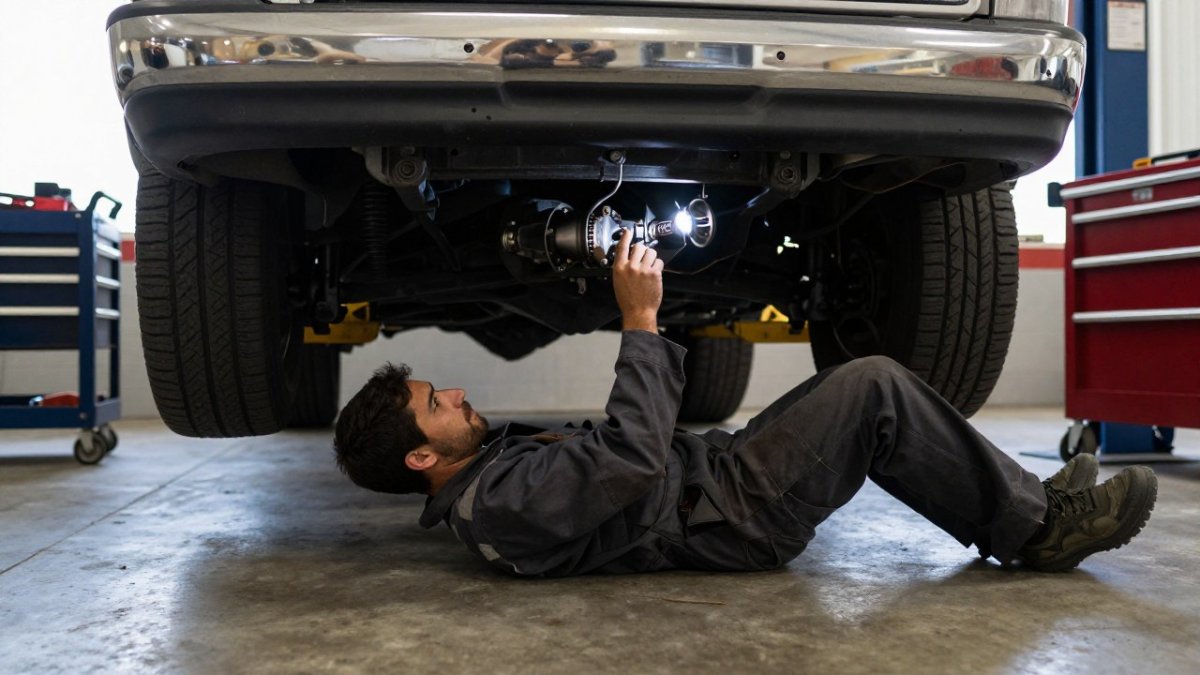
A diagnostic drive at each speed range, done safely on an empty road, will point you to the right system. Note the exact speed where the highway vibration starts and stops.
Use the speed range where the shake appears to narrow down which system to check first.
| Speed or condition | Likely cause |
|---|---|
| Shake at 5-15 mph | Tire flat spotting or a bent wheel |
| Shake at 30-45 mph | Wheel balance or hub runout |
| Shake at 50-70 mph | Driveshaft balance, u-joint, or center bearing |
| Shake only when braking | Brake pad deposits or a rotor issue |
| Shake when turning | CV joint, control arm, or alignment |
| Constant hum or howl | Wheel bearing or tire howling from wear |
When to See a Mechanic After a Tow
See a mechanic after a tow if the vibration lasts beyond a short drive, if any wheel runs hot, or if you see fluid leaks or bent parts underneath. Those are signs of real damage, not settling.
Book a shop visit when you notice:
- Vibration that does not fade after 20 miles
- A pull to one side or off-center steering wheel
- Grinding, clunking, or a burning smell
- Fresh dents, scrapes, or bent control arms
- A hot wheel or brake after a short drive
- A new whine from the transfer case or differential
Before you decide on repairs, our cost review on whether heavy-duty mobile repair is worth it helps you judge the value. And if you are unsure whether the flatbed was the right call, compare flatbed vs wheel-lift towing for modern vehicles.
Document the Damage Before You Drive Away
Documenting condition before a vehicle leaves the deck can help if a claim is later needed. Towing damage is a liability question, and liability runs on evidence. The time to build that evidence is before the truck leaves the deck, not after the vibration starts.
Do this at the drop-off point, with the driver present if possible:
- Photograph the underside from front, middle, and rear, with the truck still on the deck or just off it
- Photograph each tire and wheel, including the sidewalls and the tread face
- Photograph every tie-down point, strap, and chain contact area on the frame
- Note the date, time, odometer reading, and the name of the towing company and driver
- Ask for the tow ticket or invoice and keep it, it establishes the timeline
- If you see fresh scrapes, bent brackets, or a strap wrapped around a suspension part, photograph it before anything is moved
Photos taken at drop-off, with a timestamp, can help document the condition of a vehicle if a dispute arises.
Watch out: do not drive the truck for a week and then report the vibration. The longer the gap between the tow and the report, the easier it is for the tow company or its insurer to attribute the damage to something else.
Separate Towing Damage From Pre-Existing Wear
Not every vibration after a tow was caused by the tow. Trucks accumulate wear, and a u-joint that was already dry or a tire that was already cupped can cross the threshold during a long loaded trip. A simple way to sort it out:
- Did the vibration start immediately after the tow, or was it already present and just more noticeable?
- Does the vibration match a speed range that points to one system (see the speed checklist above)?
- Are there fresh marks, scrapes, shiny strap rubs, bent brackets, near the part that seems to be causing it?
- Does the tow ticket show the truck was moved with any wheel on the ground?
If the answers point to fresh marks and an immediate onset, treat it as tow-related and document it. If the vibration was already there and the tow only made it obvious, a mechanic can still help, but the claim path is different.
Keeping the photos, the tow ticket, and your written report together in one folder can make records easier to find if you file a claim.
A vibration after a tow is your truck telling you something moved. Do not ignore it and hope it settles. Fox Recovery runs fully certified and licensed operators, 24/7 service, and state-of-the-art 19 ft. and 21 ft. flatbeds with a multiple-point inspection before and after every load.
Frequently Asked Questions
Can improper tie-down procedures cause truck vibration after a flatbed tow?
Yes. Tie-down straps routed over suspension components or pulled too tight can compress control arms, stress the center bearing, and shift suspension geometry. This can cause a vibration that shows up at highway speeds. A proper operator secures the vehicle by the tires or frame, not by loading the suspension. If you notice vibration after a tow, have a mechanic check the tie-down points and inspect for bent or stressed components before assuming the truck itself failed.
Is it common for tires to develop flat spots during transport?
It can happen, especially in cold weather or when a vehicle sits loaded for a long distance. Flat spotting from transport usually shows up as a steady vibration or tire howling that fades after 10 to 20 miles of driving as the tires warm up and round out. If the vibration persists past that, the tire may have a permanent flat spot or a wheel balance issue that needs a shop to check hub runout and rebalance.
Does a flatbed tow affect wheel alignment or suspension?
A flatbed tow should not change alignment if the vehicle is secured correctly. Problems start when straps are routed over control arms or when the truck is winched at a sharp angle that stresses the suspension. Signs of suspension damage after towing include pulling to one side, uneven tire wear, clunking over bumps, and steering feedback that feels loose. Have a shop check alignment and inspect control arms and tie rods if any of these appear.
What should I inspect immediately after my truck is unloaded from a flatbed?
Walk around the truck and check the tires for flat spots or damage, look for fresh scrapes on the frame and lower body panels, and confirm the tie-down points are not bent. Then drive a short loop at low speed, listening for clunks or new vibrations. Note any changes before you leave the drop-off location, and photograph them. That documentation matters if you need to file an insurance or liability claim later.
