
Table of Contents
- What Happens If a Luxury Car Is Damaged During Transport
- Car Damaged During Shipping? What to Do at the Delivery Point
- How to Document Car Damage After Shipping
- The Car Transport Damage Claim Process, Step by Step
- Car Shipping Damage Claim Deadline: How Long You Have to File
- Diminished Value and the Enclosed vs. Open Insurance Gap
- Choosing a Flatbed Recovery Team for High-Value Vehicles
- Call Fox Recovery Before Your Luxury Vehicle Moves Again
- Frequently Asked Questions
Last Updated: November 10, 2026
What Happens If a Luxury Car Is Damaged During Transport
If you are dealing with luxury car damage from transport, the carrier’s liability is usually limited by the shipping contract, and your recovery depends on what you wrote on the delivery paperwork before you drove away. At Fox Recovery, we move high-value vehicles on flatbeds every week, and we see how quickly a small scratch becomes a fight when nobody documented it. The steps below show you exactly what to do, in order, from the moment the truck arrives.
Carrier Liability and the Bill of Lading
The Bill of Lading (BOL) is the shipping contract and the delivery receipt in one document (41 CFR § 102-118.15 – Definitions. | Electronic Code of Federal Regulations (e-CFR) | US…). It lists the vehicle’s condition at pickup and at delivery, and it decides most damage disputes.
Carrier vs. Broker: Who Pays
The carrier hauls the car, and the broker arranges the shipment.
Liability usually sits with the carrier that signed the BOL. A transport broker can still carry responsibility if it hired an uninsured carrier or misrepresented coverage. Check the shipping contract for who is named as the responsible party before you call anyone.
Car Damaged During Shipping? What to Do at the Delivery Point
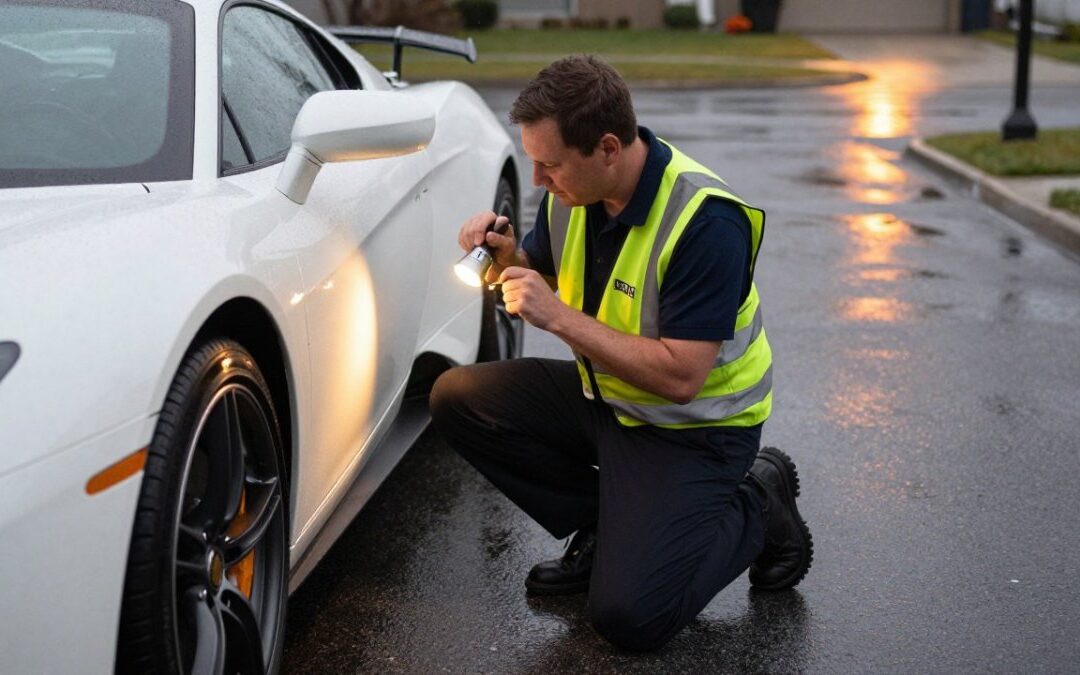
Do not sign a clean delivery receipt if you see damage. That single signature is the most common mistake we hear about.
Follow these steps at the curb:
- Inspect the vehicle before the driver leaves, in daylight if possible.
- Walk the full body, roof, wheels, and glass with the driver beside you.
- Write every new mark on the BOL, however small.
- Photograph each mark with the driver and the truck in frame.
- Ask the driver to sign and date your notes.
- Keep your copy of the signed BOL.
If the driver refuses to acknowledge damage, write “damage noted, driver declined to sign” on the BOL, photograph it, and note the time. Then call the carrier’s dispatch line while the truck is still there.
How to Document Car Damage After Shipping
Good documentation wins luxury car damage claims. Vague descriptions lose them.
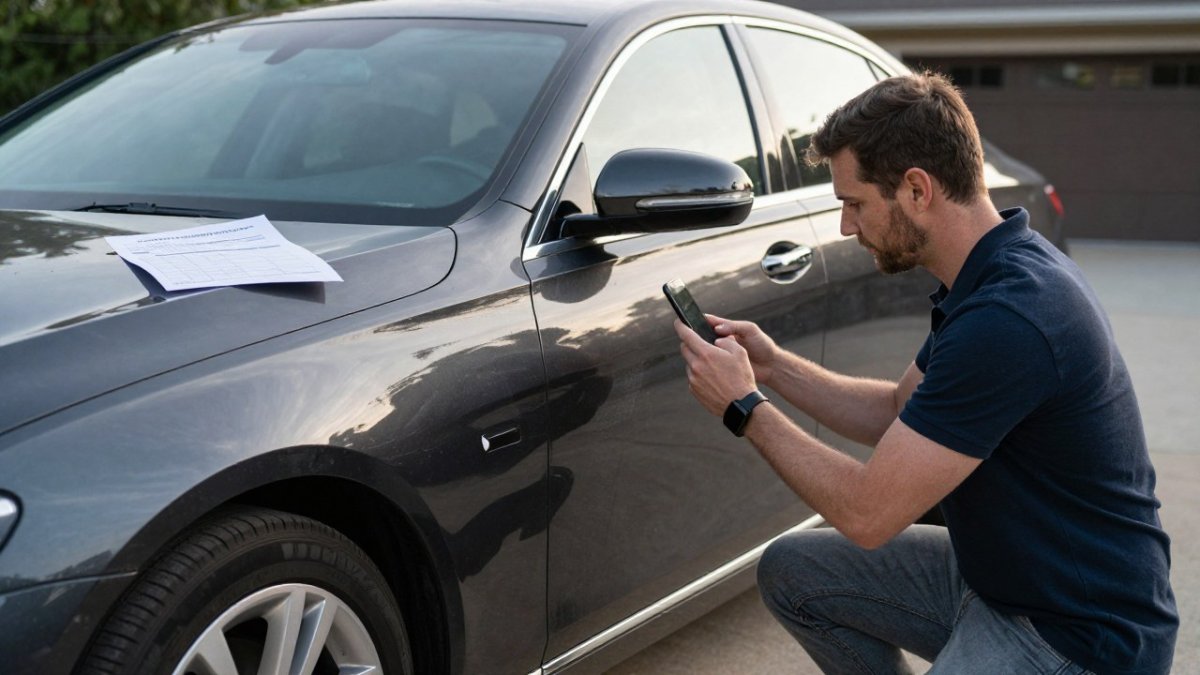
Capture four things for every damaged area:
- Wide shot showing the whole panel and the car’s plate
- Close-up of the damage with something for scale
- Video walkaround with a spoken description of date, time, and location
- Condition report from pickup, side by side with the new damage
Also photograph the odometer, the delivery receipt, and the carrier’s door markings. Save everything to cloud storage the same day. Phone photos get lost, and a claim without photographic evidence is hard to prove.
The Car Transport Damage Claim Process, Step by Step
The car transport damage claim process starts with a written notice to the carrier, not a phone call. Verbal complaints leave no paper trail, and most carriers’ claims departments will not open a file without something in writing.
Here is the order that works, with the mechanism behind each step:
- Notify the carrier in writing within the deadline in your contract. Send it to the claims address or email listed on the BOL or the carrier’s website, not to the driver, and not to the broker unless the broker is named as the responsible party. Keep the delivery receipt and the envelope or sent-mail record.
- Attach your evidence: the signed BOL with damage notations, photos, video, the pickup condition report, and the odometer reading. Number each photo and reference the numbers in your letter so the adjuster can match them to the BOL line items.
- Get two repair estimates from shops that work on your make, and ask each shop to itemize parts, labor, and paint separately. On a luxury vehicle, a single panel repair can involve multi-stage paint and calibration of driver-assist sensors, so a one-line estimate invites a lowball counteroffer.
- Request an inspection if the carrier disputes the damage. Most carriers have a preferred inspector or adjuster; you can also ask for a joint inspection with your own shop present. Put the request in writing and propose two dates.
- Negotiate a settlement in writing, never verbally. State the amount you will accept, attach the estimates, and set a response deadline. A written demand that references the BOL and the repair estimates is far harder to ignore than a phone call.
- Escalate to the carrier’s insurer or a third-party adjuster if talks stall. Ask the carrier in writing for the name of its cargo insurer and policy number; if it will not provide them, that is a signal to involve a transportation attorney.
For interstate shipments, carrier liability is generally governed by federal law, and the shipping contract and declared value you agree to at booking affect how a claim is measured (49 U.S. Code § 14706 – Liability of carriers under receipts and bills of lading | U.S….). Review the carrier’s terms and consult the official source or a transportation attorney for current rules.
Keep every email. Send notices by a method that proves delivery, certified mail, a signed courier receipt, or an email with a read receipt, and keep a single timeline document with dates, names, and what was said. If the carrier is a broker rather than the hauler, route the claim to the party named as carrier on the BOL and copy the broker; the broker’s role is usually limited to arranging the shipment, but it can share responsibility if it hired an uninsured or unlicensed carrier.
Watch out: accepting a settlement offer in writing can release the carrier from part of your claim. Review any release carefully before signing.
Here is the claim process in the order that works, with the mechanism behind each step.
| Step | What to do | Key detail |
|---|---|---|
| 1 | Notify the carrier in writing | Within the deadline in your contract |
| 2 | Attach your evidence | Signed BOL, photos, video, condition report, odometer |
| 3 | Get two repair estimates | Itemize parts, labor, and paint separately |
| 4 | Request an inspection | If the carrier disputes the damage |
| 5 | Negotiate a settlement in writing | Never verbally |
| 6 | Escalate to the carrier’s insurer | If talks stall |
Car Shipping Damage Claim Deadline: How Long You Have to File
The car shipping damage claim deadline is set by your shipping contract, and it is often short. Many carriers require written notice within a few days of delivery, sometimes less.
Read the BOL and the carrier’s terms on the day the car arrives. Put the deadline in your calendar with a reminder two days earlier. Missing it can void a valid claim, no matter how clear your photos are.
Diminished Value and the Enclosed vs. Open Insurance Gap
Repairs restore the car. They do not restore its resale value, and on a luxury vehicle that gap is often the largest part of the loss.
Diminished value is the drop in a vehicle’s worth after it has been damaged and repaired, even when the work is perfect. A Carfax or AutoCheck record showing transport damage follows the car, and a buyer at resale will discount for it. Diminished value is generally described in three categories: immediate, inherent, and repair-related.
To pursue it, ask for a written vehicle appraisal from an appraiser who works on your make and who can document comparable sales with and without damage history. Include the appraisal in your demand letter alongside the repair estimates, and state the diminished-value figure separately so the carrier cannot fold it into the repair settlement.
Coverage also differs by shipping method, and this is where luxury owners get caught. Carrier insurance limits vary by shipping method, and coverage is not unlimited.
Before you book, ask the carrier three questions in writing: What is the per-vehicle cargo liability limit on this shipment? Is that limit the same for enclosed and open service? And does the policy cover the full value of my car, or only up to the limit? Get the answers by email so the limit is documented if a claim arises.
Watch out: a carrier’s certificate of insurance shows that coverage exists, not that it covers your car’s value. Ask for the cargo liability limit and the deductible in writing, and confirm whether the policy pays actual cash value or agreed value, the difference on a collector car can be substantial.
Choosing a Flatbed Recovery Team for High-Value Vehicles
A flatbed keeps all four wheels off the ground, which protects the drivetrain, the undercarriage, and the paint. For a luxury or vintage car, that matters more than saving a few dollars.
Ask three questions before you book:
- Are the operators certified and licensed, and can they show proof?
- What insurance limit applies to my vehicle’s value?
- Is the truck a flatbed with proper straps and wheel chocks?
Watch out: a wheel-lift truck can stress the drivetrain and bumper on a low-clearance car. If a company cannot explain how it secures a high-value vehicle, call someone else. Fox Recovery uses 19 ft. and 21 ft. flatbeds and provides a multiple-point inspection for safe delivery of vehicles.
For deeper reading, see our guides on flatbed transport for luxury vehicles, flatbed vs wheel-lift towing, and preventing drivetrain damage during towing. If you are weighing costs for a classic car, read whether professional flatbed towing is worth it for vintage cars, and for broader protection tips, our article on best practices for safe luxury vehicle shipping covers the full checklist.
Call Fox Recovery Before Your Luxury Vehicle Moves Again
Damage during transport is stressful, but the paperwork you keep in the first hour decides the outcome. Move fast, document everything, and put the car on the right equipment next time.
Fox Recovery is available 24 hours a day, 365 days a year, with fully certified and licensed operators and state-of-the-art flatbed equipment built for high-value vehicles.
Call (847) 587-6076 for assistance with your luxury vehicle.
A damaged luxury car needs a recovery team that treats it like its own. Fox Recovery brings certified operators, 19 ft. and 21 ft. flatbeds, and a multiple-point inspection to every job, around the clock. Get started with Fox Recovery and move your high-value vehicle with confidence.
Frequently Asked Questions
Who is responsible if a luxury car is damaged during transport?
The carrier that physically moved the vehicle is generally responsible, not the broker who arranged the booking. That is why the Bill of Lading matters: it records the condition of the car at pickup and at delivery, and a clean signed release can weaken a carrier liability claim. If the driver refuses to note damage, write it on the delivery receipt yourself, photograph everything, and keep a copy. Your shipping contract and the carrier’s cargo insurance are the two documents that decide who pays.
How long do I have to report damage after my car is delivered?
Report it the same day, before you sign a clean release if possible. The car shipping damage claim deadline depends on the carrier’s tariff and your shipping contract, and many carriers require written notice within a short window after delivery, often days rather than weeks. Waiting can be treated as acceptance of the vehicle’s condition. Send written notice by email so you have a timestamp, and keep copies of every photo, the condition report, and the signed delivery documentation.
Does transport insurance cover scratches and cosmetic damage to a luxury car?
Often only partly. Carrier cargo insurance usually covers damage caused by the carrier’s negligence, but many policies exclude or limit cosmetic damage, and open transport exposes paint to road debris that carriers may argue is normal wear. Enclosed transport carries higher limits and fewer exclusions because the vehicle is protected from the elements. Read the coverage limits before booking, and photograph the paint, wheels, and undercarriage at pickup so cosmetic damage is documented from the start.
Can I refuse delivery if my car is damaged during transport?
You can refuse to sign a clean release, which is different from refusing the vehicle. Note the damage on the delivery receipt, photograph it on the spot, and accept the car under protest in writing so you keep possession and can still file a claim. Refusing the vehicle outright can complicate storage liability and delay repairs. If the damage is structural or the car is not drivable, call a flatbed recovery service to move it safely rather than driving it.
