
Table of Contents
- What Is Flatbed Transport and Why Luxury Vehicles Need It
- Flatbed Towing for Low-Clearance Cars: Loading and Safety
- How to Verify a Towing Company’s Insurance and Credentials
- Luxury Vehicle Transport Checklist Before Pickup
- Flatbed Auto Transport Cost: What Affects Your Price
- Step-by-Step: Preparing and Loading Your Luxury Vehicle
- Common Mistakes to Avoid During Flatbed Transport
- Frequently Asked Questions
Last Updated: October 5, 2026
What Is Flatbed Transport and Why Luxury Vehicles Need It
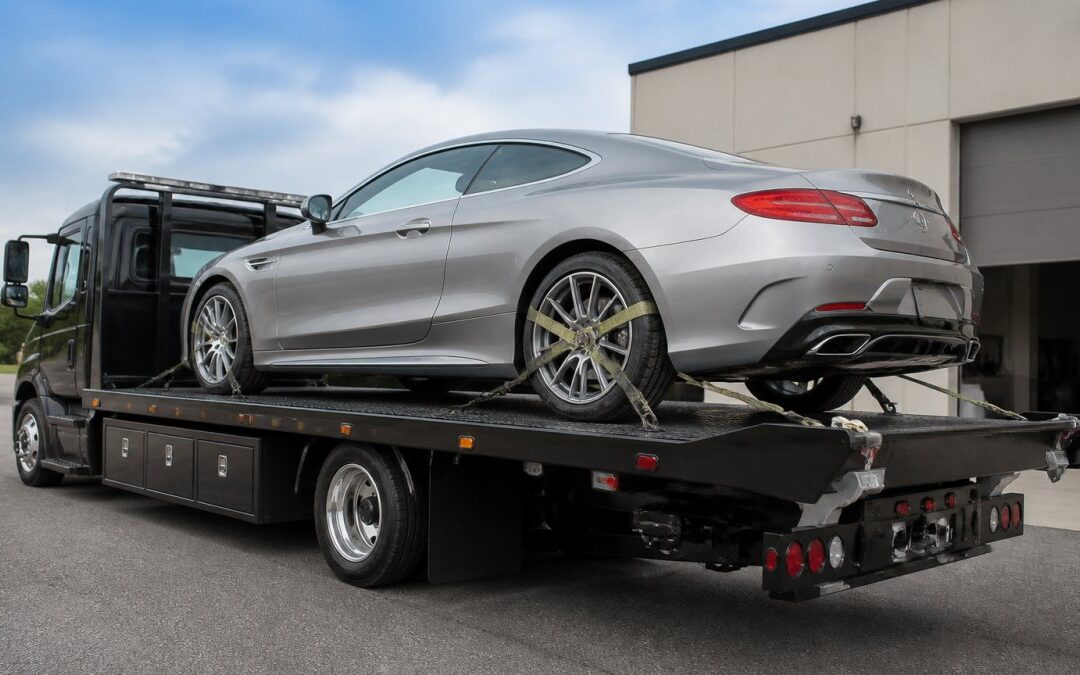
Flatbed transport for luxury vehicles is a specialized towing method where your car is loaded entirely onto an open, flat platform rather than being towed behind another vehicle. The entire weight of your vehicle rests on the flatbed itself, eliminating the stress on the drivetrain, suspension, and frame that traditional towing can cause.
Luxury and exotic vehicles, sports cars, high-performance machines, collector automobiles, have low ground clearance, sensitive drivetrains, and often all-wheel-drive systems that can suffer serious damage if towed improperly. A flatbed eliminates those risks entirely.
At Fox Recovery, we understand your high-value vehicle is an investment. When you need flatbed transport for luxury vehicles, the method matters as much as the company handling it, a flatbed keeps your car stable, secure, and damage-free from pickup to delivery.
Most towing methods work fine for standard vehicles, but luxury cars operate under different rules. Ground clearance is measured in inches, transmissions can be damaged by improper towing angles, and the paint, suspension, and undercarriage are engineered for performance, not rough conditions.
Flatbed transport removes variables: your vehicle doesn’t roll behind a truck on its own wheels but sits stationary on a platform, secured with wheel straps and tie-downs at multiple points. Nothing drags, rolls, or shifts during transport.
Flatbed Towing for Low-Clearance Cars: Loading and Safety
Low-clearance vehicles present unique challenges that standard towing simply cannot handle. Cars with ground clearance under 5 inches, common in sports cars and luxury sedans, risk severe damage if the front or rear bumper catches during loading or transport.
Loading low-clearance vehicles requires precision: the flatbed must sit at the correct angle, and the vehicle must be winched on slowly and carefully. Operators need to know your car’s exact dimensions and plan the loading sequence accordingly.
Most towing companies treat all vehicles the same, positioning the ramp at a standard angle and assuming the car will load like a pickup truck. Low-clearance vehicles need a shallower ramp angle, slower winch speed, and spotters watching for contact points.
The real difference is experience. A qualified flatbed operator has loaded hundreds of luxury and exotic cars and knows that a Porsche 911 or Ferrari requires different handling than a Lamborghini or McLaren.
When your low-clearance car is being loaded, the operator should:
- Assess ground clearance at the front, center, and rear before positioning the ramp
- Adjust ramp angle to match your vehicle’s lowest points
- Use a winch with gradual tension rather than sudden pulling
- Position spotters on both sides to watch for contact
- Stop and reassess if any part of the vehicle makes contact with the ramp
Safety also means preventing shifting once the vehicle is on the flatbed. Wheel straps must sit at the correct angle to stop rolling or sliding, the suspension should not be compressed excessively, and no part of the vehicle should hang over the platform edges.
How to Verify a Towing Company’s Insurance and Credentials
Before handing over your luxury vehicle, get proof the towing company is qualified and protected. Many owners skip this step and pay for it.
Ask for documentation of licensing and certification. A legitimate flatbed operation should have a current commercial driver’s license (CDL) for operators handling heavy-duty towing, plus proof of state licensing for the company itself. Most states regulate towing operations and require specific permits, ask to see them.
Insurance is non-negotiable. Ask for proof of commercial general liability and cargo insurance, cargo insurance specifically covers the vehicle being transported. A company without it puts your vehicle at risk and exposes you to liability if damage occurs.
Here’s what to look for:
- Commercial general liability insurance with a minimum of $1 million coverage
- Cargo insurance that covers the full value of your vehicle
- Workers’ compensation insurance (required in most states)
- Proof that the company is properly licensed and registered with your state’s transportation authority
Don’t accept verbal assurances. Ask for certificates of insurance and verify them independently by contacting the insurer to confirm the policy is active and limits are as stated. A reputable company like Fox Recovery provides this documentation without hesitation.
Also verify the operators themselves are certified. Many states require specific training and certification exams, so ask about training, certifications, and time in the industry. An operator with 10+ years handling luxury vehicles is far more valuable than one with a few months of general towing experience.
Luxury Vehicle Transport Checklist Before Pickup
Before pickup, prepare carefully so nothing is missed and your vehicle arrives in the same condition it left.
Vehicle Condition Documentation:
- Take photos of your vehicle from multiple angles before pickup, including the front, rear, sides, top, and undercarriage if visible
- Note any existing damage, dents, or scratches in writing
- Include the current mileage on your odometer
- Document the fuel level
Mechanical Preparation:
- Check that your vehicle starts and runs (unless it’s being transported because it doesn’t)
- Ensure the battery has sufficient charge
- Confirm the fuel tank is between one-quarter and one-half full (too much fuel adds weight; too little can cause fuel pump damage)
- Release the parking brake if the vehicle is operational
Security and Contents:
- Remove or secure any loose items inside the vehicle
- Close all windows and lock all doors
- If the vehicle has a security system, provide the code or disarm it
- Remove or secure any aftermarket equipment (spoilers, roof racks, etc.)
Accessibility:
- Ensure the towing company has clear access to your vehicle
- Move other vehicles out of the way if necessary
- Provide gate codes or building access information if the vehicle is in a secured area
- Be present during pickup to answer questions and observe the loading process
Communication:
- Get the towing company’s dispatch number and driver contact information
- Confirm the pickup time and expected delivery time
- Ask about the route and estimated travel time
- Provide your contact information and ensure the company has it
Special Considerations:
- If your vehicle has a manual transmission, inform the towing company (some require the transmission to be in neutral; others have specific handling procedures)
- If your vehicle is all-wheel-drive or four-wheel-drive, confirm that the towing company understands the drivetrain and has the proper equipment
- If your vehicle is electric, provide charging information and confirm the company knows how to handle EVs
This checklist creates a record: if damage occurs during transport, you have documentation of the vehicle’s condition before pickup, protecting both you and the towing company with a clear baseline.
Flatbed Auto Transport Cost: What Affects Your Price
Flatbed auto transport pricing depends on several factors; understanding them helps you get a fair quote and avoid surprises.
The primary factors are distance, vehicle weight, size, and urgency.
Seasonal demand plays a role too: summer months see higher demand, and winter transport in harsh weather may cost more due to added risk and operational challenges.
Vehicle condition affects cost as well. One that runs and can be driven onto the flatbed costs less than one needing special recovery equipment or winching, and an accident-damaged vehicle requiring careful handling adds time and expertise.
Transport type matters too. Open flatbed transport is standard and typically most affordable, while enclosed transport protects your vehicle from weather and road debris at a higher cost.
For specific pricing on flatbed auto transport cost for your vehicle, contact Fox Recovery directly. Pricing varies by situation, so get a detailed estimate that breaks down the service components rather than guessing at costs.
One critical point: if a towing company quotes you a price that seems unusually low, ask questions. Extremely low pricing often indicates the company is cutting corners on safety, equipment, or driver training. Your vehicle’s safety is worth paying for proper service.
Step-by-Step: Preparing and Loading Your Luxury Vehicle
The loading process is where precision matters most. Here’s how a professional operation should handle your luxury vehicle.
Documentation and Condition Assessment
Before loading, the operator should thoroughly inspect your vehicle, documenting its condition at pickup to protect both you and the towing company.
The operator will photograph the vehicle from multiple angles, note existing damage, record mileage, verify fuel level, and check that doors and windows are secure. This documentation becomes the baseline for delivery verification.
The operator should also confirm the parking brake is released (if operational) and the transmission is in neutral, check that all-wheel-drive systems are in the correct towing mode, and verify battery level and charging status on electric vehicles.
Securing Tie-Downs and Wheel Straps
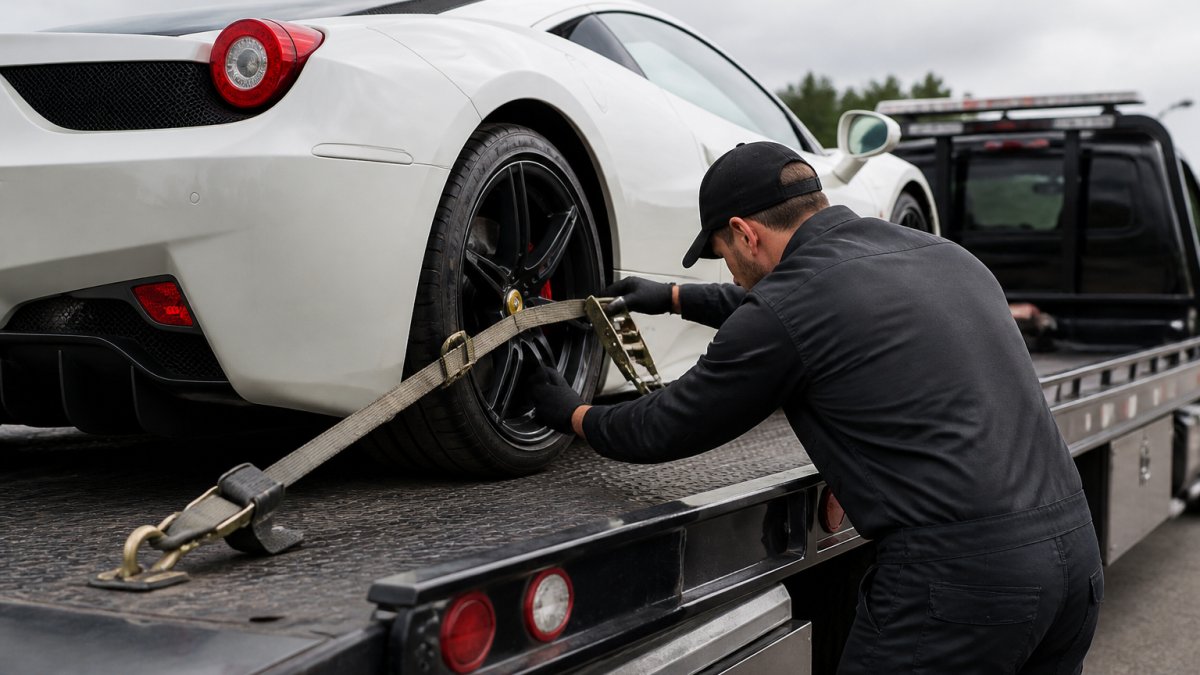
Once your vehicle is positioned on the flatbed, securing it properly is essential. The operator uses heavy-duty wheel straps that wrap around each wheel to anchor it to the platform.
Proper wheel strap placement is critical: straps should run at a 45-degree angle from the wheel toward the flatbed frame, distributing force evenly and preventing rolling or sliding. They must be tight enough to prevent movement but not so tight they damage wheels or suspension.
For low-clearance or unusual suspension geometry, the operator may use additional tie-down points. Some luxury vehicles have factory tie-down loops designed for transport, which should be used when available rather than relying solely on wheel straps.
The operator will also check for parts hanging over the flatbed edges. Bumpers, spoilers, and other components must be fully supported by the platform, and anything extending beyond it must be secured to prevent shifting.
Before the vehicle leaves the pickup location, the operator should verify all securing devices are tight and properly positioned. This is the moment to ask questions and observe, if anything looks wrong or incomplete, speak up before the vehicle leaves.
Common Mistakes to Avoid During Flatbed Transport
Understanding what can go wrong helps you avoid costly errors. Here are the most common mistakes.
Mistake 1: Not verifying the towing company’s credentials. Many owners accept a verbal assurance that a company is insured and licensed.
Mistake 2: Loading a low-clearance vehicle with a standard ramp angle. A flatbed positioned at the angle that works for a pickup truck will damage a sports car.
Mistake 3: Failing to document your vehicle’s condition before pickup. Without photos and written notes, you have no proof of the vehicle’s condition before transport. If damage occurs and the company disputes responsibility, documentation is your protection.
Mistake 4: Not securing loose items inside the vehicle. Anything loose inside the car can shift during transport and cause interior damage.
Mistake 5: Choosing a towing company based solely on price. The cheapest option is rarely best for a luxury vehicle.
Mistake 6: Transporting with a full fuel tank. Extra fuel adds weight and can cause fuel pump damage during transport. A fuel tank should be between one-quarter and one-half full.
Mistake 7: Not communicating special requirements. If your vehicle has a manual transmission, all-wheel-drive, or is electric, the towing company needs to know. Different vehicles have different transport requirements.
When your luxury vehicle needs transport, the method you choose determines whether it arrives in perfect condition or damaged.
At Fox Recovery, we handle flatbed transport for luxury vehicles with the precision and care your vehicle deserves.
Frequently Asked Questions
Is flatbed transport the safest way to move a luxury car?
Yes. Flatbed transport eliminates tire contact with the road and prevents drivetrain damage that can occur with wheel-lift or hook-and-chain towing. Your luxury vehicle sits on a stable platform secured with wheel straps and tie-downs, protecting the suspension, transmission, and undercarriage. This method is the industry standard for exotic cars, sports cars, all-wheel drive vehicles, and collector cars where any damage means significant repair costs.
How do I verify a towing company’s insurance and licensing before transport?
Request proof of current commercial general liability insurance (minimum $1 million coverage) and cargo liability insurance specific to vehicle transport. Confirm they hold a state towing license and that operators are certified. Don’t hand over your vehicle to any provider who can’t produce these credentials immediately.
What should I include on my luxury vehicle transport checklist?
Document your vehicle’s condition with photos and video before pickup, noting any existing damage. Remove personal items. Confirm the transport company’s insurance details.
Does flatbed transport prevent damage to low-clearance vehicles?
Flatbed transport is the only safe option for low-clearance vehicles. Sports cars, exotic vehicles, and custom builds with lowered suspension cannot be towed with wheel-lift equipment because the front bumper or splitter will drag and sustain damage. A flatbed lifts the entire vehicle onto the platform, keeping all parts clear of the road. Operators experienced with low-clearance loading use proper ramp angles and winch techniques to avoid scraping the undercarriage during loading and unloading.