
Last Updated: November 12, 2026
Quick Summary
Choose a towing company for high-value imports by verifying its license, cargo insurance, and operator certifications in writing before dispatch, then confirming it sends a flatbed with soft tie-downs and asks about your car’s clearance, drivetrain, and brake type. Get a written estimate and a signed condition report at pickup and delivery.
- Flatbed towing is the safest method for most high-value imports because no wheels touch the road.
- General liability protects the company, but cargo insurance is what covers your car while in its care.
- Ask for the per-vehicle cargo limit in writing and compare it to your car’s value.
- An operator who quotes a price before asking about your vehicle is not paying attention.
- Record the odometer, fuel level, and warning lights in a signed condition report at pickup.
Table of Contents
- Why High-Value Imports Need a Different Kind of Towing Company
- Verify Licensing, Insurance, and Credentials Before You Call
- Flatbed Towing for Imported Cars: Why the Loading Method Matters
- Towing a Low-Clearance Car Without Damaging the Bumper or Drivetrain
- Questions to Ask a Towing Company Before Dispatch
- Your Towing Quote Checklist: Reading the Rate Structure Before You Agree
- Documenting the Handoff: Condition Reports and Chain of Custody
- Book a Flatbed Transport That Protects Your Import
- Frequently Asked Questions
Why High-Value Imports Need a Different Kind of Towing Company
A Ferrari, a Porsche 911, or a restored vintage Alfa Romeo does not ride like a family sedan. Low ground clearance, stiff suspension, and expensive bodywork turn a routine tow into a real risk.
A careless hookup can crack a front lip, bend a control arm, or scrape a wheel.
High-value imports also carry stricter transport needs. They sit lower. They weigh differently. Some have all-wheel-drive systems that must not spin on a tow dolly.
So the standard “call the nearest truck” approach falls short. You need a company that asks about your car before it asks for your address.
Verify Licensing, Insurance, and Credentials Before You Call
Start with paperwork, not promises. The best time to check a towing company’s credentials is before your car is on the deck, not after.
Ask for three things:
- A current operating license for towing in your state
- Active insurance coverage, including cargo insurance
- Operator certifications showing training in vehicle handling
Anyone can print a logo on a truck. Real credentials come with documents and policy numbers.
For a step-by-step walkthrough of what to request and how to check it, see our guide on how to verify towing certification.
What Proof to Request and How to Read It
Ask for the certificate of insurance directly.
Then check that the cargo coverage exists. General liability protects the company. Cargo insurance protects your car.
A common mistake is accepting a verbal “we’re fully insured” and moving on. Get it in writing, even by text or email.
Watch out: Some operators carry only basic liability. If your import is damaged and there is no cargo coverage, recovering the repair cost becomes your problem.
Flatbed Towing for Imported Cars: Why the Loading Method Matters
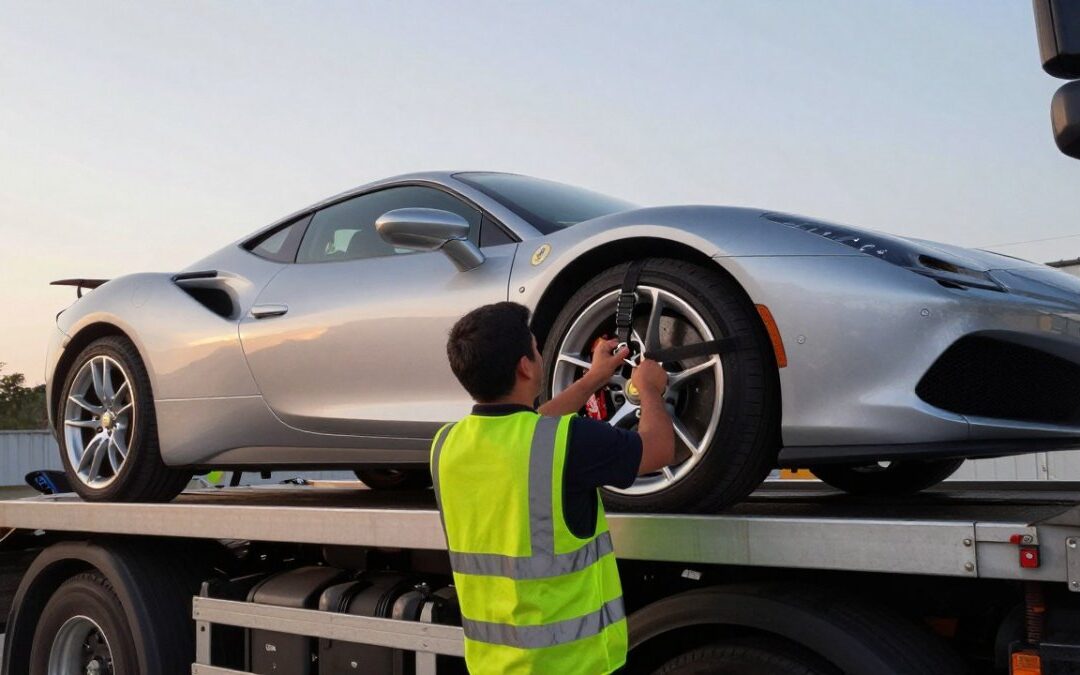
Flatbed towing is the safest method for most high-value imports. The entire car rides on the deck, so no wheels touch the road. That protects the drivetrain, the transmission, and the paint.
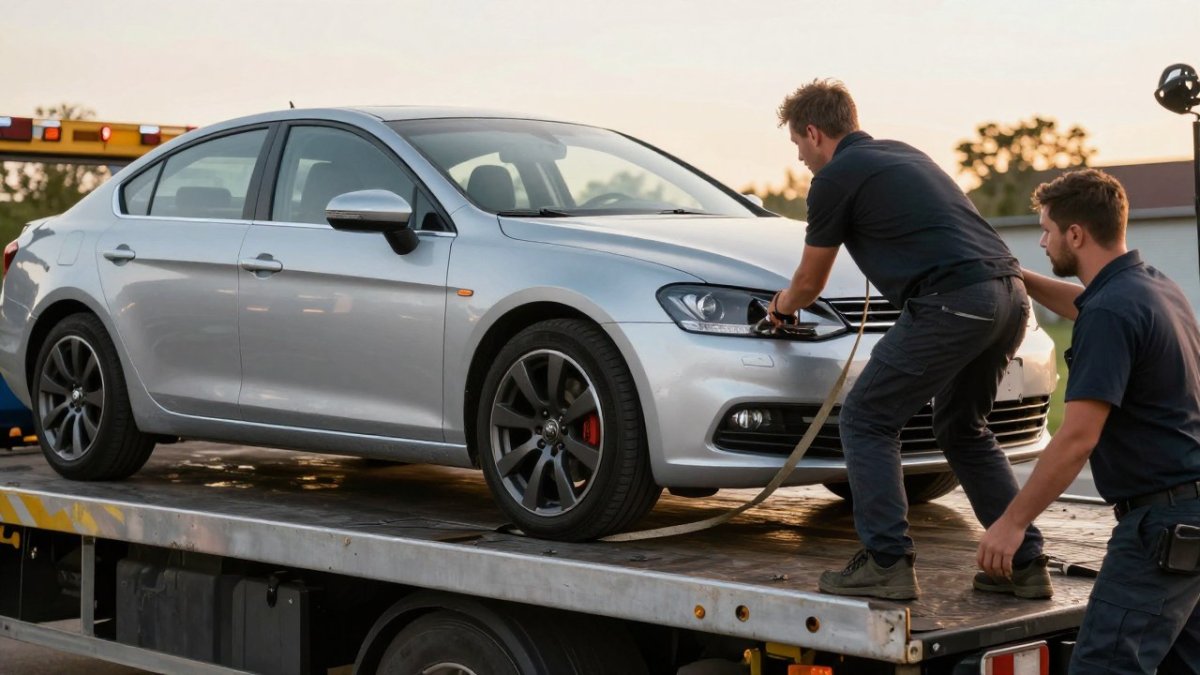
Wheel-lift and dolly setups leave two wheels spinning. On an all-wheel-drive import, that can damage the transfer case. On a low car, it can also stress the front bumper during loading.
Fox Recovery runs 19 ft. and 21 ft. flatbeds with wheel straps and soft tie-downs, which spread the load instead of pinching the wheels. For a deeper comparison, read our breakdown of flatbed versus wheel-lift towing.
Towing a Low-Clearance Car Without Damaging the Bumper or Drivetrain
Low clearance is where most damage happens. A steep ramp angle can catch a front splitter before the car is even fully on the deck. But on a high-value import, clearance is only half the problem, the drivetrain and electronic systems create their own failure modes that a generic tow operator will not anticipate.
Good operators plan for the approach angle. They use ramps, wood blocks, or angled approaches, and they check the approach angle before pulling. Ask these questions before the truck arrives:
- What loading angle do you use for cars this low?
- Do you use wheel straps or soft straps, and are the straps rated for forged or multi-piece wheels?
- How do you secure a car with an electronic parking brake or an electronic transmission selector?
- How do you handle a vehicle with carbon-fiber body panels or a front lip that sits below the ramp breakover?
Import-Specific Drivetrain and Configuration Considerations
All-wheel-drive systems are the most common source of hidden damage. A wheel-lift or dolly tow that leaves one axle spinning can overheat a transfer case or damage a center differential.
Transmission and parking-brake configurations vary widely across imports. Some models require the transmission to be placed in a specific service mode before loading, and some electronic parking brakes must be released through a menu sequence rather than a lever.
Watch out: An operator who says “we tow these all the time” without asking your model year, drivetrain, and brake type is guessing. Specific questions get specific answers; vague confidence is the red flag.
Loading and Securing Without Paint or Wheel Damage
Soft tie-downs and wheel straps spread the load instead of pinching the wheel face. For forged or multi-piece wheels, confirm the straps are wide enough and that the operator routes them clear of the valve stem and spokes. For carbon-fiber components, avoid any strap contact with the panel itself, the load should go through the wheels or designated tie-down points, never through bodywork.
A careless hookup is the most common cause of avoidable damage. If an operator seems unsure about your car’s specs, that is a red flag. Our complete guide on preventing drivetrain damage during towing covers the specific risks in more detail.
Questions to Ask a Towing Company Before Dispatch
The best companies answer these without hesitation. If they stumble, keep looking. Use this as a call script so you can compare providers on the same criteria instead of improvising.
Equipment and loading method
- What tow truck will you send for my car, flatbed, wheel-lift, or dolly?
- What is the deck length, and will my vehicle fit with clearance at both ends?
- What loading angle do you use, and do you carry ramps or blocks?
- Do you use wheel straps or soft straps, and are they rated for my wheel type?
Operator experience
- Have you loaded this make and model before?
- How do you handle all-wheel drive, an electronic parking brake, or a right-hand-drive vehicle?
- Will the same operator load and unload the car, or does it change hands?
Insurance and coverage
- Are you licensed and insured, and can you send the certificate of insurance by email before dispatch?
- Does your policy include cargo coverage for the vehicle while it is in your care, custody, and control?
- What is the per-vehicle cargo limit, and does it cover my car’s value?
Logistics and price
- What is your estimated arrival time, and how do you communicate delays?
- How is your rate structured, hookup fee, per-mile rate, after-hours charge, winching fee, storage fee?
- Can you send the total estimate in writing before I agree?
- Do you provide a condition report at pickup and delivery, and who signs it?
Clear communication here tells you a lot. A dispatcher who asks about your car’s clearance, drivetrain, and brake type before quoting is paying attention. One who quotes a price before asking anything about the vehicle is not.
The Agreed-Value and Cargo Insurance Question Most Owners Forget
This is the question almost no one asks, and it is where high-value imports are most exposed.
Cargo coverage carries per-vehicle limits, so compare the limit to your vehicle’s value. Ask for the per-vehicle limit in writing, then compare it to your car’s value.
Get the answer in writing, including any exclusions. Common exclusions to ask about include damage from loading and unloading, damage to aftermarket or specialty wheels, and damage that occurs during storage.
Use these questions as a call script so every provider is compared on the same criteria.
| Topic | Questions to ask |
|---|---|
| Equipment and loading method | What truck, deck length, loading angle, ramps, and strap type? |
| Operator experience | Loaded this make and model? How handle AWD, electronic brake, right-hand drive? |
| Insurance and coverage | Licensed and insured? Certificate by email? Cargo coverage and per-vehicle limit? |
| Logistics and price | Arrival time, delay communication, rate structure, written estimate? |
| Condition report | Provided at pickup and delivery, and who signs it? |
Your Towing Quote Checklist: Reading the Rate Structure Before You Agree
A towing quote is not one number. It is a set of line items, and each one can change the total.
Use this checklist before you say yes:
- Is there a hookup or base fee?
- What is the per-mile rate?
- Are there after-hours or weekend charges?
- Is there a winching or recovery fee?
- Are storage fees mentioned?
- Is the quote in writing?
Ask for the total estimate up front. A company that gives clear, upfront pricing is usually the one that will not surprise you later.
Pricing depends on distance, vehicle type, and time of day. Ask Fox Recovery for a current quote based on your car and location.
For help judging competing quotes, read how to compare heavy-duty towing rates.
Documenting the Handoff: Condition Reports and Chain of Custody
A condition report protects both sides. It records the car’s state before the tow and after delivery.
Walk around the car with the operator. Note existing scratches, chips, and wheel scuffs. Take photos with a timestamp.
Then confirm these details:
- Odometer reading at pickup
- Fuel level
- Any warning lights on the dash
- Who signs the report and when
This record is your chain of custody. If something goes wrong, it is the first thing anyone will ask for.
Watch out: Skipping the walkaround feels faster in the moment. Without it, proving pre-existing versus new damage becomes nearly impossible.
If a handoff does go wrong, our guide on steps to take if a luxury car is damaged during transport walks through your options.
Book a Flatbed Transport That Protects Your Import
Choosing the right company comes down to proof, equipment, and communication. Check the credentials. Confirm the flatbed. Ask the hard questions about coverage and condition reports.
Fox Recovery is available 24 hours a day, 365 days a year.
Do not leave a low-clearance import to a truck that was built for something else. Call Fox Recovery at (847) 587-6076 and get a flatbed transport that protects your car from hookup to handoff.
Your import deserves more than a generic tow. Fox Recovery brings certified operators, modern flatbed equipment, and careful handling for high-value vehicles, available any hour of any day.
Frequently Asked Questions
What should I look for in a towing company for a high-value car?
Look for three things first: proof of current licensing and insurance, flatbed equipment sized for your vehicle, and operators trained on low-clearance and all-wheel-drive vehicles. Ask whether they carry cargo or agreed-value coverage that matches your car’s worth, not just standard liability. Request a written estimate with the hookup fee and per-mile rate spelled out. A company that answers these questions quickly and in writing is usually the one that handles the vehicle with the same care.
Is flatbed towing safer for imported cars?
For most high-value imports, yes. A flatbed carries all four wheels off the ground, so there is no spinning driveline, no risk of a front or rear lip scraping, and no wear on tires or transmission. That matters for all-wheel-drive systems and low-clearance bodywork. Confirm the deck length fits your wheelbase and that the operator uses soft straps or wheel baskets rather than chains over painted surfaces. Ask about tie-down points specific to your model before the truck arrives.
How can I verify a towing company’s insurance coverage?
Ask for a certificate of insurance naming the towing company and listing general liability and on-hook cargo coverage limits. Call the insurer’s number on the certificate to confirm it is active, and ask whether your vehicle type and value fall inside the policy limits. For a car worth more than the standard cargo limit, ask about agreed-value coverage in writing. Keep a copy of the certificate with your service paperwork so a claim, if needed, starts from documented facts.
What information should I give a tow operator about my imported vehicle?
Tell dispatch the year, make, model, drivetrain, ride height, and any modifications such as a front lip, lowered suspension, or aftermarket wheels. Mention whether the car is all-wheel drive and whether it has a locking steering column. Share the exact location and any access limits like a tight garage or steep driveway. Send photos of the vehicle’s current condition before the truck arrives. Clear details up front let the operator bring the right equipment and loading method on the first trip.
