
Last Updated: October 25, 2026
Quick Summary
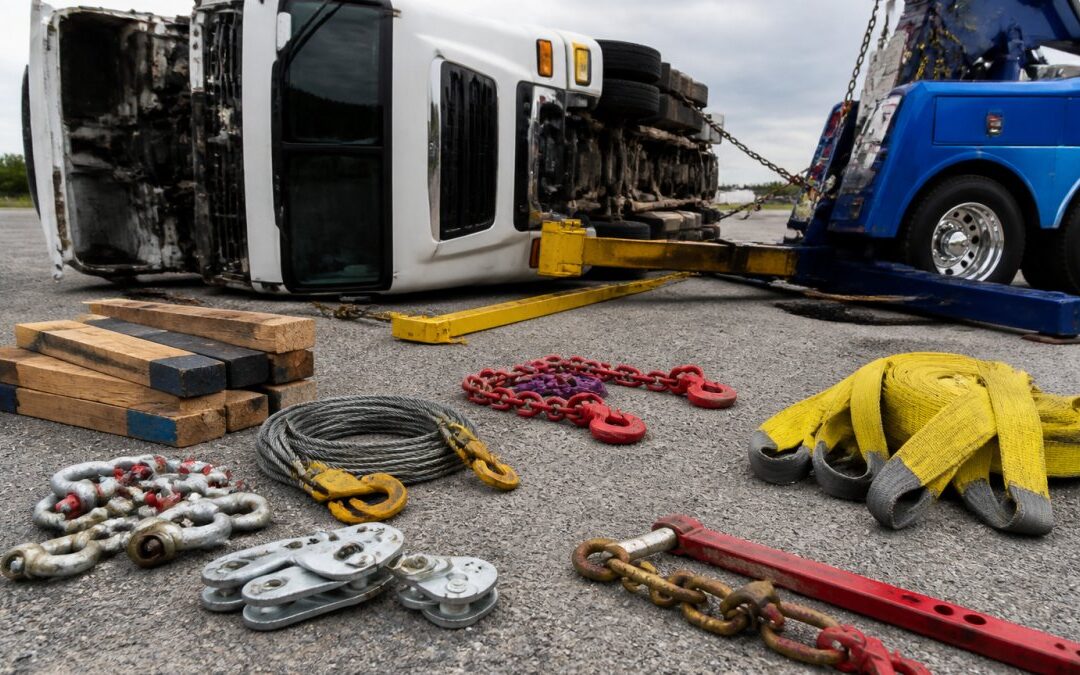
Heavy vehicle recovery equipment encompasses specialized tools, rigging systems, and mechanical devices designed to safely extract, move, and transport disabled or stuck vehicles. Unlike light-duty towing gear, heavy vehicle recovery equipment must handle substantially greater loads, complex rigging scenarios, and unpredictable field conditions.
- A 20,000-pound winch rigged through a snatch block delivers 40,000 pounds of pulling force but doubles the load on anchor points.
- Snatch straps have 20-30% elasticity built in to absorb shock loads and prevent violent jerks during sudden breakaway scenarios.
- Grade 80 or higher steel shackles are recommended for heavy vehicle recovery to safely accommodate full pulling force.
- Synthetic rope is the modern standard, floating and requiring minimal maintenance compared to wire rope.
- Recovery boards work best in moderate traction-loss scenarios like sand, light mud, or snow but cannot substitute for winch recovery when vehicles are deeply stuck.
Table of Contents
- Understanding Heavy Vehicle Recovery Equipment
- Heavy-Duty Towing Equipment: Winches and Pulling Systems
- Vehicle Recovery Equipment List: Straps, Shackles, and Rigging
- Recovery Boards, Traction Aids, and Ancillary Gear
- Heavy Vehicle Recovery Safety: Inspection, Setup, and Best Practices
- Light vs. Heavy-Duty Vehicle Recovery: Choosing the Right Equipment
- Equipment Maintenance, Retirement, and Professional Recovery Planning
- Getting Professional Heavy Vehicle Recovery Support
- Frequently Asked Questions
Understanding Heavy Vehicle Recovery Equipment
A 10,000-pound winch won’t safely recover a loaded semi-trailer, and a passenger-vehicle tow strap will fail pulling a bus out of mud.
Recovery equipment serves three core functions: generating pulling force (winches and anchor systems), transferring it safely (straps, ropes, rigging hardware), and protecting people and assets (inspection, load distribution, PPE).
Heavy-Duty Towing Equipment: Winches and Pulling Systems
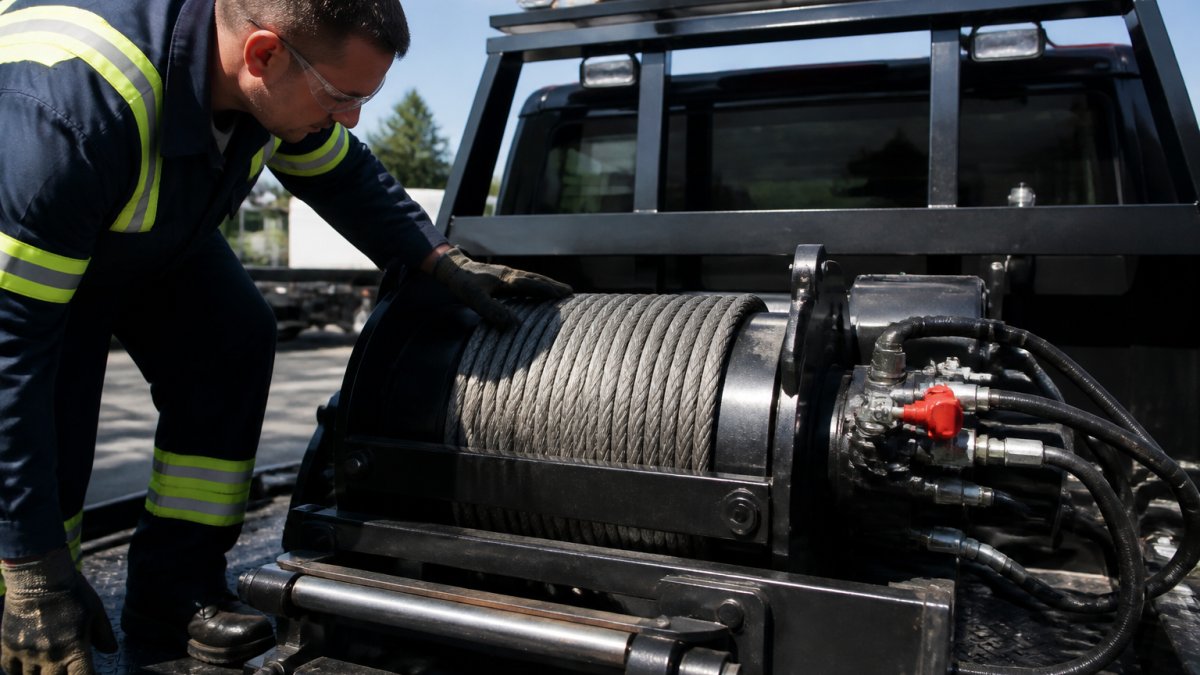
Winches are the foundation of any serious recovery operation, generating the controlled pulling force needed to move disabled vehicles. A winch rated for 20,000 pounds cannot reliably recover a 35,000-pound loaded truck, the equipment will overheat, the hydraulic system will fail, or the line will snap under sustained load.
Winch Types and Pulling Capacity Ratings
Two winch types dominate heavy vehicle recovery: hydraulic and electric. Hydraulic winches draw power from the engine or a dedicated pump, delivering consistent force across varying loads and excelling in continuous-duty and extreme-temperature scenarios. Electric winches are lighter, quieter, and easier to maintain, but generate less consistent power and can overheat during sustained pulls.
Pulling capacity comes in two measurements: line pull (maximum force the winch generates) and safe working load (SWL), typically 25-50% of line pull depending on safety factor and configuration. A 20,000-pound line-pull winch might have a 10,000-pound SWL once mechanical advantage, rigging losses, and safety margins are accounted for. Never confuse the two, operating above SWL voids warranties and creates catastrophic failure risk.
A 20,000-pound winch rigged through a snatch block delivers 40,000 pounds of pulling force, but that configuration doubles the load on anchor points and the winch itself, so all connected equipment must be rated accordingly.
Synthetic Rope vs. Wire Rope
Synthetic rope (typically 12-strand UHMWPE or polyester blends) is the modern standard: it floats, won’t rust, needs minimal maintenance, and handles better in cold weather.
In coastal, muddy, or cold conditions, synthetic rope’s low maintenance and handling justify its higher cost.
Rope diameter matters as much as material.
Winches come in two main types, each with distinct advantages and limitations for different recovery conditions.
| Winch Type | Power Source | Best For | Key Limitation |
|---|---|---|---|
| Hydraulic | Engine or dedicated pump | Continuous-duty and extreme-temperature scenarios | Requires engine or pump power |
| Electric | Battery or vehicle electrical system | Lighter, quieter operations | Less consistent power, overheats during sustained pulls |
Vehicle Recovery Equipment List: Straps, Shackles, and Rigging
Every component connecting your winch to the vehicle must be rated for the full pulling force your winch generates, a single weak link can cause catastrophic failure. Straps, shackles, blocks, and anchor hardware all need documented load ratings and inspection records.
Tow Straps and Snatch Straps
Tow straps and snatch straps serve different purposes and cannot be interchanged. A tow strap is designed for controlled, steady-state pulling at consistent tension.
Snatch straps typically have 20-30% elasticity built into their weave, preventing the violent jerk of rigid straps and reducing peak forces on anchor points and frames.
Strap load ratings are marked in working load limit (WLL), typically 1/5 to 1/6 of breaking strength.
Shackles and Soft Shackles
Shackles are the mechanical connection points between straps and vehicle anchors.
Soft shackles are lighter, won’t damage frames, and are easier to handle in cold weather, but they have lower load ratings and require careful inspection for fiber damage.
Pin diameter and body thickness directly affect capacity: a 1/2-inch shackle rated at 9,500 pounds WLL cannot be substituted with a 3/8-inch shackle rated at 6,500 pounds.
Snatch Blocks and Heavy-Duty Rigging
Snatch blocks are pulleys that redirect pulling force and increase mechanical advantage.
Snatch blocks must be rated for the total load they’ll handle: doubling mechanical advantage means the block experiences 40,000 pounds of internal load in a 20,000-pound pull. Many operators miss this calculation, leading to block failure during critical recoveries.
Heavy-duty rigging also includes anchor points, load distribution hardware, and backup systems.
Recovery Boards, Traction Aids, and Ancillary Gear
Recovery boards (traction boards or recovery mats) provide traction when vehicles are stuck in mud, sand, or snow.
Quality recovery boards are made from high-density polyethylene or composites, typically 47-51 inches long and 10-12 inches wide, and interlock to create longer traction surfaces.
Recovery boards work best in moderate traction-loss scenarios: sand or light mud, snow-covered roads, or gravel where wheels spin.
Heavy Vehicle Recovery Safety: Inspection, Setup, and Best Practices
Equipment failure during recovery creates dangerous conditions: snapped winch lines can whip across the work area, failed anchor points can cause vehicles to drop unexpectedly, and improper rigging can result in vehicle damage or operator injury. Safety protocols aren’t bureaucratic overhead, they’re the difference between a successful recovery and a catastrophic incident.
Pre-Recovery Equipment Inspection
Every piece of recovery equipment must be inspected before use. This isn’t a casual visual check, it’s a documented, systematic process.
Load-rated equipment comes with inspection intervals: synthetic rope typically requires inspection every 12 months or after every major recovery, whichever comes first.
Equipment retirement criteria are just as important as inspection protocols. Synthetic rope showing permanent deformation, discoloration, or fiber damage should be retired, don’t attempt to repair or reuse it.
Rigging Setup and Load Distribution
Proper rigging setup begins with identifying recovery points on the vehicle being recovered.
Load distribution matters significantly in heavy vehicle recovery.
Anchor point selection determines whether your recovery succeeds or fails. The anchor must be immovable, a large tree, a concrete structure, or another heavy vehicle securely parked. Never rig to utility poles, fences, or structures that might shift under load.
Personal Protective Equipment and Operator Training
Everyone in the recovery area must wear appropriate personal protective equipment: safety glasses, work gloves rated for the recovery task, steel-toed boots, and high-visibility clothing.
Operator training is non-negotiable for heavy vehicle recovery. Operators need to understand load ratings, recognize when equipment is damaged or unsafe, calculate mechanical advantage correctly, and make sound decisions about rigging configurations.
Fox Recovery ensures all operators are fully certified and licensed. This commitment to training reduces incident risk and ensures consistent, safe recovery operations across all scenarios.
Light vs. Heavy-Duty Vehicle Recovery: Choosing the Right Equipment
The jump from light-duty to heavy-duty recovery isn’t just a matter of bigger numbers, it’s a fundamental shift in equipment specifications, rigging complexity, and operator expertise required. Understanding these differences prevents equipment failures and ensures safe, effective recoveries.
Vehicle Weight and Load Rating Matching
Vehicle weight determines equipment requirements. A light-duty pickup truck typically weighs 4,000-5,500 pounds and can be recovered with a 10,000-pound winch and standard tow straps.
Gross vehicle weight rating (GVWR) is the critical specification. This is the maximum weight the vehicle can safely carry, including cargo.
Payload distribution also affects recovery planning. A truck carrying heavy cargo has different weight distribution than an empty truck.
Recovery Scenario Selection: Mud, Sand, Snow, and Accident Recovery
Different stuck scenarios demand different recovery approaches. A vehicle bogged in mud typically requires sustained pulling force, a winch-based recovery with steady, controlled tension.
Accident recovery presents the most complex scenarios. Vehicles involved in collisions may have frame damage, fluid leaks, or unstable positioning that complicates recovery.
OSHA guidelines on heavy vehicle operations and recovery procedures provide baseline safety standards for commercial recovery work.
For specialized scenarios like ditch recovery or accident scenes, anchor words to a detailed recovery guide provides step-by-step procedures for these complex situations. Specialized guidance on ditch recovery covers the specific rigging and equipment configurations that work best when vehicles are embedded in ditches or off-road terrain.
Equipment Maintenance, Retirement, and Professional Recovery Planning
Equipment maintenance extends the life of recovery gear and prevents failures at critical moments.
Shackles and steel hardware should be inspected for rust and corrosion, cleaned if necessary, and stored dry.
Equipment retirement timing is critical. Synthetic rope showing permanent stretch, discoloration, or embedded debris should be retired, don’t attempt to repair or reuse it.
Professional recovery planning involves maintaining equipment inventories organized by recovery scenario, documenting all inspections and maintenance, and conducting periodic training refreshers.
Getting Professional Heavy Vehicle Recovery Support
When recovery scenarios exceed your equipment or expertise, professional recovery services become essential.
Fox Recovery maintains state-of-the-art flatbed equipment and fully certified operators available 24 hours a day, 365 days a year.
The decision to call for professional support isn’t an admission of failure, it’s a recognition that some scenarios demand specialized expertise and equipment.
Heavy vehicle recovery equipment explained represents a specialized domain where equipment specifications, rigging expertise, and safety protocols directly determine success or failure.
Frequently Asked Questions
What is the difference between light and heavy-duty vehicle recovery equipment?
Light-duty recovery gear handles vehicles up to 10,000 lbs and works best on pavement or firm ground. Heavy-duty recovery equipment manages vehicles over 10,000 lbs, including medium and heavy-duty trucks, buses, and tractor-trailers, and is rated for extreme conditions: deep mud, sand, snow, and accident sites. Heavy-duty systems use higher working load limits, stronger anchor points, and more sophisticated rigging to distribute force safely across the vehicle frame.
What heavy-duty towing equipment do professional operators use most often?
Professional operators rely on electric or hydraulic winches with 20,000 to 50,000+ lbs pulling capacity, synthetic or wire rope rated for the load, heavy-duty shackles rated to match the winch, snatch blocks to redirect force and increase mechanical advantage, and tow straps with working load limits matched to the vehicle weight. Each piece is inspected before use and rated for the specific recovery scenario, whether it’s roadside towing, ditch extraction, or accident recovery.
How do you choose the right recovery equipment for a specific vehicle weight?
Match the working load limit of every component to the vehicle’s gross vehicle weight rating (GVWR) plus a safety margin. For a 40,000 lbs truck, use equipment rated for at least 50,000-60,000 lbs to account for uneven load distribution and sudden jerking during recovery. Verify the winch capacity, rope or strap rating, shackles, and anchor points all meet or exceed this threshold. Professional operators calculate recovery force based on terrain, vehicle position, and pulling angle before selecting gear.
What safety precautions matter most during heavy vehicle recovery?
Inspect all equipment for wear, damage, or corrosion before each recovery. Verify anchor points are solid and rated for the pulling force. Wear gloves and personal protective equipment rated for the task. Keep bystanders and vehicle occupants at a safe distance, at least 1.5 times the rope or strap length away from the recovery line in case it fails. Never exceed the working load limit, and always use rigging geometry that distributes force evenly across the vehicle frame to avoid structural damage.
What should be in a basic vehicle recovery kit for heavy-duty vehicles?
A professional heavy-duty recovery kit includes a winch or towing vehicle with adequate pulling capacity, synthetic or wire rope rated for the load, heavy-duty shackles and soft shackles, a snatch block or two for mechanical advantage, heavy-duty tow straps with clear working load limits, recovery boards or traction aids for soft terrain, heavy work gloves, and a rigging manual or guide. Add a first-aid kit, flashlight, and communication device. Every item must be inspected regularly and rated for the vehicles and conditions you’ll encounter.
How do winches and recovery straps differ in heavy vehicle recovery?
Winches use a motorized drum and cable or rope to pull a vehicle through controlled, steady force, ideal for precision recovery from ditches or steep angles. Recovery straps rely on a towing vehicle’s momentum and the strap’s elasticity to create a sudden jolt that helps dislodge stuck vehicles, best for mud and sand. Winches offer more control; straps work faster for bogged vehicles. Many professional operations use both: winches for accident scenes and rigging work, straps for quick extraction in soft terrain.
What regulations or standards govern heavy vehicle recovery equipment?
Recovery equipment must meet ANSI (American National Standards Institute) and SAE (Society of Automotive Engineers) standards for working load limits, material strength, and safe use. Winches, shackles, and rigging hardware are rated by these standards. Tow operators in most states must be licensed and follow DOT (Department of Transportation) guidelines for roadside safety and vehicle transport. Always verify that equipment carries certification marks and that operators have current training and licensing before hiring recovery services.
