
Table of Contents
- What Happens When a Vehicle Gets Stuck in a Ditch
- Car Stuck in a Ditch: What to Do Before Help Arrives
- Vehicle Recovery Safety Tips You Need to Know
- How Professional Ditch Recovery Works
- Off-Road Vehicle Recovery Equipment That Matters
- Winch Recovery Cost and What Affects Your Final Bill
- After Recovery: Damage Documentation and Next Steps
- Frequently Asked Questions
Last Updated: October 19, 2026
What Happens When a Vehicle Gets Stuck in a Ditch
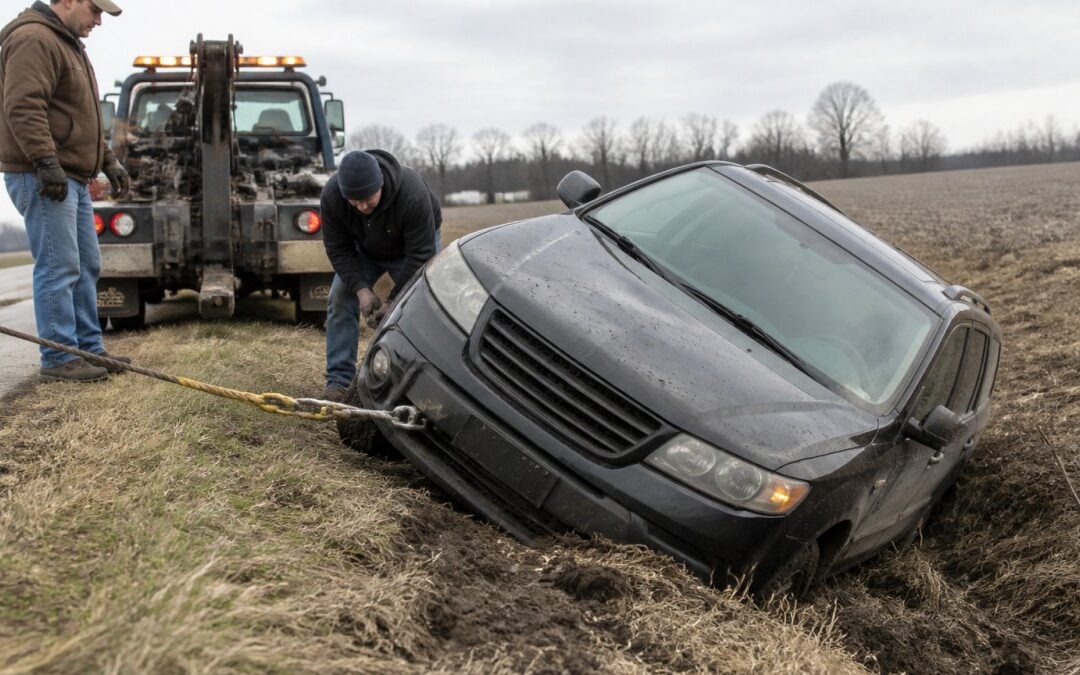
When ditch stuck vehicles create a precarious situation, they demand immediate attention and careful handling. Ditches present unique challenges compared to standard roadside breakdowns.
When a car or truck slides into a ditch, several things happen simultaneously. The vehicle tilts at an angle that makes self-extraction nearly impossible. Wheels lose traction on unstable ground.
At Fox Recovery, we provide expert recovery services. Each situation is different. Some vehicles rest at a shallow angle in dry conditions. Others sink deeper into mud, snow, or sand after days of weather exposure.
The key insight most vehicle owners miss: attempting self-recovery often causes more damage than the original incident. Spinning wheels dig deeper. Makeshift pulling methods can bend frames or tear suspension components.
Car Stuck in a Ditch: What to Do Before Help Arrives
Safety first: Assessing the situation
Your first action after realizing the vehicle is stuck should be to ensure everyone’s safety. Turn off the engine immediately. Check for fuel leaks or visible damage that might indicate electrical hazards.
If the vehicle is on an active roadway or near traffic, move to a safe location away from the ditch. Do not stand in the roadway while waiting for help.
Assess the ditch itself. Is the vehicle resting on solid ground or sinking into mud, water, or sand? Can you see the wheels clearly, or are they partially submerged?
Document the vehicle’s position with photos if it’s safe to do so. These images help the recovery team plan their approach and can be valuable for insurance claims later.
Information to gather for the recovery operator
When you call for recovery services, have specific details ready. The recovery operator needs to know the vehicle’s exact location, including mile marker, road name, or nearby landmarks.
Describe the ditch conditions. Is it muddy, sandy, or filled with water? How deep does the vehicle appear to be stuck? Are there obstacles around the ditch like trees, power lines, or fence posts that might complicate recovery?
Mention any visible damage. Broken axles, bent frames, or leaking fluids affect how the vehicle must be extracted. If the vehicle is on its side or upside down, that changes the recovery method entirely.
Ask the operator for an estimated arrival time and what to expect during recovery. Understanding the process reduces anxiety and helps you prepare for what comes next.
Vehicle Recovery Safety Tips You Need to Know
Recovery operations involve heavy equipment, high-tension cables, and forces that can cause serious injury or death if something goes wrong. Safety must come first, before any attempt to recover the vehicle.
When not to attempt self-recovery
Never use another vehicle to pull a stuck car out of a ditch without professional equipment. Improvised recovery methods frequently fail and cause injuries. A tow chain can snap and whip back at high speed.
Do not attach recovery cables to bumpers, trailer hitches, or other components not designed for towing loads. These attachment points will tear away under stress, leaving you with a damaged vehicle and an unsuccessful recovery.
Avoid standing near the vehicle while recovery is underway. Cables under tension can snap. Vehicles can shift unexpectedly during extraction. Even trained operators maintain a safe distance from active recovery zones.
Never attempt recovery in darkness without proper lighting. You cannot see hazards, cable positioning, or the vehicle’s movement. Professional recovery equipment includes lighting systems for this reason.
Risks specific to ditch extraction
Ditch recovery introduces hazards that standard roadside towing does not. The angle of the vehicle during extraction creates stress on the frame and suspension.
Mud and soft ground can collapse during recovery, burying the vehicle deeper or causing the recovery vehicle itself to become stuck. Water-filled ditches introduce drowning risks and can damage the vehicle’s electrical systems.
Steep inclines magnify every risk. A vehicle on a steep slope can roll during extraction if the recovery angle is wrong. The recovery vehicle itself can lose stability if positioned incorrectly on uneven terrain.
Cable failure is rare with professional equipment but catastrophic when it occurs. Cables snap without warning and can cause serious injury. Professional recovery operators inspect cables before each use and replace them regularly.
How Professional Ditch Recovery Works
Professional ditch recovery follows a systematic process designed to extract the vehicle safely while minimizing additional damage. Understanding how this process works helps you understand why professional recovery costs what it does and why attempting self-recovery is rarely worth the risk.
Assessment and vehicle positioning
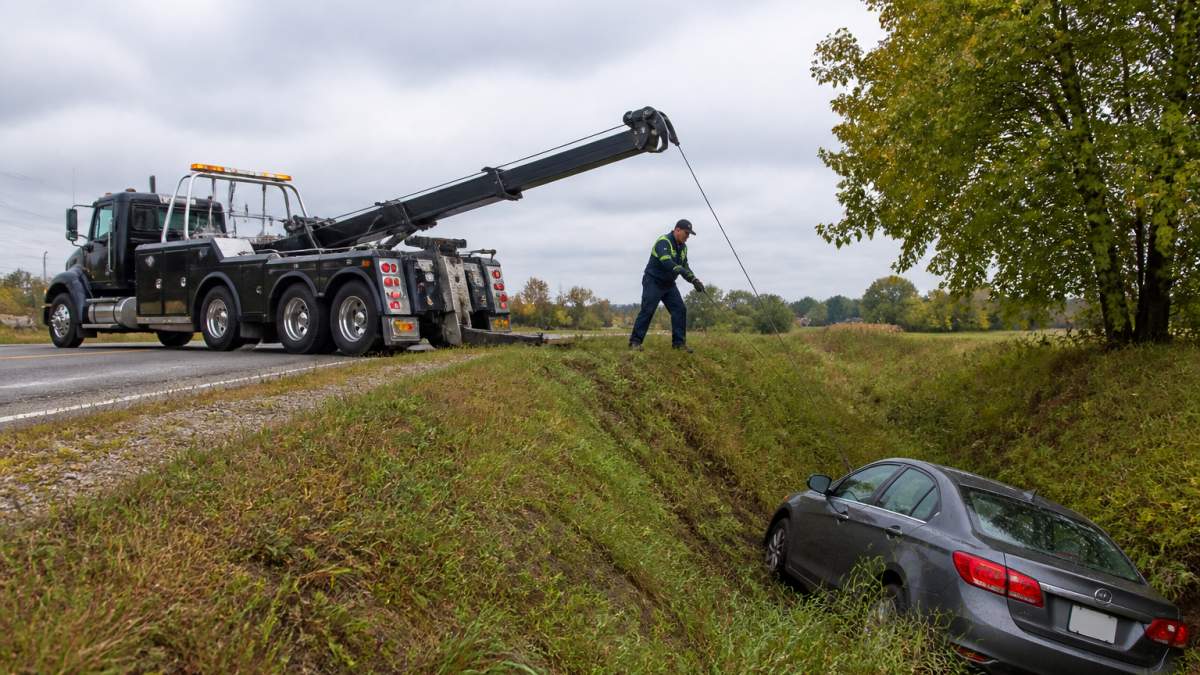
The recovery operator arrives and assesses the scene before touching the vehicle. They evaluate the ditch depth, ground conditions, vehicle position, and nearby hazards. This assessment determines the recovery method and equipment needed.
The operator positions the recovery vehicle on stable ground, typically on the road or shoulder above the ditch. The vehicle must be positioned so the winch can pull at the correct angle.
Once positioned, the operator attaches a recovery strap or cable to a designated recovery point on the vehicle. Most modern vehicles have factory recovery points designed for this purpose.
Controlled winching and extraction
Controlled winching is the heart of professional recovery. The operator engages the winch slowly, applying steady tension rather than sudden jerks.
As the vehicle moves, the operator may need to adjust the angle or reposition the recovery vehicle. Communication is essential. If the vehicle is being towed by another operator, radio contact ensures coordinated movement.
Most ditch extractions take 15 to 45 minutes depending on conditions. Deep ditches, soft ground, or vehicles with heavy damage take longer. The operator never rushes. Speed increases risk.
Once the vehicle reaches level ground, the operator disconnects the recovery equipment and inspects the vehicle for additional damage caused during extraction. They document any new damage with photos for insurance purposes.
Off-Road Vehicle Recovery Equipment That Matters
Professional recovery equipment is specialized, expensive, and requires training to use safely. Understanding what equipment does what helps explain why professional recovery for ditch stuck vehicles is different from standard towing.
Winch capacity and recovery vehicles
A winch is an electric or hydraulic motor that winds a steel cable onto a drum. The capacity of the winch determines how much pulling force it can generate. A light-duty winch rated for 8,000 pounds can recover small cars. A medium-duty winch rated for 16,000 pounds handles most sedans and SUVs.
The recovery vehicle itself must be heavy enough to anchor the winch without being pulled into the ditch. A recovery vehicle that’s too light will be dragged forward by the pulling force. Professional recovery operators use trucks rated for the recovery work they perform.
Flatbed recovery vehicles are preferred for ditch extraction because they can position the winch at the optimal angle. The flatbed also provides a stable platform for the operator to work from while rigging the recovery.
Specialized rigging and safety gear
Rigging refers to the process of connecting cables, straps, and chains to create a secure attachment between the recovery vehicle and the stuck vehicle. Professional operators use rated recovery straps, chains, and cables that meet industry standards.
Shackles, clevis hooks, and recovery points are all specialized components designed to distribute pulling forces safely. Using the wrong attachment method can result in equipment failure and serious injury.
Safety gear includes hard hats, high-visibility clothing, and sometimes gloves and eye protection. Operators wear this gear during all recovery operations. The gear reduces injury risk if something fails or if the operator is struck by moving equipment.
Ground anchors and snatch blocks are used in complex recoveries where a direct pull isn’t possible.
Winch Recovery Cost and What Affects Your Final Bill
Understanding what drives recovery pricing helps you know what to expect when you call for help. Recovery costs vary significantly based on several factors, and knowing these factors helps you make informed decisions.
Factors that determine recovery pricing
The primary factors affecting recovery cost include the vehicle’s weight, the depth of the ditch, ground conditions, and how long the vehicle has been stuck.
Distance from the recovery service’s base affects pricing. A recovery call 5 miles away costs less than one 30 miles away because of travel time and fuel. After-hours calls (nights, weekends, holidays) typically include a premium because they require dispatching operators during off-peak times.
Additional services increase cost. If the vehicle needs to be transported to a repair shop after recovery, that’s a separate towing charge.
Weather conditions and ground stability also factor into pricing. Recovering a vehicle from a frozen ditch takes longer than from a dry one. Recovering from a water-filled ditch requires special precautions and may need additional equipment.
Getting a quote and understanding service rates
When you call Fox Recovery, ask for a detailed quote. A reputable recovery operator will explain what they’re charging for and why.
Some recovery services charge by the hour once they arrive on scene. Others charge a flat rate for the recovery itself. Ask which pricing model applies to your situation.
Request a breakdown of costs. This transparency helps you understand what you’re paying for and makes it easier to compare quotes from different recovery services.
Ask about insurance. Many insurance policies cover recovery costs for accidents or breakdowns. Knowing whether your policy covers recovery helps you understand your actual out-of-pocket cost. Some recovery services can bill insurance directly, which simplifies the process for you.
After Recovery: Damage Documentation and Next Steps
Once the vehicle is extracted from the ditch, the recovery process isn’t quite finished.
Photograph the vehicle from multiple angles immediately after recovery. Document any new damage that occurred during the extraction process.
Have the vehicle inspected by a qualified mechanic before driving it.
Check fluid levels and top off any fluids that may have leaked during the incident.
Keep all recovery documentation, including photos, receipts, and the recovery operator’s report.
Contact your insurance company to report the incident and file a claim if appropriate. Provide them with the recovery documentation and any photos you took.
When a vehicle ends up stuck in a ditch, the situation demands professional expertise and specialized equipment. Attempting self-recovery risks additional damage and personal injury.
Frequently Asked Questions
What should I do if my car gets stuck in a ditch?
First, turn off the engine and assess whether the vehicle is stable. If you’re in traffic or on a roadway, turn on hazard lights and move to a safe distance if possible. Call a professional recovery service immediately, attempting to self-recover often causes additional damage or injury. While waiting, document the scene with photos, note the ditch depth and angle, and gather details about your vehicle’s position. Provide this information to the recovery operator when they arrive to speed up the extraction process.
How much does winch recovery cost?
Winch recovery pricing depends on several factors: vehicle weight and size, ditch depth and angle, terrain conditions, distance from the recovery service location, and whether additional equipment or multiple operators are needed. Light-duty recoveries typically cost less than heavy-duty extractions. For an accurate quote specific to your situation, contact a professional recovery provider with your vehicle details and location information. Most providers offer 24/7 emergency service, and pricing may vary based on time of day or weather conditions affecting access.
What equipment is needed for off-road vehicle recovery?
Professional off-road recovery requires heavy-duty winches rated for your vehicle’s weight, reinforced tow straps or chains, recovery hooks and shackles, and a stable recovery vehicle positioned for mechanical advantage. Operators also use rigging equipment to distribute load safely, winch controllers for precise movement, and personal protective equipment. The recovery vehicle must have sufficient power and traction to handle difficult terrain. Weather conditions and terrain type determine whether additional equipment like air bags, snatch blocks, or anchoring systems are necessary to safely extract a stuck vehicle.
When should you not attempt to self-recover a vehicle stuck in a ditch?
Avoid self-recovery if the ditch is deep, the vehicle is at a steep angle, or the ground is unstable (mud, sand, or soft soil). Never attempt recovery if you’re injured, if other vehicles are at risk, or if the ditch is near traffic. Do not use inadequate equipment like rope or damaged chains. If the vehicle is upside down, partially submerged, or the recovery point is compromised, professional help is essential. Steep terrain, poor visibility, or bad weather conditions also warrant calling professionals. Self-recovery mistakes can cause vehicle damage, injury, or worse, professional operators have the training and equipment to handle these risks safely.