
Table of Contents
- What Is a Rotator Tow Truck and When It’s Needed for Accidents
- Understanding Rotator Tow Truck Capabilities and Lifting Capacity
- Semi-Truck Rollover Recovery: Equipment and Approach
- Rotator Recovery Equipment: Setup and Load Charts
- Heavy-Duty Towing Safety: Scene Assessment and Traffic Control
- Step-by-Step Accident Scene Recovery Process
- Recovery Cost Factors and What to Expect
- Frequently Asked Questions
Last Updated: October 14, 2026
What Is a Rotator Tow Truck and When It’s Needed for Accidents
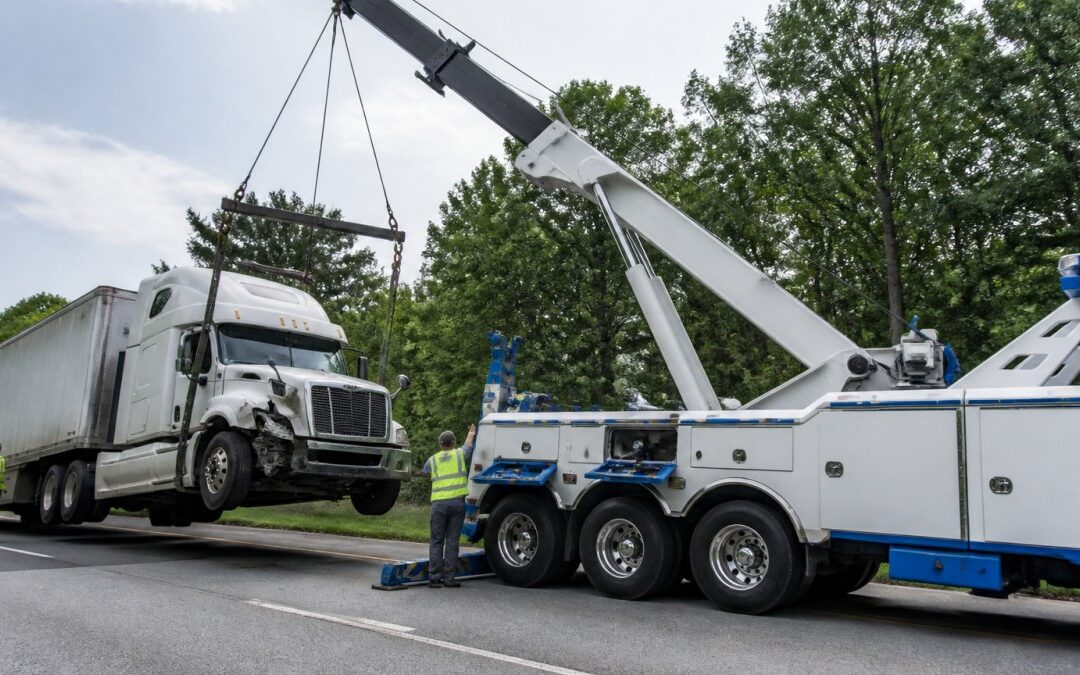
A rotator tow truck is a specialized heavy-duty recovery vehicle equipped with a rotating boom and winch system designed to handle complex accident recovery scenarios. Unlike standard tow trucks, rotator towing for accident recovery provides the precision and lifting capacity needed for overturned vehicles, multi-vehicle collisions, and difficult-angle extractions.
Rotator tow trucks become essential when accidents involve vehicles that cannot be recovered with conventional equipment. An overturned semi-truck, a car wedged under a bridge, or a vehicle in a ravine all demand the elevated lift and controlled positioning that only a rotator can provide. This is where standard flatbed equipment reaches its limits.
How a Rotator Differs From Standard Tow Trucks
A standard tow truck uses a fixed boom and basic winch. A rotator wrecker features a boom that rotates 360 degrees, allowing operators to approach recovery from multiple angles without repositioning the entire truck. This rotational capability is the defining difference between a rotator tow truck and conventional recovery equipment.
The boom on a rotator can reach higher, extend farther, and maintain stability during complex lifts. Where a standard wrecker might require multiple attempts or repositioning, a rotator tow truck accomplishes the same recovery in one controlled operation. For accident scenes with limited space, damaged guardrails, or vehicles in precarious positions, this difference is critical.
Understanding Rotator Tow Truck Capabilities and Lifting Capacity
Rotator recovery equipment comes in various tonnage ratings, typically ranging from 35 to 60 tons of lifting capacity. The specific tonnage required depends on the vehicle’s weight, its position, and the angle of the lift. A light-duty rotator handles passenger vehicles and small trucks. A heavy-tonnage rotator manages semi-trucks and specialized commercial vehicles.
Load charts determine safe working parameters for each rotator configuration. These charts account for boom angle, load distance from the truck, and ground stability. A competent operator consults the load chart before every lift to ensure the recovery stays within safe limits. Exceeding rated capacity risks equipment failure and secondary accidents, a critical safety concern at any accident scene.
The working radius of a rotator’s boom extends the effective reach beyond what standard equipment offers. This extended reach means operators can stabilize and lift vehicles from positions that would otherwise require dangerous manual rigging or multiple equipment passes.
Semi-Truck Rollover Recovery: Equipment and Approach
Semi-truck rollover recovery demands specialized equipment and careful planning. An overturned tractor-trailer creates hazards that standard recovery methods cannot safely manage: fuel spills, cargo shifts, and unstable load distribution all complicate the operation.
A rotator tow truck rated for heavy-duty recovery is the standard choice for semi-truck rollovers. The operator must assess cargo type before beginning the lift. Hazardous materials require additional precautions and coordination with hazmat teams. Even standard freight can shift during recovery if rigging is not precise, creating secondary accident risk.
The recovery sequence for a semi-truck rollover follows a strict protocol. First, the scene is stabilized and made safe. Second, the vehicle is assessed for cargo and structural damage. Third, rigging points are identified and secured. Finally, the rotator performs a controlled lift, rotating the truck back onto its wheels or onto a flatbed for transport. Each step requires expertise that only experienced heavy recovery specialists possess.
Rotator Recovery Equipment: Setup and Load Charts
Setting up a rotator for accident recovery involves positioning the truck, deploying outriggers for stability, and configuring the boom for the specific lift. Outriggers extend from the truck’s sides to prevent tipping during high-angle lifts. Without properly deployed outriggers, even a rotator tow truck becomes unstable.
Load charts are the operator’s guide to safe recovery. These charts specify maximum safe loads at different boom angles and distances. A 45-degree lift angle allows greater tonnage than a 70-degree angle. A load 10 feet from the boom tip is safer than one 20 feet away. The chart tells the operator exactly what is possible without exceeding equipment limits.
Rigging, the process of securing cables, chains, and attachment points, directly affects recovery safety. Poor rigging causes load shift, equipment damage, and potential injury. Professional operators inspect every rigging point before lift-off. At Fox Recovery, our fully certified and licensed tow operators follow strict rigging protocols.
Heavy-Duty Towing Safety: Scene Assessment and Traffic Control
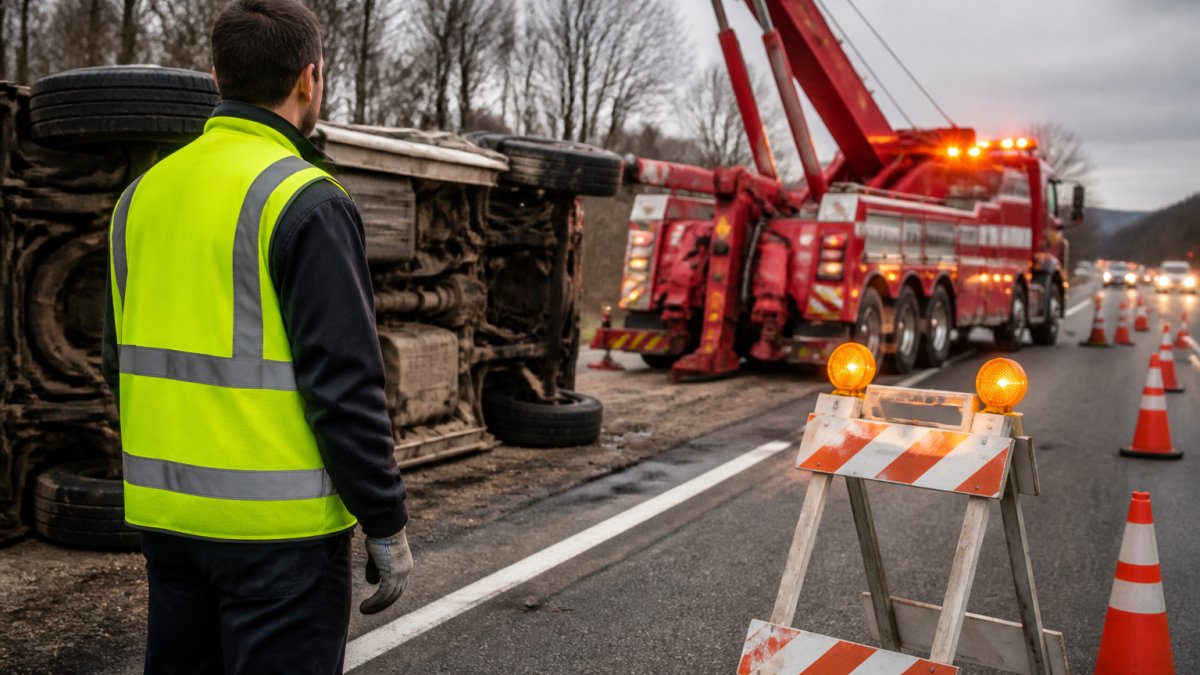
Every accident scene presents unique hazards. The first step in safe rotator recovery is a thorough scene assessment. The operator evaluates vehicle positions, fuel leaks, power lines, traffic flow, and ground conditions before deploying equipment.
Vehicle Stabilization Before Lift
Unstable vehicles shift unexpectedly during recovery. Before the rotator boom engages, the vehicle must be stabilized using airbags, cribbing, or mechanical props. This stabilization prevents load shift and protects both equipment and personnel.
For overturned vehicles, stabilization is especially critical. The vehicle’s weight distribution is uneven, and any movement during rigging can cause it to roll again. Professional stabilization takes time but prevents accidents that could delay recovery for hours or cause injuries.
Managing Secondary Accident Risk
An accident scene with active recovery operations creates secondary accident risk: approaching traffic may not notice equipment and personnel, or distracted drivers may slow suddenly. Traffic control is not optional, it is mandatory for operator and scene safety.
Traffic control measures include advance warning signs, traffic control cones, and personnel directing traffic away from the recovery zone. On high-speed roadways like interstate highways, secondary accident prevention requires coordination with law enforcement. At Fox Recovery, we coordinate with local authorities.
Step-by-Step Accident Scene Recovery Process
Initial Scene Evaluation and Equipment Selection
The first decision is whether rotator towing for accident recovery is necessary or if standard equipment suffices. This decision depends on vehicle position, accessibility, and damage severity. An operator arriving at the scene conducts a rapid assessment: Can a standard wrecker reach and recover this vehicle safely? Or does the situation demand a rotator tow truck’s specialized capabilities?
For vehicles in ravines, under bridges, or in high-angle positions, rotator recovery is the only safe option. For vehicles on roadways in accessible positions, a standard wrecker may be sufficient. This assessment determines equipment dispatch and response time.
Rigging, Winching, and Controlled Lift
Once equipment arrives and the scene is stabilized, rigging begins. The operator identifies secure attachment points on the vehicle frame, never on bumpers or body panels, which tear away under load. Cables or chains are secured to frame points, and the rigging is double-checked before winching begins.
The winch operates under operator control, pulling steadily and smoothly. Jerky or rapid winching can cause load shift or equipment failure. The controlled lift is the hallmark of professional recovery. A rotator tow truck’s precision boom control allows the operator to adjust angle and position in real time, responding to load behavior and ground conditions.
Post-Recovery Documentation and Insurance Coordination
Once the vehicle is recovered and secured on the flatbed, documentation begins. Photos of the recovered vehicle, damage assessment, and scene conditions all become part of the recovery record. This documentation supports insurance claims and provides a record of the vehicle’s condition at recovery.
Insurance coordination follows recovery completion. The vehicle’s condition, recovery method used, and any special circumstances are documented for the insurance adjuster. Clear documentation prevents disputes and ensures the claim process moves smoothly. Fox Recovery provides detailed recovery reports.
Recovery Cost Factors and What to Expect
Rotator towing for accident recovery costs more than standard towing because the equipment, expertise, and time required are greater. Several factors influence the final cost: distance to the recovery location, complexity of the recovery operation, equipment tonnage required, and scene conditions.
A simple recovery, a vehicle in an accessible position requiring straightforward rigging, takes less time and costs less than a complex recovery. An overturned semi-truck requiring hazmat coordination, multiple rigging points, and high-angle lift takes significantly longer and costs more. Distance from the recovery facility also affects pricing: a 50-mile recovery costs more than a 10-mile one due to fuel, time, and equipment deployment.
For specific pricing on your situation, contact Fox Recovery at (847) 587-6076. Our team assesses your recovery needs and provides a transparent estimate before work begins.
Scene conditions also impact recovery cost. A vehicle in mud or snow requires additional stabilization and rigging time. A vehicle with hazardous cargo requires coordination with specialized teams. A vehicle damaged in ways that complicate attachment points requires creative rigging solutions. Professional operators factor these variables into their assessment.
When an accident leaves a vehicle in a position that standard equipment cannot safely reach, rotator recovery becomes essential. The specialized capabilities of a rotator tow truck, its elevated lift, rotational boom, and precision control, make the difference between a quick, safe recovery and a prolonged, dangerous operation. At Fox Recovery, our fully certified and licensed operators have the expertise to assess your specific situation and execute recovery safely. We’re available 24 hours a day, 365 days a year. Call (847) 587-6076 to discuss your recovery needs.
Frequently Asked Questions
What is a rotator on a tow truck, and how does it work?
A rotator tow truck features a boom with a 360-degree rotating arm and winch system, allowing operators to recover vehicles from difficult angles without repositioning the truck itself. The boom extends and rotates to reach overturned vehicles, vehicles in ravines, or those wedged under bridges. This precision capability makes rotator towing essential for accident recovery where standard tow trucks cannot safely access or lift the damaged vehicle.
When is a rotator tow truck needed versus a conventional wrecker?
A rotator tow truck is necessary when a vehicle is overturned, positioned at a difficult angle, in a ravine, under a bridge, or in a location where a standard wrecker cannot maneuver safely. Conventional wreckers work well for straight-line recovery on flat ground. Rotator recovery equipment handles high-angle lifts, side-pull recoveries, and precision extractions where the vehicle or scene geometry demands elevated, angled, or rotational lift. Scene assessment determines which is appropriate.
What safety precautions are used during rotator accident recovery?
Professional rotator recovery involves traffic control to prevent secondary accidents, vehicle stabilization before any lift begins, load-chart verification to ensure the boom can safely handle the vehicle’s weight and position, rigging inspection, and continuous communication between operators. Scene safety protocols include establishing a perimeter, controlling approaching traffic, and assessing ground stability. Hazardous materials, cargo shift, and environmental factors are evaluated before recovery begins. Heavy-duty towing safety standards govern every step.
How long does heavy-duty accident recovery typically take?
Recovery time depends on scene complexity, vehicle position, weather, and whether cargo or hazardous materials are involved. Simple overturned-vehicle recoveries may take 45 minutes to 2 hours. Difficult-access situations, vehicles in ravines, under bridges, or with cargo complications, can require 3 to 6 hours or more. Scene assessment, stabilization, rigging setup, and controlled lift each add time. Professional operators prioritize safety over speed, and 24/7 emergency response availability ensures rapid dispatch to minimize total recovery duration.
NHTSA vehicle recovery guidelines and safety standards
OSHA standards for heavy equipment operation and scene safety
American Towing Association best practices for recovery operations