
Last Updated: October 23, 2026
Quick Summary
Best practices for luxury vehicle transport start with verifying the carrier’s FMCSA operating authority and cargo insurance limit against your car’s value, then choosing enclosed transport for high-value vehicles. Document the condition with timestamped photos at pickup and delivery, and get exclusions and inspection details in writing before you book.
- Enclosed transport is the safer default for high-value vehicles; open transport suits cars where weather exposure is acceptable.
- Confirm the carrier’s filed cargo limit is at or above your vehicle’s value before booking.
- Ask whether the truck will be the provider’s own and get the actual carrier’s USDOT number if not.
- Leave about a quarter tank of fuel and remove personal items, which cargo insurance excludes.
- Do not sign a clean delivery receipt if you see new damage; note it and photograph it on the spot.
Table of Contents
- Why Luxury Vehicle Transport Demands a Different Approach
- How to Choose a Qualified Luxury Car Transport Provider
- What Drives Luxury Car Transport Cost
- Auto Transport Insurance Coverage: Limits, Exclusions, and Claims
- Your Luxury Car Shipping Checklist: Preparing for Pickup
- How to Inspect a Car After Shipping
- Special Handling: EVs, Low-Clearance, and Classic Vehicles
- Conclusion
- Frequently Asked Questions
Why Luxury Vehicle Transport Demands a Different Approach
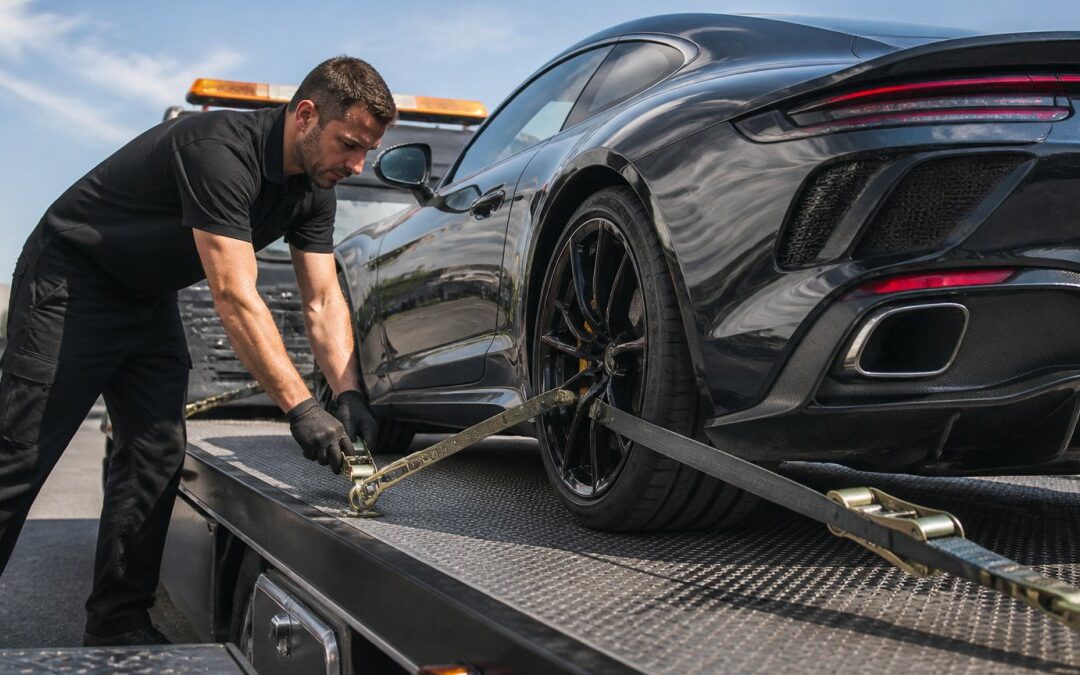
Best practices for luxury vehicle transport start with one fact: a high-value car cannot ride like an ordinary one. At Fox Recovery, we move showroom and museum vehicles on flatbeds because a low-clearance exotic car can be damaged by a single careless strap or a steep ramp angle.
The stakes are simple. A luxury vehicle transport job involves paint, trim, wheels, and underbody panels that cost real money to repair, and most of that damage happens through handling rather than distance. That is why the approach differs from a standard tow.
Enclosed vs. Open Transport for High-Value Vehicles
Enclosed transport is the safer default for a high-value vehicle, while open transport suits cars where weather and road debris exposure are acceptable trade-offs.
For a classic car, an exotic car, or anything with fresh paint or delicate trim, we recommend enclosed transport every time. For a daily-driven luxury sedan, open transport is a reasonable choice if the provider uses soft-strap tie-downs and a hydraulic liftgate.
How to Choose a Qualified Luxury Car Transport Provider
Choosing a qualified provider comes down to verification, not marketing. Ask for the carrier’s operating authority, proof of cargo insurance, and the equipment that will actually touch your car. A common mistake is booking on price alone.
Most competitors stop at “check the license and insurance.” The useful version of that advice is knowing where to look and what a real answer looks like. The checklist below is built around five things you can verify in writing before you sign.
1. Operating authority
For-hire motor carriers that move vehicles across state lines must hold active operating authority from the Federal Motor Carrier Safety Administration (FMCSA). Ask for the carrier’s legal name and USDOT number, then look the number up in the FMCSA’s public SAFER system or the FMCSA’s Licensing and Insurance (L&I) database. What you want to see: an “Active” authority status, the correct legal name matching the entity on your quote, and a motor carrier type that fits vehicle transport.
2. Cargo insurance, verified, not promised
A certificate of insurance is a snapshot; the FMCSA L&I record is the source. Pull the carrier’s insurance filing and confirm three things: the insurer is listed, the coverage type includes automobile liability and cargo, and the cargo limit is at or above your vehicle’s value. A common pattern is a carrier advertising “fully insured” while the filed cargo limit sits well below the value of an exotic or classic car.
3. Carrier identity and subcontracting
Ask one direct question: “Will the truck that picks up my car be your truck, driven by your employee?” If the answer is no, ask for the name and USDOT number of the actual carrier before pickup. Brokers are legal and common, but you are entitled to know who is hauling the vehicle, because that entity’s insurance and safety record are what protect you.
4. Safety and complaint history
The FMCSA’s Safety Measurement System (SMS) publishes inspection and crash data by carrier. Look at the carrier’s crash rate and hours-of-service compliance relative to its peer group. Then check the Better Business Bureau for complaint patterns and the state attorney general’s consumer protection office for enforcement actions. One complaint is noise; a pattern of damage or non-payment complaints is a signal.
5. Equipment and inspection specifics
Confirm the equipment that will actually touch the car: a hydraulic liftgate or ramps rated for the vehicle’s approach angle, soft-strap tie-downs (not chains), and wheel baskets or straps that secure the tires rather than the body. Ask how many inspection points occur before loading and whether the driver completes a condition report with you present. Get the pickup and delivery windows in writing, confirm who sends transit updates, and ask for the claims contact, not the sales contact, before you book.
Skipping the insurance and authority check is the most expensive shortcut in luxury car shipping. If the carrier’s filed cargo limit sits below your vehicle’s value, the gap comes out of your pocket after a claim, and if the authority is inactive, your leverage is close to zero.
Save a screenshot of the FMCSA authority and insurance record on the day you book. If a dispute arises later, you want the record as it stood when you signed, not as it looks after the carrier updates its filing.
What Drives Luxury Car Transport Cost
Luxury car transport cost depends on distance, transport type, vehicle size, and timing, not on a single flat rate.
The practical move is to compare quotes on identical terms. A uShip guide to comparing auto transport quotes makes the point that quotes only compare fairly when the transport method matches.
Pricing depends on distance, equipment, and timing, so ask for a written quote rather than a phone estimate.
Auto Transport Insurance Coverage: Limits, Exclusions, and Claims
Auto transport insurance coverage is the part most owners misunderstand. The carrier’s cargo insurance covers damage caused by the carrier during transit, but it does not cover pre-existing damage, mechanical failure, or personal items left in the vehicle.
The claims process follows a fixed order: document the condition at pickup, document it again at delivery, note any new damage on the delivery inspection, and file the claim with photographs.
Carrier cargo coverage vs. your own policy
These are two different things and they do not stack the way owners assume. The carrier’s cargo insurance is commercial coverage that responds to damage the carrier causes while the vehicle is in its care. Your personal auto policy generally follows the vehicle, but many policies exclude or limit coverage while the car is in the care of a for-hire carrier, and some exclude commercial transport entirely.
How to verify limits and exclusions in writing
Ask the provider for the certificate of insurance and the cargo coverage declarations page, not just a verbal “we’re covered.” On the declarations page, confirm the named insured matches the carrier’s legal name, the cargo limit, the deductible, and the policy period covering your shipment dates. Then ask for the exclusions in writing. Common exclusions to look for: damage from acts of God, wear and tear, mechanical or electrical failure, personal items, and damage that was not noted at delivery.
What evidence to retain for a claim
A claim is won or lost on the condition record. At pickup, photograph the odometer, fuel level, all four wheels, every body panel, the roof, the glass, and the underbody in good light, and keep the timestamps. Have the driver sign the condition report and get a copy before the truck leaves. At delivery, repeat the same set of photos before you sign anything, and write any new damage on the delivery receipt in the driver’s presence.
Photograph the odometer, the fuel level, and all four wheels at pickup. Those three shots settle most disputes about what changed during transit.
The carrier’s cargo limit, not the word “insured”, is what protects you. Verify the limit against your car’s value, get the exclusions in writing, and keep a timestamped photo record at both ends of the shipment.
Your Luxury Car Shipping Checklist: Preparing for Pickup
A luxury car shipping checklist starts with cleaning and documenting the vehicle. Wash the car so any damage is visible, then photograph every panel, the roof, the wheels, the interior, and the dashboard before the carrier arrives. Mile Auto Transport’s exotic car guidance recommends exactly this photo record for high-value vehicles.
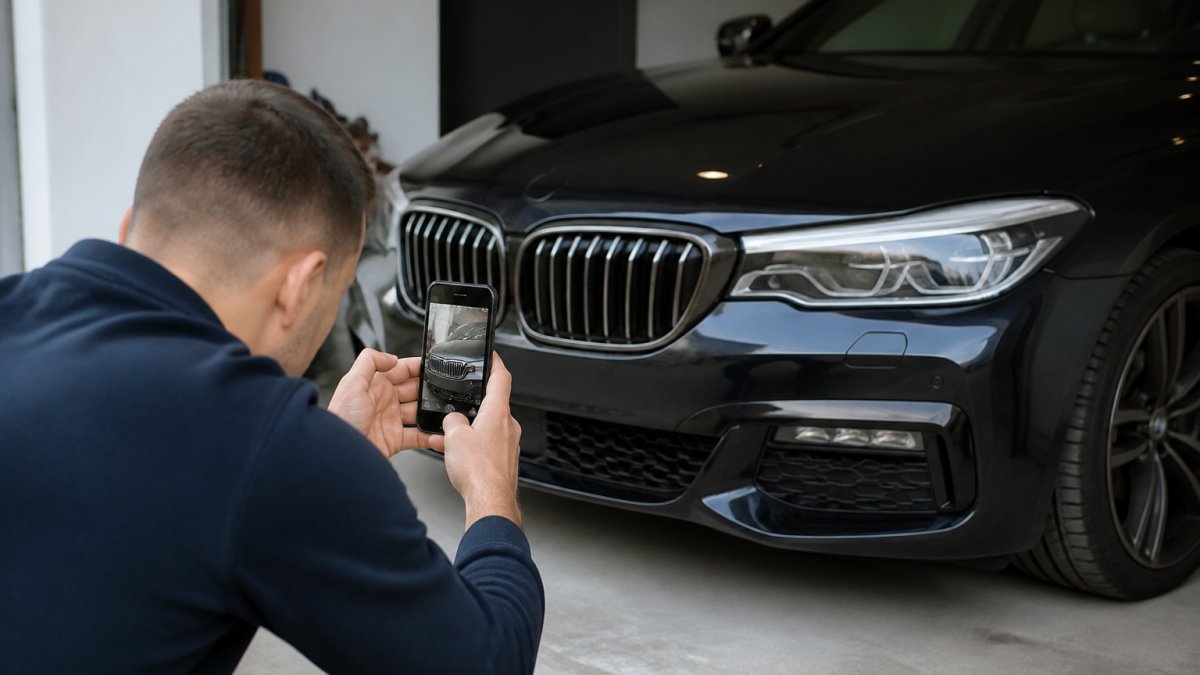
Preparation continues with the mechanical basics. Nexus Auto Transport’s long-distance shipping tips advise checking tire pressure, fluid levels, and leaks, and leaving roughly a quarter tank of fuel to reduce weight.
| Prep Step | Why It Matters |
|---|---|
| Wash and photograph the car | Creates the condition record for any claim |
| Check tires, fluids, leaks | Prevents transit-related failures |
| Leave about a quarter tank | Cuts weight and fire risk |
| Remove personal items | Cargo insurance excludes them |
| Confirm ground clearance | Prevents ramp and liftgate damage |
How to Inspect a Car After Shipping
Inspection after shipping means comparing the delivery condition to your pickup photos before you sign anything. Walk the vehicle in good light, check every panel and wheel, look underneath for scrapes, and confirm the odometer reading.
Do not sign a clean bill of delivery if you see damage. Once you sign, the claims process gets harder. If something looks wrong, call the provider before the carrier leaves.
Special Handling: EVs, Low-Clearance, and Classic Vehicles
Special handling needs differ by vehicle. EVs and hybrids require care with battery state of charge and a transporter that knows how to move a car that cannot roll freely.
Tell the provider the vehicle’s exact dimensions, ground clearance, and drivetrain type when you book. That information changes the equipment and the quote, and hiding it causes problems at pickup.
Conclusion
The hardest part of luxury vehicle transport is not the distance, it is trusting the people who load and unload your car. Fox Recovery handles high-value vehicles for showrooms and museums with state-of-the-art 19 ft. and 21 ft. flatbeds, fully certified and licensed operators, and a rigorous multiple-point inspection before every move. We are available 24 hours a day, 365 days a year, and we also support fleet vehicle management for medium and heavy-duty trucks.
Frequently Asked Questions
How much does it cost to transport a luxury car?
Luxury car transport cost depends on distance, transport type, vehicle size, and season. Enclosed transport costs more than open transport because it uses specialized equipment and takes fewer vehicles per load. For an exact figure on your route and vehicle, request a written quote and confirm whether it covers enclosed or open transport.
Is enclosed transport better for a luxury car?
For most high-value vehicles, yes. Enclosed carriers shield the car from road debris, weather, and UV exposure, and they reduce the risk of damage from other vehicles on the load. Open transport is generally safe and cheaper, but it leaves paint and glass exposed. If your car is a classic, exotic, or has custom paint or a convertible top, enclosed transport is the safer choice. Confirm the carrier’s equipment, including soft-strap tie-downs and a hydraulic liftgate, before booking.
What insurance should a luxury car transport company have?
Ask for a certificate of cargo insurance and confirm the coverage limit per vehicle, not just per load. A policy with a low per-vehicle limit can leave a six-figure car underinsured. Check exclusions: many policies exclude personal items inside the vehicle, pre-existing damage, and certain weather events. Also confirm whether the broker or the carrier holds the policy, since claims are filed against the party that damaged the vehicle. Get the coverage details in writing before you hand over the keys.
How do I document a luxury car’s condition before transport?
Wash the car first so damage is visible, then photograph every body panel, the roof, wheels, glass, interior, and dashboard with the odometer reading. Use good lighting and capture close-ups of any existing chips or scratches. Note the date and time. Both you and the driver should sign the condition report at pickup and keep a copy. This record is your evidence if you need to file a claim after delivery.
What should I do if my car is damaged during transport?
Note the damage on the delivery inspection form before you sign, and photograph it on the spot. Do not sign a clean bill of lading if you see new damage. Then file a claim with the carrier’s insurance, including your pre-shipment photos, the condition report, and delivery photos. Report the claim promptly, since most policies have short filing windows. Keep all correspondence and get repair estimates from a shop you trust.
How far in advance should I book luxury vehicle transport?
Book as early as possible, especially in peak moving season. Reputable providers recommend reserving your pickup window weeks ahead so you get the carrier and equipment you want. Enclosed carriers are fewer in number than open ones, so availability tightens first. If you need expedited pickup, expect to pay more. Confirm the pickup and delivery windows in writing and ask how the carrier handles delays or access problems at either end.
