
Table of Contents
- What Is Private Property Towing and Why Businesses Need It
- Private Property Towing Laws and Compliance Requirements
- Installing Private Property Towing Signs: Requirements and Placement
- Authorizing a Tow: Who Can Make the Decision and How
- Handling Abandoned Vehicle Towing for Commercial Properties
- Selecting and Contracting Commercial Property Towing Services
- Managing Disputes, Liability, and Customer Relations
- Conclusion
- Frequently Asked Questions
Last Updated: October 21, 2026
What Is Private Property Towing and Why Businesses Need It
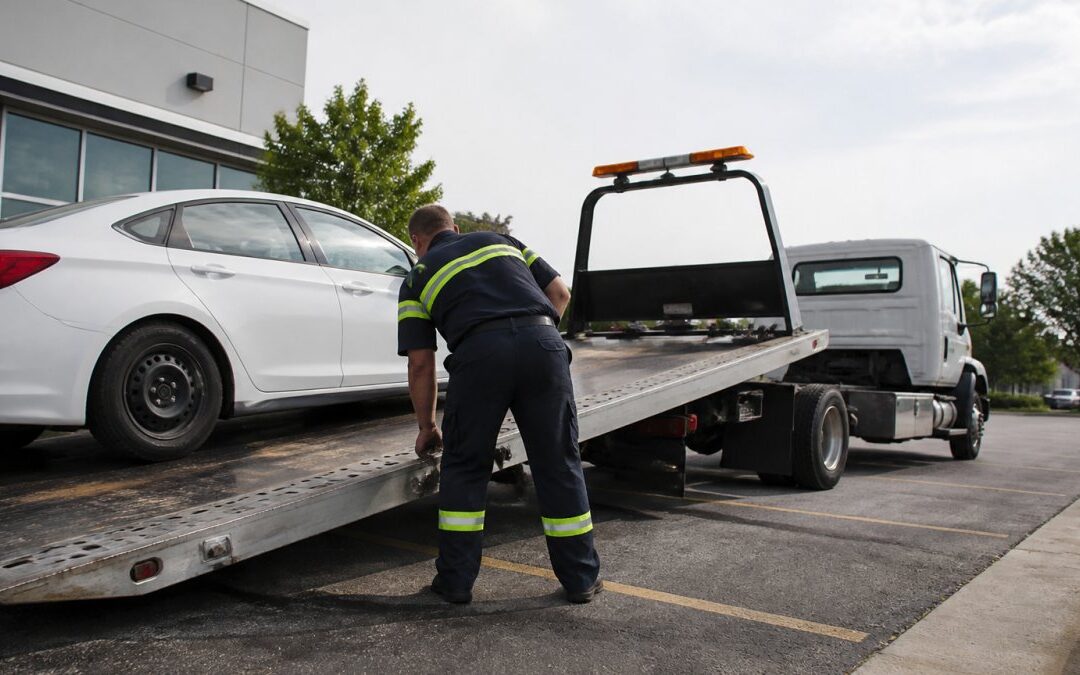
Private property towing is the removal and impoundment of vehicles parked illegally or abandoned on commercial property without the owner’s permission.
Unauthorized vehicles consume valuable spaces, create liability concerns, and signal poor lot management. Without enforcement, a property becomes a de facto free parking zone; private property towing protects paying tenants and customers.
Commercial properties need reliable enforcement partners. Whether you manage a small retail lot or a large mixed-use property, private property towing requires clear compliance steps, proper signage, and a vetted provider.
Private Property Towing Laws and Compliance Requirements
Private property towing is governed by state law, often with county or municipal ordinances layered on top. There is no single federal towing statute, so compliance falls on the property owner or manager, and rules differ sharply by jurisdiction. Before you authorize a single tow, build a written compliance file answering the questions below, it decides whether a tow holds up if challenged.
Towing rules change at the state and local level, and some cities layer additional permit, signage, or rate-cap requirements on top of state law. Confirm every item below against your current state statute and your city or county ordinance before enforcement begins, and re-check annually.
1. Signage and notice
- Confirm minimum sign size, letter height, contrast, and reflectivity requirements.
- Confirm required content: the towing warning, the towing company or property manager’s name and phone number, enforcement hours, and any permit or registration number.
- Confirm placement rules: signs at every vehicle entrance, at restricted-area boundaries, and visible from the spaces where required.
- Keep dated photos of every sign at installation and after replacement.
2. Written authorization
- Identify in writing who may request a tow: the owner, property manager, or named agent, many jurisdictions bar authorization from tenants or random employees.
- Keep a signed standing authorization letter or service agreement naming the individuals empowered to call.
- Require the caller to log the date, time, vehicle description, plate, location, and specific violation for every tow.
3. Parking rules and posting
- Post the rules being enforced, not just a generic “violators will be towed” warning; if you tow from reserved, permit, or fire-lane spaces, say so.
- Make sure rules are enforceable: an unposted rule, or one conflicting with a recorded easement or lease, is a dispute waiting to happen.
- Check whether your jurisdiction requires a grace period, warning, or posted time limit before removal.
4. Documentation and records
- Retain the authorization log, the tow company’s incident report, and photos of the vehicle, its location, and the signage for every removal.
- Keep records at least as long as your state’s statute of limitations allows a claim, and longer if your insurer recommends it.
- Store records where they can be produced quickly if a complaint, demand letter, or small-claims filing arrives.
5. Vehicle release and fee disclosure
- Confirm the maximum towing and storage fees allowed, and whether they must be posted at the lot or disclosed at release.
- Confirm release hours and method, including weekend availability or a set time after payment.
- Confirm required payment methods and whether administrative or gate fees are capped.
6. Abandoned and disabled vehicles
- Confirm the state definition of abandonment and the notice procedure before removal.
- Confirm whether you must notify law enforcement, the registered owner, or both before towing.
- Confirm the holding period before auction and the notice that must precede the sale.
7. Insurance and licensing
- Verify the towing company’s current license and insurance certificates, and confirm coverage limits meet what your lease, lender, or insurer requires.
- Confirm it carries garagekeepers or on-hook coverage for damage during the tow, not just general auto liability.
- Keep copies on file and calendar the renewal dates.
A compliance file that answers these seven questions, with dated photos and signed authorizations, is the single best defense against a disputed tow. Build it before enforcement starts, not after the first complaint.
The Federal Trade Commission guidance on consumer protection reinforces the same principle from the consumer side: clear, upfront notice of parking and towing terms protects both the business and the vehicle owner. Treat the checklist above as the local layer that sits on top of that baseline.
Installing Private Property Towing Signs: Requirements and Placement
Proper signage is the foundation of legal private property towing enforcement.
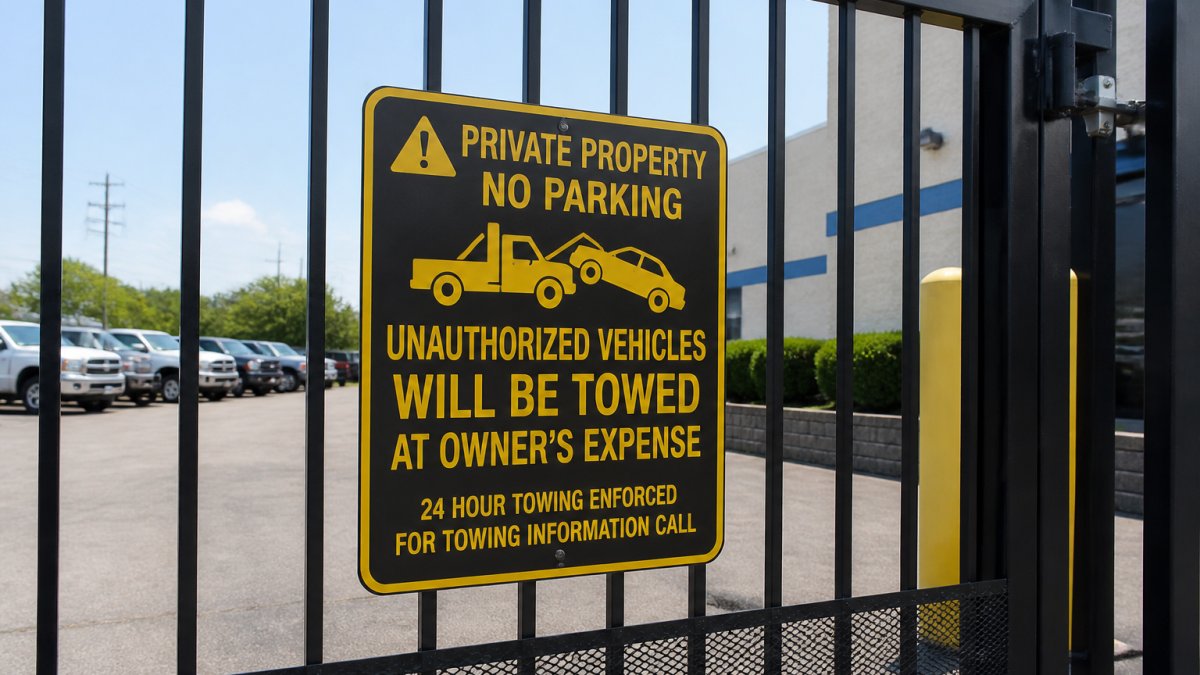
Most jurisdictions require signs visible from lot entrances stating that unauthorized vehicles will be towed and including the property manager’s contact information.
Height and placement matter legally.
Documentation is equally important. Photograph installations with date stamps and record when signs were installed, where they’re positioned, and any maintenance or replacement.
Many property managers place signs at entry points, near reserved or restricted spaces, and at lot exits. This redundancy strengthens your legal position and reduces claims of ignorance.
Authorizing a Tow: Who Can Make the Decision and How
Not everyone working at a property can authorize a tow.
Establish a clear chain of command before towing becomes necessary.
Document the authorization each time. When you call a towing company, provide your name, role, property address, the vehicle’s location and description, and the specific violation.
This documentation protects your business if the owner disputes the removal and helps your provider defend its actions, showing the tow was authorized by someone with legitimate authority and that proper procedures were followed.
Handling Abandoned Vehicle Towing for Commercial Properties
Abandoned vehicles present a unique challenge for commercial properties. A vehicle left for weeks or months signals neglect and creates liability. State law typically defines abandonment, often as a vehicle left 5-10 days without movement or visible occupancy.
Before towing an abandoned vehicle, follow your state’s notification procedures.
Document the abandoned vehicle’s condition before towing: photograph it, note its location, and record the date you first observed it. If your state requires notice, photograph the notice you posted.
Abandoned vehicle towing often involves longer storage periods, which increases liability.
Selecting and Contracting Commercial Property Towing Services
Choosing a towing provider is a contract decision as much as an operational one. The provider enforces your parking policy in your name, so the agreement determines who carries the risk when a tow is disputed, who pays for a mistaken removal, and how quickly you can exit. Compare providers on the terms below, not just response time.
The three common service models
Most commercial property towing arrangements fall into one of three structures, each shifting cost and control differently.
| Model | How it works | What the business typically pays | Trade-offs |
|---|---|---|---|
| Fee-for-service (per-tow) | The provider charges the vehicle owner the tow and storage fees allowed by law; the business may pay a call-out or patrol fee. | Often $0 to the business for owner-paid tows, plus any patrol or standby fee | Cheapest upfront, but the provider’s revenue depends on volume, which can create an incentive to tow aggressively |
| Contracted patrol / retainer | The business pays a monthly or annual fee for scheduled patrols, signage, and enforcement. | A recurring fee, typically quoted monthly | Predictable cost and calmer enforcement, but you pay whether or not tows happen |
| Hybrid | A retainer covers patrols and signage, and per-tow fees apply only when a vehicle is actually removed. | Monthly base plus per-tow charges | Balances cost and control, but the contract is more complex to compare |
Ask every provider to quote in writing under all three models so you can see the real cost of each. A “free” towing program is rarely free once you account for patrol fees, signage charges, and buried liability terms.
Contract terms to negotiate
- Fee schedule. Require an itemized schedule covering tow, storage (per day), after-hours release, administrative, gate, and heavy-duty charges, and confirm fees comply with state or local caps.
- Authorization scope. Spell out who may call, what violations trigger a tow, and whether the provider may patrol and tow on its own initiative or only on your call.
- Response-time commitment. Put a target arrival time in the contract and state what happens if it is missed.
- Liability and indemnification. Confirm on-hook or garagekeepers coverage for damage during the tow, and who defends and pays if a vehicle owner sues over a tow performed at your request.
- Mistaken-tow responsibility. State clearly who bears the cost when a vehicle is towed in error, including refunding the owner’s fees.
- Insurance certificates. Require current certificates naming your business as an additional insured where your lease or insurer requires it.
- Term and cancellation. Negotiate a cancellation right with reasonable notice, and confirm whether provider-installed signage or equipment must be bought out or returned if you switch.
- Records and reporting. Require an incident report and photos for every tow, plus a monthly summary of tows, response times, and complaints.
- Data and signage ownership. Confirm who owns the signs, authorization log, and tow records, and that you can obtain copies on request.
Before signing, ask the provider to walk you through a recent disputed tow from start to finish, including the records they produced. How they answer tells you more about their compliance culture than any brochure.
Vetting the provider
Verify the license and insurance directly with the issuing agency or insurer rather than relying on a photocopy. Confirm the provider knows your state’s fee caps and release rules and can explain them without hedging.
Fox Recovery provides commercial property towing with fully certified and licensed operators and flatbed equipment designed to protect high-value vehicles. Our 24/7 availability covers enforcement whenever your lot needs it, and our team can walk you through the authorization process and liability terms before you sign. Call (847) 587-6076 to discuss your property’s enforcement needs.
Managing Disputes, Liability, and Customer Relations
Even with proper procedures, disputes arise. A vehicle owner may claim the signage wasn’t visible, that they didn’t violate parking rules, or that the tow was unauthorized.
Establish a dispute resolution process before conflicts occur. Most disputes are resolved by reviewing documentation, signage photos, authorization records, and the towing company’s incident report; if the evidence supports the removal, explain your position clearly and professionally.
Some disputes escalate to small claims court or regulatory complaints, which is why documentation is critical.
Liability extends beyond individual disputes.
Communication with vehicle owners matters for relations and reputation. When a vehicle is towed, provide clear information about where it’s stored, how to retrieve it, and what fees apply.
Consider a warning system before towing. For first-time violations, leave a notice explaining the parking rule and the consequences of repeated violations.
Conclusion
Private property towing is a powerful tool for managing commercial parking, but it requires careful execution. Proper signage, clear authorization procedures, documented compliance, and a reliable towing provider form the foundation of effective enforcement. Skipping steps or working with unprofessional providers creates liability and disputes that undermine your parking policy.
Fox Recovery brings fully certified operators and 24/7 availability to your commercial property towing needs. Whether you’re enforcing parking rules for the first time or scaling up, our team delivers prompt, professional service backed by state-of-the-art equipment and rigorous procedures.
Frequently Asked Questions
Can a business tow a car from its private property without permission?
Yes, a business can authorize private property towing for unauthorized or illegally parked vehicles on its property, but only if proper notice is given. Most states require clearly visible signage warning that unauthorized vehicles will be towed at owner’s expense. The property owner or authorized manager must contact the towing provider and provide authorization. Without proper signage and authorization procedures, the business may face liability for wrongful towing or damage to the vehicle.
What information must private property towing signs include?
Towing signs must include the property owner’s or manager’s name and phone number, the towing company’s name and phone number, the specific parking restrictions, and a statement that unauthorized vehicles will be towed at the owner’s expense. Signs should be placed at all entrances and visible from the parking area. State and local regulations vary, so verify requirements in your jurisdiction before installation.
How long can a vehicle sit abandoned on commercial property before it can be towed?
Most states allow towing of abandoned vehicles after 5-7 days of continuous parking without permission, but this varies by jurisdiction. Some states require written notice to the vehicle owner before towing. Check your state’s abandonment statute and local ordinances for exact timelines and notification requirements. Documenting the vehicle’s presence with photos and dates protects your business in case of disputes over whether the vehicle was truly abandoned.
What should a business look for when choosing a commercial property towing services provider?
Verify that the towing provider is fully licensed and certified in your state and holds appropriate insurance coverage. Confirm they offer 24-hour availability and have experience with your property type and vehicle sizes. Request a written service agreement outlining response times, authorization procedures, billing, and liability protections. Check references from other businesses using their services.