
Table of Contents
- Barnetts Towing vs Guardian Fleet: Service Capabilities Compared
- Heavy-Duty Towing Equipment and Specialization
- Standard Heavy-Duty Towing Rates and Pricing Factors
- Heavy-Duty Towing Cost Factors: What Affects Your Quote
- Towing Company Service Areas and Dispatch Availability
- Questions to Ask a Towing Company Before You Commit
- Which Provider Should You Choose?
- Frequently Asked Questions
Last Updated: October 12, 2026
Barnetts Towing vs Guardian Fleet: Service Capabilities Compared
When your fleet breaks down or faces an accident, you need a towing company that understands the stakes. Barnetts Towing vs Guardian Fleet represents a choice between two regional operators, each claiming reliability and expertise. But what actually separates them? The answer lies in their service capabilities, equipment, response times, and how they handle the specific demands of heavy-duty recovery.
At Fox Recovery, we understand what fleet managers and vehicle owners actually need from a towing partner. It’s not just about showing up, it’s about showing up with the right equipment, the right expertise, and the commitment to protect your vehicle. This guide breaks down the real differences between these providers so you can make an informed decision for your operation.
Both companies serve the regional market, but their approaches differ in meaningful ways. Understanding those differences helps you avoid costly mistakes when you’re under pressure and need immediate assistance.
Heavy-Duty Towing Equipment and Specialization
The equipment a towing company deploys determines whether your vehicle arrives safely or arrives damaged. Heavy-duty towing isn’t a one-size-fits-all operation. A wrecker designed for light-duty work will fail catastrophically when tasked with recovering a loaded commercial truck.
Barnetts Towing operates with traditional heavy-duty wreckers and rotators, equipment that’s proven reliable for decades. Guardian Fleet emphasizes modern recovery systems with advanced winching capabilities.
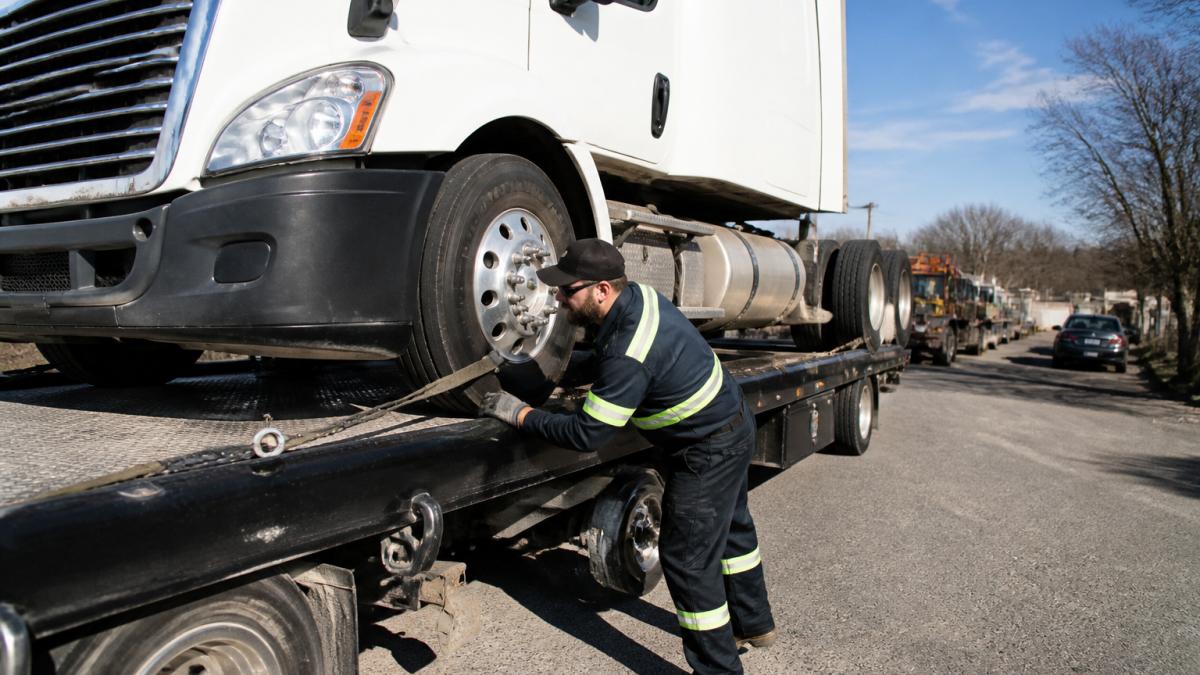
Fox Recovery operates state-of-the-art 19-foot and 21-foot flatbeds. Our fully certified and licensed operators understand the difference between towing a vehicle and transporting it safely.
When evaluating either provider, ask specifically about their equipment maintenance schedule, the age of their fleet, and whether they carry specialty gear for accident recovery, vehicle extrication, and equipment transport.
Standard Heavy-Duty Towing Rates and Pricing Factors
Cost matters, but transparent pricing matters more. The problem with most towing quotes isn’t the number, it’s that the number changes between the phone call and the invoice. Fleet managers consistently report the same pattern: a base rate quoted over the phone, then add-ons that appear only at billing. Understanding the anatomy of a heavy-duty towing invoice is the only way to compare Barnetts Towing, Guardian Fleet, or any other provider on equal footing.
The Line Items That Actually Drive Your Bill
A heavy-duty towing invoice is rarely one number. It’s a stack of line items, and each one is negotiable in the sense that you can ask about it before you commit:
- Hook-up or winching fee, the flat charge to attach and begin recovery. This is the base rate most dispatchers quote first.
- Per-mile mileage, typically charged one way, from the recovery point to the destination, though some operators charge round-trip. Always confirm which.
- Heavy-duty surcharge, a tiered premium that kicks in above a certain gross vehicle weight. A Class 8 tractor is not priced like a box truck.
- Recovery labor, hourly charges for winching, uprighting, or extrication beyond a simple hook-and-pull. This is where ditch and rollover jobs diverge sharply from roadside breakdowns.
- After-hours and holiday premium, nights, weekends, and holidays usually carry a multiplier on the base rate.
- Standby time, if your driver or load isn’t ready when the wrecker arrives, the clock can start running.
- Fuel surcharge, a variable add-on tied to diesel prices, common on longer hauls.
- Storage, daily fees if the vehicle sits at the tow yard before you retrieve it.
Neither Barnetts Towing nor Guardian Fleet publishes a fixed rate card for heavy recovery, and that’s normal, every recovery is different. What separates a trustworthy operator is whether they’ll walk you through each line item before dispatch.
How to Compare Quotes Apples-to-Apples
When you request quotes, ask each provider to itemize the same way. A quote that says “$X to tow” is not comparable to one that breaks out hook-up, mileage, and labor. Ask specifically:
- Is mileage charged one way or round trip?
- What’s the weight threshold that triggers the heavy-duty surcharge?
- Is there a minimum billable time, and what’s the hourly rate after that?
- Are after-hours rates a flat premium or a multiplier?
- Does the quote include fuel surcharge and storage, or are those billed separately?
A provider that answers these in writing is giving you a real number. A provider that deflects is giving you a starting point for a dispute.
Request an itemized estimate in writing before you authorize dispatch. If a company won’t put the line items in an email or text, treat the phone quote as an opening bid, not a final price. Get at least two itemized quotes for any non-emergency heavy recovery so you can see where the market sits.
For scheduled fleet work, ask about volume or retainer pricing, which most operators reserve for accounts with recurring needs rather than one-off calls.
Heavy-Duty Towing Cost Factors: What Affects Your Quote
Distance drives the largest portion of towing costs. A 50-mile recovery costs substantially more than a 10-mile one, and both operators factor mileage into their quotes. Time of day also matters, after-hours and holiday service typically carries premiums.
Vehicle weight and complexity are critical variables. Recovering a loaded tractor-trailer from a ditch requires different techniques and equipment than recovering an empty flatbed. Accident recovery, extracting a vehicle from a collision scene, adds complexity and cost compared to standard mechanical breakdown assistance.
Recovery location affects pricing significantly. A roadside recovery on a highway takes minutes. A recovery from private property, a ravine, or a commercial lot may require specialized equipment and extended labor. Neither Barnetts Towing nor Guardian Fleet publishes fixed rates for these scenarios because every recovery is different.
We recommend getting multiple quotes for any major recovery to understand market rates and ensure you’re not overpaying for standard service.
Always ask whether the quoted price includes dispatch fees, fuel surcharges, or equipment charges. Some companies list a base rate but add significant fees at checkout. Request an itemized estimate before committing.
Towing Company Service Areas and Dispatch Availability
Service area defines whether a company can help you when you need it, but “we serve the region” is not a coverage map. What actually determines whether a wrecker reaches you in time is fleet density, dispatch model, and how the operator prioritizes calls. Barnetts Towing and Guardian Fleet both describe regional coverage, but neither publishes a response-time commitment, and that’s the number that matters when your tractor is blocking a lane.
What “Coverage” Really Means
A service area is only as good as the number of trucks stationed inside it. Two operators can claim the same territory and deliver wildly different response times depending on:
- Fleet density, how many wreckers and rotators are positioned within your radius at any given hour.
- Dispatch model, whether calls route through a central dispatcher, a local yard, or a third-party answering service. A central dispatcher with live truck tracking can commit to a window; an answering service usually can’t.
- Priority rules, police-requested accident clearances typically jump ahead of private calls. If you’re a fleet account, ask whether you get priority dispatch or wait in the general queue.
- Time-of-day staffing, a company can be “24/7” on paper and still run a thin overnight crew. Ask how many operators are on shift at 2 a.m.
Questions That Expose Real Availability
Instead of asking “do you cover my area,” ask these:
- How many heavy-duty wreckers do you have stationed within 30 miles of my primary routes?
- What’s your average response time to my ZIP code, not your best-case time?
- Do fleet accounts get a dedicated dispatch line, or do we call the same number as retail customers?
- What happens if your nearest truck is already on a call, do you have a backup, or do we wait?
- Can you commit to a response window in writing for scheduled work?
A confident operator answers these with specifics. A vague answer, “we’ll get there as fast as we can”, tells you the company hasn’t measured its own performance.
“24/7 availability” and “24/7 response capability” are not the same thing. A dispatcher can answer the phone at 3 a.m. while the nearest qualified heavy-duty operator is two hours away. Confirm both the phone coverage and the truck coverage before you rely on a provider for overnight fleet support.
Fox Recovery staffs operators around the clock and maintains heavy-duty equipment ready for dispatch across our service territory. When you compare providers, put the same five questions to Barnetts Towing, Guardian Fleet, and anyone else on your shortlist, the answers, not the marketing language, will tell you which one can actually reach your fleet when it matters.
Questions to Ask a Towing Company Before You Commit
Before signing a fleet support agreement or relying on a provider for roadside assistance, get answers to these critical questions:
Certification and licensing: Are your operators fully certified and licensed to operate heavy-duty recovery equipment? Request proof. Certification matters because it signals training, ongoing education, and compliance with industry standards.
Equipment maintenance: When was your fleet last serviced? How often do you maintain your wreckers and flatbeds?
Experience with your vehicle type: Have you recovered vehicles like ours before? If you operate specialized equipment, ask for examples of similar recoveries.
Response time commitment: What’s your guaranteed response time to our location? A company unwilling to commit to a specific timeframe raises red flags.
Insurance and liability: What coverage do you carry? How do you handle claims if a vehicle is damaged during recovery?
Fleet support pricing: Do you offer volume discounts or preferred rates for regular fleet support? What does a monthly retainer include?
Dispatch process: How do I request service?
Care and custody protocols: How do you ensure vehicle security from the moment you arrive until handoff? What documentation do you provide?
These questions separate companies that take their work seriously from those that simply show up with a tow truck.
If a towing company refuses to answer these questions or provides vague responses, that’s a signal to keep looking. When you’re in crisis mode, you won’t have time to negotiate. Get clarity now.
Which Provider Should You Choose?
Comparing Barnetts Towing vs Guardian Fleet requires matching their capabilities against your actual needs. Both operate in the regional market and handle heavy-duty recovery.
| Factor | Barnetts Towing | Guardian Fleet | Fox Recovery |
|---|---|---|---|
| 24/7 Availability | Regional coverage | Regional coverage | Yes, 365 days/year |
| Equipment Type | Traditional wreckers/rotators | Modern recovery systems | State-of-the-art flatbeds |
| Specialty Focus | General heavy-duty recovery | Advanced winching capability | High-value vehicle protection |
| Response Commitment | Call for details | Call for details | Prompt service guarantee |
| Fleet Support | Available | Available | Dedicated support |
If your priority is proven, traditional heavy-duty recovery with established regional presence, Barnetts Towing delivers that. If you prefer modern recovery systems with advanced capability, Guardian Fleet offers that approach.
If you operate high-value vehicles, require consistent 24/7 availability, or need a partner committed to safe vehicle handling, Fox Recovery provides those capabilities with fully certified operators and state-of-the-art flatbed equipment.
The real differentiator isn’t brand loyalty, it’s matching the provider’s actual capabilities to your actual needs. Call the companies that interest you. Ask the questions outlined above. Request references from fleet managers in your industry.
When a fleet vehicle breaks down or faces an accident, you need a recovery partner who understands the pressure you’re under. Whether you need immediate roadside assistance or scheduled fleet support, we’re the dependable problem-solving partner you can trust.
Frequently Asked Questions
What should I ask a towing company before booking heavy-duty service?
Ask about licensing and certifications, equipment specifications (flatbed size, weight capacity), response time guarantees, coverage area and dispatch availability, insurance and liability coverage, pricing structure and any hidden fees, experience with your vehicle type, and availability 24/7. Request references from fleet clients or commercial accounts. Verify they handle specialty recovery if you need it.
What factors affect heavy-duty towing cost?
Distance traveled, vehicle weight and type, recovery complexity, time of day or emergency status, equipment required, and local market rates all influence pricing. Ask your provider to itemize labor, mileage, equipment, and any additional recovery charges before service begins.
How do I know if a towing company covers my service area?
Call directly and confirm they operate in your specific location and on the highways you use most. Ask about dispatch response times and whether they have satellite locations or partner networks nearby. For fleet support, verify they can handle multiple vehicles simultaneously and maintain consistent coverage during peak hours.
What makes heavy-duty towing different from standard towing?
Heavy-duty towing requires specialized flatbed equipment, operator certification, and experience with commercial vehicles like buses, tractor-trailers, and medium-duty trucks. These vehicles demand careful drivetrain handling, proper weight distribution, and compliance with DOT regulations. Standard tow trucks cannot safely handle these loads, so specialized providers are essential for fleet operations.