
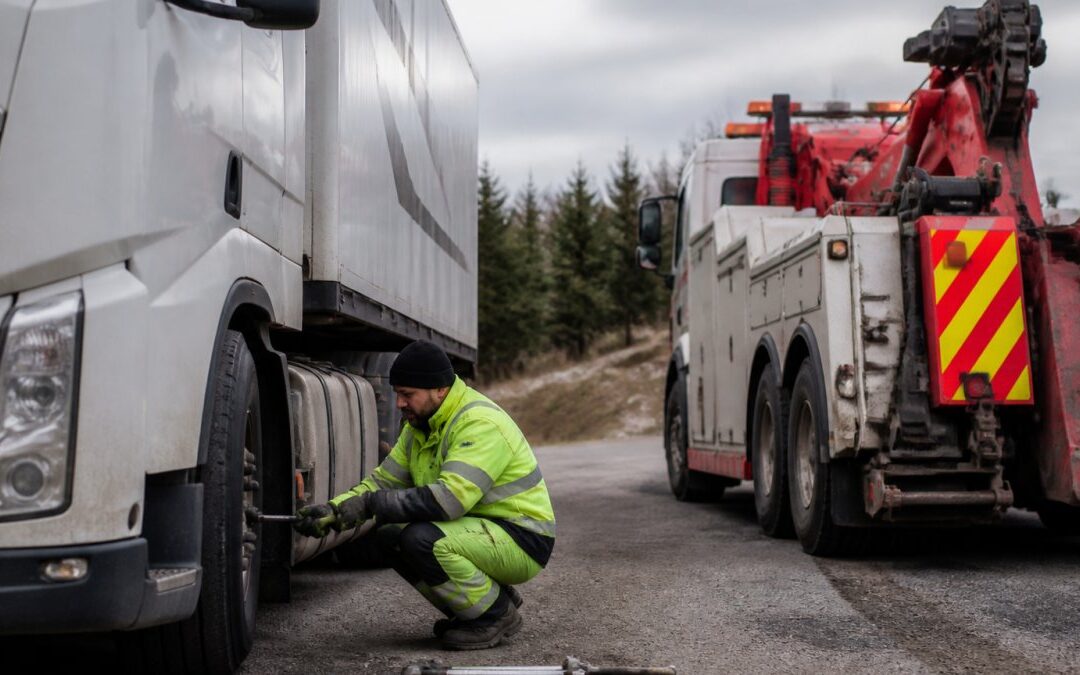
Table of Contents
- What Emergency Roadside Assistance for Trucks Includes
- Types of Truck Repair Services Available Through Roadside Assistance
- Emergency Roadside Assistance Cost for Semi-Trucks
- Commercial Truck Breakdown Assistance: Response Times and Coverage
- 24/7 Emergency Dispatch and How to Request Assistance
- Vetting Mobile Mechanics and Verifying Certification
- Safety Protocols for Stranded Drivers During Breakdowns
- Insurance and Warranty Coverage for Roadside Assistance
- Frequently Asked Questions
Last Updated: October 1, 2026
What Emergency Roadside Assistance for Trucks Includes
Emergency roadside assistance for trucks includes mobile repair, fuel delivery, battery service, lockout assistance, and recovery from ditches or accident scenes, going far beyond basic towing.
The best providers operate 24/7 with rapid response times and fully certified technicians. You’re paying for expertise and equipment, not just a tow.
True emergency roadside assistance for trucks means having access to trained technicians who understand the complexity of commercial vehicles, not just a winch operator who can hook up a cable.
Fox Recovery’s 24/7 emergency roadside assistance for trucks prioritizes on-site solutions. Our fully certified operators arrive, resolving many breakdowns without towing.
Types of Truck Repair Services Available Through Roadside Assistance
The best emergency roadside assistance for trucks includes several distinct service categories. Understanding what’s available helps you choose a provider that matches your fleet’s needs.
Mobile Truck Repair Services on Site
Mobile truck repair is often a fast, cost-effective resolution. A technician can arrive with equipment and parts, handling various repairs on location.
A 30-minute on-site repair beats hours of downtime. For fleet managers, this translates directly to reduced costs and maintained schedules.
Towing and Heavy Equipment Recovery
When on-site repair isn’t possible, commercial truck towing requires specialized flatbed equipment, weight distribution expertise, and knowledge of cargo and drivetrain handling.
Heavy equipment recovery for ditches, embankments, accident scenes, or mud requires winches, rigging equipment, and trained operators. Improper technique can cause thousands in additional damage.
Fox Recovery operates 19-foot and 21-foot flatbeds for medium and heavy-duty trucks, buses, and tractor-trailers. Our fully certified operators understand weight distribution, brake systems, and commercial vehicle complexity.
Emergency Roadside Assistance Cost for Semi-Trucks
Pricing for emergency roadside assistance for trucks depends on distance, time of day, repair complexity, and contract type. Understanding typical costs helps fleet managers budget and compare providers.
Typical Service Call Fees
Base service call fees typically range from $75 to $150 for standard hours, with after-hours premiums adding 25 to 50 percent. Fees are often waived if you proceed with towing or repair.
Mobile Repair Labor Rates
Mobile repair rates typically range from $85 to $150 per hour. Most repairs take 0.5 to 2 hours; battery or alternator work takes about 1 hour, while air brake diagnostics may extend to 2-3 hours. Parts are billed at cost plus 15-25 percent markup.
Towing and Recovery Charges
After-hours towing includes a 25-75 percent surcharge. Hazmat or oversized load towing commands premium pricing for regulatory compliance.
Fleet Contract Pricing Models
Fleet contracts offer tiered pricing through volume commitment.
Request itemized pricing from any provider before signing a contract. Transparent pricing should show base fees, hourly labor rates, towing rates per mile, and recovery surcharges separately.
Cost Comparison: On-Site Repair vs. Towing
Prioritize providers that resolve 40-60 percent of breakdowns on-site, directly reducing downtime and maintenance costs.
Insurance and Warranty Coverage Impact on Out-of-Pocket Costs
Many commercial vehicle insurance policies include roadside assistance coverage, though limits and exclusions vary. Review your policy to understand what’s covered. Manufacturer warranties sometimes include roadside assistance with limitations on approved facilities or mileage.
For fleet operations, a direct contract with Fox Recovery can provide reliable support.
Transparent pricing upfront, including base fees, mileage charges, and recovery surcharges, allows fleet managers to budget accurately and compare providers fairly.
Contact Fox Recovery directly for a quote tailored to your fleet’s needs. Call (847) 587-6076 for immediate assistance or a fleet support consultation.
Commercial Truck Breakdown Assistance: Response Times and Coverage
Response time matters enormously, every hour of downtime represents lost revenue and missed deliveries. The best emergency roadside assistance for trucks guarantees response times measured in minutes.
Coverage area determines whether a provider can reach you. Local providers with 24/7 availability typically outperform national networks routing calls through distant dispatch centers.
Fox Recovery operates 24/7/365 with immediate dispatch. Our local expertise means certified operators arrive quickly.
24/7 Emergency Dispatch and How to Request Assistance
When a breakdown happens, speed matters. The process for requesting emergency roadside assistance for trucks should be simple and immediate.
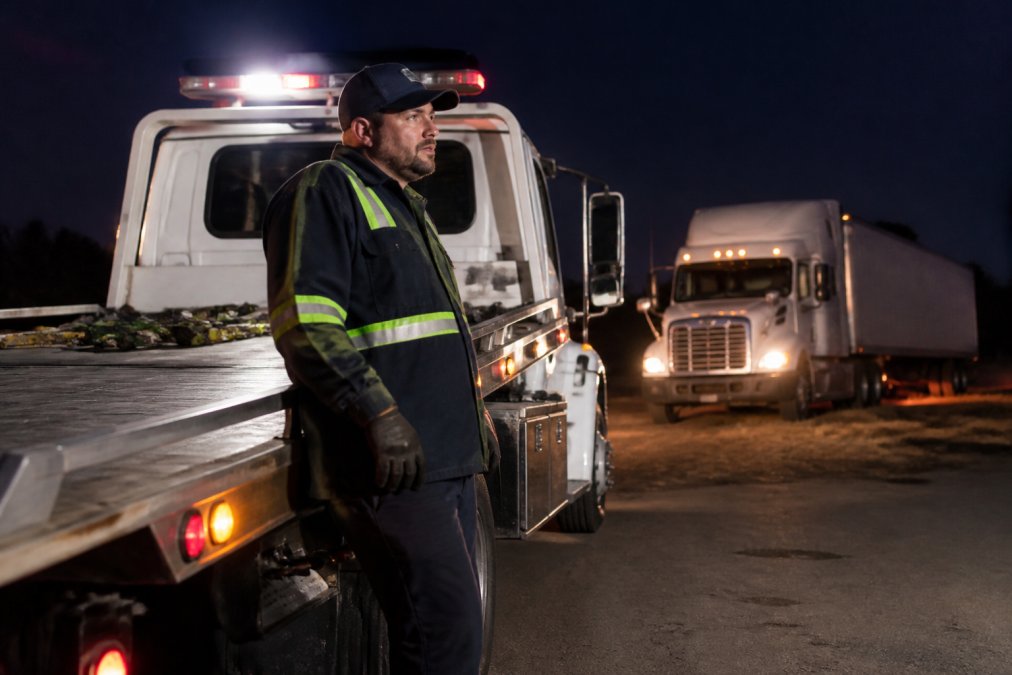
The fastest way to get help:
- Call Fox Recovery directly at (847) 587-6076
- Provide your location (mile marker, highway name, or GPS coordinates work best)
- Describe the issue: breakdown type, vehicle condition, whether it’s safe to remain in the cab
- Confirm you’re in our service area
- Dispatch confirms arrival time, typically within 30 minutes for our coverage zone
Vetting Mobile Mechanics and Verifying Certification
Not all roadside assistance providers are equally qualified. The difference between a certified technician and an untrained operator shows in repair quality and vehicle safety.
Safety Protocols for Stranded Drivers During Breakdowns
A breakdown on a highway creates an immediately dangerous situation. Professional emergency roadside assistance for trucks includes safety protocols that protect everyone on scene.
Immediate Actions: First 60 Seconds
When a breakdown occurs:
- Activate hazard lights immediately to alert traffic within 500-1,000 feet.
- Move the vehicle off the roadway if safe. If it cannot be moved, remain inside with hazard lights on.
- Exit only if you can safely reach the shoulder. Do not stand between the vehicle and traffic.
- Call for help immediately with mile markers, highway name, or GPS coordinates.
Hazard Placement and Visibility Standards
Proper scene setup prevents secondary accidents. Place warning devices at 10 feet, 110 feet, and 310 feet behind the vehicle, following FMCSA guidelines that provide 4 seconds of warning at highway speeds. On curves or hills, place devices further back.
Driver Positioning and Communication
While waiting: remain inside the locked vehicle with the engine off; keep windows closed; do not stand on the shoulder or between the vehicle and traffic; communicate clearly with the tow operator about vehicle condition and hazards.
Scene Management During Towing
Professional tow operators position their truck with emergency lights activated, communicate before rigging, and maintain awareness of passing traffic.
If a tow operator arrives without activating hazard lights, positioning warning devices, or wearing high-visibility gear, this is a sign of inadequate safety training.
Special Scenarios: Hazmat, Cargo, and Accident Scenes
For hazmat cargo, inform dispatch immediately, do not move if you suspect a leak. For unsecured cargo, inform the tow operator before rigging. For accident scenes, contact law enforcement first and do not move the vehicle unless it creates an immediate hazard.
Pre-Breakdown Safety Preparation
Before a breakdown occurs, fleet managers and drivers should:
- Ensure all vehicles carry reflective warning triangles or LED warning lights that meet FMCSA standards
- Provide drivers with high-visibility vests stored in an accessible location (cab or door pocket)
- Brief drivers on the specific location of warning devices and how to deploy them
- Establish a communication protocol: which number to call, what information to provide, and how to confirm help is on the way
- Review hazard placement distances and scene safety procedures during driver training
Include scene safety protocols in your fleet’s driver training program. Drivers who understand hazard placement, visibility standards, and communication procedures respond more effectively during actual breakdowns, reducing the risk of secondary accidents or injuries.
Professional emergency roadside assistance for trucks providers train operators on scene safety and proper communication with stranded drivers. When you partner with Fox Recovery, our fully certified operators arrive prepared with proper warning devices, high-visibility gear, and scene management expertise to protect your driver and other motorists while your vehicle is recovered safely.
Insurance and Warranty Coverage for Roadside Assistance
Insurance-provided roadside assistance is often a secondary benefit with limited scope. For fleet vehicles, a dedicated emergency roadside assistance for trucks contract provides better coverage and faster response.
When evaluating coverage options, understand exactly what’s included: which services, which vehicles, which geographic areas, and what response time guarantees exist. Gaps in coverage leave your fleet vulnerable during critical breakdowns.
Frequently Asked Questions
What services are included in emergency roadside assistance for heavy-duty trucks?
Emergency roadside assistance for heavy-duty trucks typically covers battery jump starts, fuel delivery, lockout services, and towing to a repair facility. Many providers also offer mobile repair services that can fix common issues on-site. The specific services depend on your plan and the provider, so confirm coverage details before a breakdown occurs.
How quickly can emergency roadside assistance arrive after I call?
Response times vary by location and provider availability. When you call for emergency roadside assistance for trucks, provide your exact location, vehicle details, and the nature of the breakdown so dispatchers can send the right equipment and estimate arrival time accurately.
Is emergency roadside assistance covered by commercial truck insurance?
Many commercial truck insurance policies include roadside assistance coverage, but it varies by provider and plan. Some policies cover only towing, while others include mobile repair, fuel delivery, and lockout services. Review your policy documents or contact your insurance agent to confirm what emergency roadside assistance for trucks is included. If not covered, you can purchase standalone roadside assistance plans.
How do I verify a roadside assistance provider is certified and licensed?
Ask the provider for proof of licensing and certification before using their services. Fully certified and licensed operators should carry credentials from state regulatory bodies and industry organizations. Request documentation of their qualifications, especially if they handle high-value or specialty vehicles. Check online reviews and ask for references from fleet managers or dealerships they’ve worked with to confirm their reliability and expertise.
What’s the difference between mobile truck repair services and towing?
Mobile truck repair services send a technician to your location to diagnose and fix mechanical issues on-site, getting you back on the road quickly. Towing removes your vehicle to a repair facility when on-site fixes aren’t possible. Mobile truck repair services can reduce downtime, while towing is necessary for major mechanical failures, accidents, or when the vehicle cannot be safely operated.
What information should I have ready when calling for emergency roadside assistance?
Have your vehicle identification number (VIN), current location, description of the problem, and any relevant policy or membership numbers ready. For commercial vehicles, provide the fleet identification if applicable. The more details you share about the breakdown, the better the dispatcher can prepare the right equipment and technician. Also mention if your vehicle is blocking traffic or if there are safety concerns that require immediate attention.