
Last Updated: October 30, 2026
Quick Summary
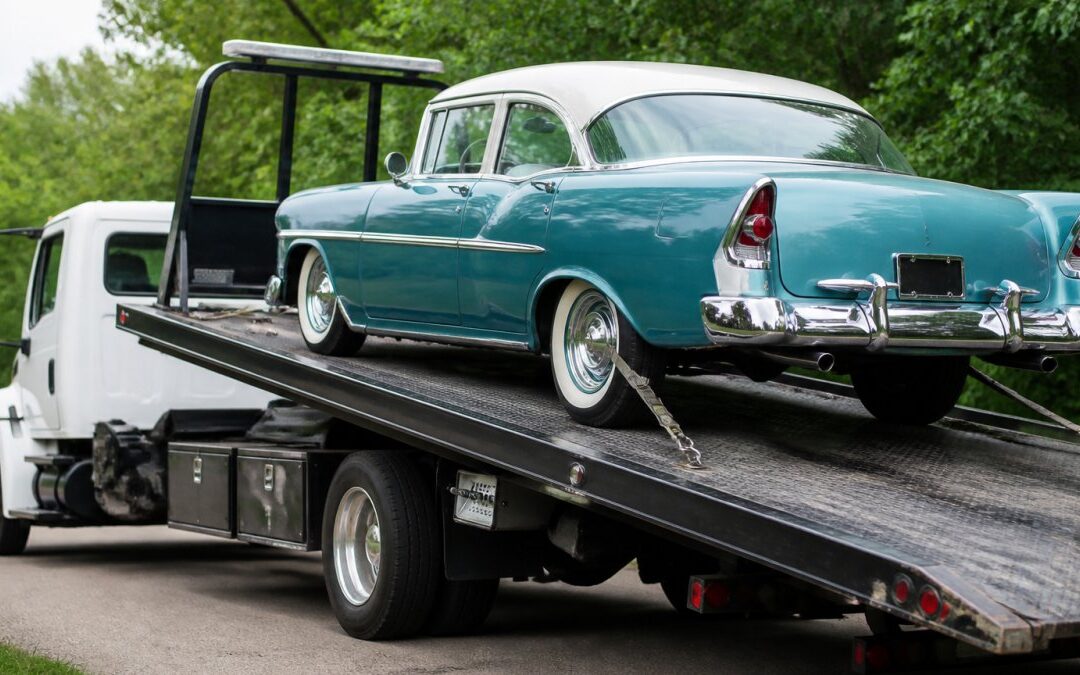
Yes, flatbed towing is worth it for vintage cars because it carries all four wheels on a level deck with zero road contact, avoiding frame stress, undercarriage scrapes, and paint damage that standard wheel-lift tows can cause. The flatbed premium is best judged against the cost of the damage it prevents, and for most vintage cars that exposure outweighs the premium.
- A wheel-lift raises two wheels and lets the others roll, keeping steering live and loading the car’s own bearings.
- Wheel straps loop over the tires, which are built to take load, while chains on frame or suspension can crush lines and mark metal.
- A 19 ft. or 21 ft. deck with a tilting bed and extended ramps is the baseline for a low-clearance car.
- Photograph all four corners, note existing flaws in writing, and keep the signed condition report with your vehicle paperwork.
- Non-running and unusually low vintage cars need flatbed towing most, since the winch loads a dead car without turning the drivetrain.
Table of Contents
- What Vintage Car Owners Risk Without Flatbed Towing
- Flatbed vs. Wheel-Lift Towing: How the Equipment Changes the Outcome
- What Flatbed Towing Cost Really Buys for a Classic Car
- How to Choose a Classic Car Towing Company
- Insurance, Liability, and Claims Documentation Before the Truck Arrives
- Your Classic Car Towing Checklist for Pickup and Delivery
- Non-Running, Modified, and Unusually Low Vintage Cars
- Book a Flatbed Tow for Your Vintage Car
- Frequently Asked Questions
What Vintage Car Owners Risk Without Flatbed Towing
A vintage car is not just an old vehicle. It is a set of parts that were never built to survive a modern tow. Most standard tow trucks were designed for daily drivers with plastic bumpers and forgiving ground clearance.
A standard tow lifts part of the car and drags the rest. A flatbed carries the entire car on a level deck. One method asks the vehicle to roll and steer under load.
Frame, Undercarriage, and Paint Damage From Standard Tows
The damage from a wheel-lift or hook-and-chain tow rarely shows up at the scene. It shows up weeks later.
- Frame stress: Pulling a car by its frame rails or suspension points puts load where the maker never intended it.
- Undercarriage scrapes: Low oil pans, exhaust, and crossmembers sit close to the road. Loading ramps and chains find them fast.
- Paint and trim damage: Chains and hooks contact bumpers, valances, and chrome. Original paint does not forgive a slipped hook.
Why Original Condition Drives Resale Value
Original condition is the single biggest driver of value for a classic car. Survivor cars with factory paint, matching numbers, and untouched panels command far more than restored ones. Every scratch and bent bracket chips away at that.
Transport is one of the few places where owners can control the risk. For a deeper look, read avoiding towing damage to trucks.
Flatbed vs. Wheel-Lift Towing: How the Equipment Changes the Outcome
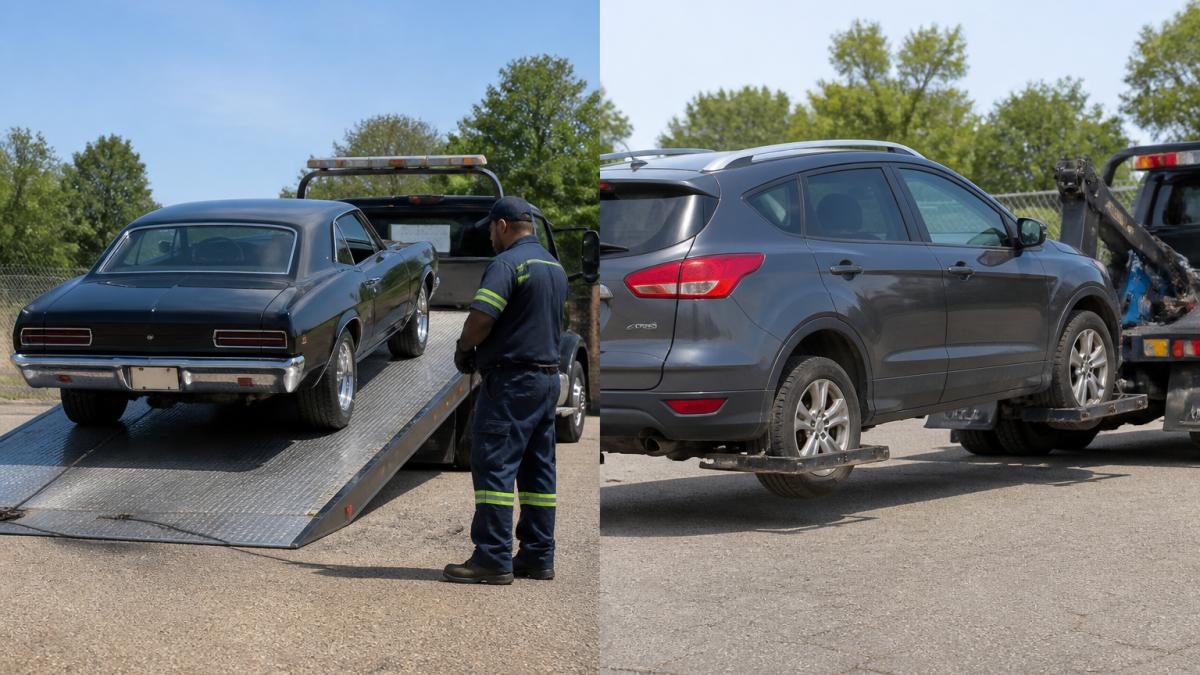
Flatbed towing and wheel-lift towing differ in one fundamental way: a flatbed carries all four wheels on a level deck, while a wheel-lift raises two wheels and lets the others roll. For a vintage car, that difference decides how much the vehicle has to work during transport.
(/2026/10/flatbed-transport-for-luxury-vehicles-a-complete-guide/), see the complete guide.
Low-Clearance Loading, Ramps, and Securement Methods
Loading is where most flatbed damage happens, and where equipment quality shows. Securement matters just as much. Wheel straps loop over the tires and hold the car by its wheels, which are built to take load. Chains hooked to the frame or suspension can crush lines and mark metal.
The two tow types differ in how much work the car has to do, and that difference matters most for a fragile classic.
| Method | How the car is carried | Key difference for a vintage car |
|---|---|---|
| Flatbed towing | All four wheels on a level deck, zero road contact | No added mileage, no rolling under load, no steering input |
| Wheel-lift towing | Two wheels raised, the others roll | Car rolls on its own bearings and steering stays live |
| Wheel straps | Loop over the tires to hold the car | Tires are built to take load |
| Chains on frame or suspension | Hooked to frame or suspension points | Can crush lines and mark metal |
What Flatbed Towing Cost Really Buys for a Classic Car
Flatbed towing typically costs more than a hook-and-chain tow, and the premium is not a single line item. It is the sum of equipment, labor, and risk transfer. Understanding what drives the number is the only way to decide whether it is worth paying.
The Cost Drivers Behind a Flatbed Quote
Most flatbed quotes are built from the same inputs. Ask a provider to break them out and you will see why two quotes for the same car can differ widely.
- Distance and time: Longer tows generally price by distance plus a hookup or winching fee. Confirm the basis with the provider.
- Vehicle condition: A non-running car needs winching, which takes longer and requires more care.
- Loading difficulty: Low clearance, wide bodywork, or modified suspension may require extra equipment or labor.
A standard tow quote and a flatbed quote are built from different inputs, so they are not directly comparable.
A Break-Even Way to Think About the Premium
The useful question is not “what does a flatbed cost?” but “what repair would a standard tow risk, and how does that compare with the premium?”
A practical pattern most classic-car owners use:
- Estimate the premium as the difference between the flatbed quote and the best standard-tow quote for the same trip.
- Estimate the exposure as the cost of the most likely damage from a standard tow: a scraped front valance, a bent exhaust, a cracked oil pan, or paint correction on a bumper. Body and paint work on a classic is rarely small, and original panels are harder to replace than to repair.
- Compare the two. When the exposure is larger than the premium, the flatbed is the cheaper option in expected terms, even though the invoice is higher.
For a daily driver with plastic bumpers and generous clearance, the exposure is low and a standard tow can be reasonable. Readers weighing that trade-off can review best practices for safe luxury vehicle shipping.
The flatbed premium is best judged against the cost of the damage it prevents, not against the price of a cheaper tow. For most vintage cars, the exposure outweighs the premium.
What the Premium Does Not Buy
A flatbed is not a guarantee. It removes the road-contact and rolling-load risks of a wheel-lift, but loading and securement still depend on the operator. Worn straps, a rushed winch, or a skipped tension check can still damage a car.
Pricing depends on distance, vehicle condition, loading requirements, and timing. For a current price or a quote for your vehicle, contact Fox Recovery directly.
How to Choose a Classic Car Towing Company
Choosing a classic car towing company comes down to proof, not promises. The questions below separate an operator who handles classics from one who simply owns a flatbed. Ask them before you book, and ask for answers in writing where you can.
Questions That Reveal Real Classic-Car Experience
- What equipment will actually arrive? Confirm a flatbed, not a wheel-lift, and ask for the deck length and whether it has low-angle ramps. A 19 ft. or 21 ft. deck with a tilting bed and extended ramps is the baseline for a low-clearance car.
- How will the car be secured? The answer should be four-point wheel strapping over the tires, not chains hooked to the frame or suspension. Ask whether they use soft straps or axle straps and whether they check tension before the truck moves.
- How do you load a non-running or very low car? A good operator describes winching at a controlled speed, using wood blocking or ramp extensions when needed, and watching the approach angle. A vague answer is a warning.
- Who is driving, and what is their experience with classics? Ask how often they handle vintage or high-value vehicles and whether the same operator loads and unloads. Experience with a modern sedan does not transfer automatically to a fragile front end.
- What insurance covers the car during loading and transit? Ask for liability coverage limits and how a claim is handled. Confirm coverage is active for the job, not just that the company “has insurance.”
- What does your condition report look like? A provider who documents the car before loading is protecting both of you. Ask to see the form and confirm you get a copy.
Red Flags During the Booking Call
- The quote is given without asking about the car’s clearance, condition, or access at pickup.
- The operator cannot confirm whether a flatbed or a wheel-lift will be sent.
- Chains are described as the standard securement method.
A reputable operator will welcome these questions. A company that resists them is telling you something before the truck ever arrives.
Skipping the condition report leaves you with no proof of pre-existing damage, and that turns a clean claim into a dispute. Confirm the report before the car moves.
At Fox Recovery, our operators are fully certified and licensed, and we run state-of-the-art 19 ft. and 21 ft. flatbeds. Before hiring any company, use this step-by-step guide to verifying towing certification.
Insurance, Liability, and Claims Documentation Before the Truck Arrives
Insurance and documentation are the parts most owners skip, and the parts that matter when something goes wrong. Before the truck arrives, ask the company about its liability coverage and how it handles a damage claim.
- Photograph the car from all four corners before loading.
- Note existing flaws in writing, including chips, scratches, and prior repairs.
- Get the coverage details in writing, not over the phone.
A reputable operator will welcome this. A company that resists a pre-tow inspection is telling you something. Watch out: skipping the condition report leaves you with no proof of pre-existing damage, and that turns a clean claim into a dispute.
Your Classic Car Towing Checklist for Pickup and Delivery
A classic car towing checklist keeps the handoff clean at both ends. Use this one every time.
- Confirm flatbed equipment and low-angle ramps
- Verify operator certification and license
- Photograph all four corners and the odometer
The pickup and delivery inspection is your last line of defense. Walk the car, compare it with your photos, and sign only when it matches.
Non-Running, Modified, and Unusually Low Vintage Cars
Non-running, modified, and unusually low vintage cars need flatbed towing more than any other vehicle. A car that will not start cannot roll onto a wheel-lift, and a modified car with altered suspension or a custom body kit may not clear standard ramps at all.
For these vehicles, the winch does the work. A flatbed winches a dead car onto the deck without asking the drivetrain to turn, which avoids loading the braking system and transmission. Owners of these cars should also review preventing drivetrain damage during towing.
Book a Flatbed Tow for Your Vintage Car
A standard tow can get the job done, but it asks your car to absorb risk that a flatbed reduces.
Fox Recovery is available 24 hours a day, 365 days a year, with fully certified and licensed operators and state-of-the-art 19 ft. and 21 ft. flatbeds for high-value vehicles. We inspect vehicles at multiple points before they move. Call (847) 587-6076 and get your classic loaded the right way.
Frequently Asked Questions
Is flatbed towing safer for vintage cars?
Yes, in most cases. A flatbed carries all four wheels on the deck, so the suspension, frame, and drivetrain take no towing load. Wheel-lift and hook-and-chain trucks lift one end and leave the rest rolling, which stresses old bushings, weak frame points, and low bumpers. For a car with original paint or a restored undercarriage, the flatbed removes the main sources of scratches, frame damage, and undercarriage damage.
How much does it cost to tow a classic car?
Flatbed towing cost depends on distance, vehicle weight, ground clearance, and whether the car runs. A short local haul usually costs more than a standard wheel-lift hookup because the equipment and loading time are greater. Ask for an itemized quote covering the hookup, per-mile rate, winching, and any after-hours charge before you agree. Confirm the total in writing so nothing is added at delivery.
What should I ask a towing company before transporting a classic car?
Ask four things: whether they run flatbeds long enough for your wheelbase, how they secure cars (wheel straps versus chains over the frame), whether operators are certified and licensed, and what insurance covers damage in transit. Also ask if they have loaded a low-clearance vehicle before and whether they carry low-angle ramps. A provider that answers these plainly is usually the one to book.
Can a vintage car be damaged by a wheel-lift tow?
It can. Wheel-lift and hook-and-chain towing lift the front or rear wheels and let the others roll, which puts load on the frame, suspension, and steering. On a vintage car, that can crack old frame welds, scrape a low air dam, or mar original paint near the straps. Non-running cars with locked drivetrains are worse, because dragging them can damage the transmission and braking system.
Is professional flatbed towing worth it for vintage cars? For anything with original paint, low clearance, or real value, yes. The premium is small next to the damage it prevents. Get started with Fox Recovery and move your classic with the care it has earned.
