
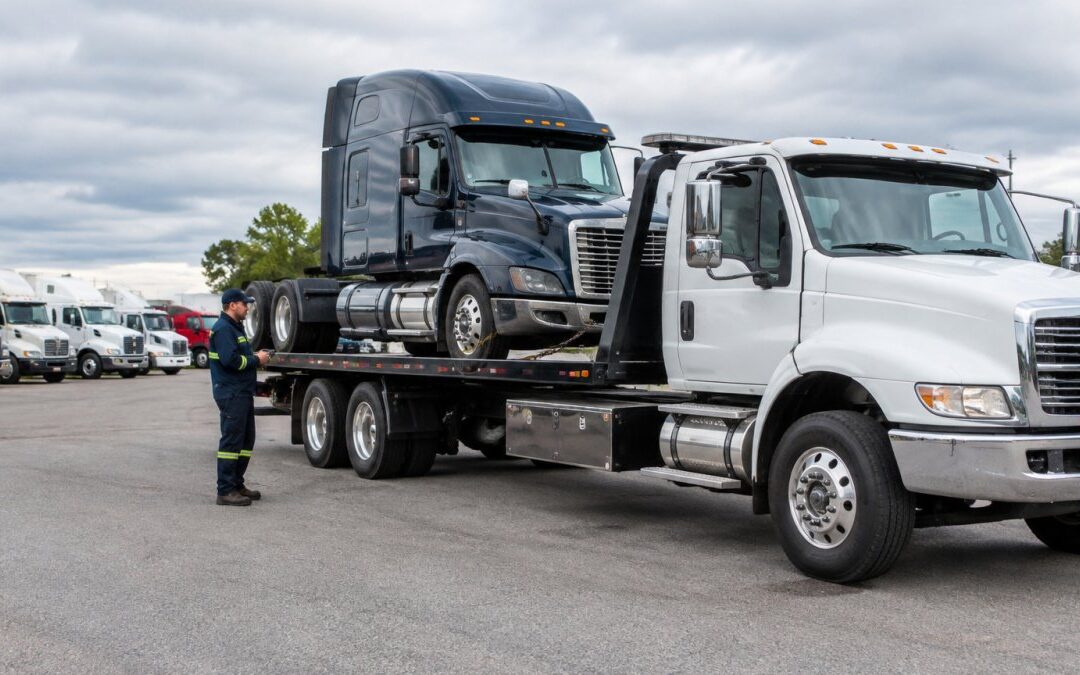
Last Updated: November 5, 2026
Quick Summary
Choosing heavy-duty towing for small fleets means lining up a dedicated partner before a breakdown, then vetting it on three points: licensing and insurance, written response terms, and equipment rated for your heaviest vehicle. Score candidates on paper and compare quotes built from the same fee categories.
- Ask for a certificate of insurance and verify the limit against your heaviest unit and its cargo.
- Put dispatch commitments and an escalation contact into a written service-level agreement.
- Require every provider to quote against the same fee categories so totals are comparable.
- Score providers 1 to 5 per criterion, weight the rows, and total them on paper.
- Avoid contracts with minimum call volumes a small fleet cannot meet.
Table of Contents
- Why Small Fleets Need a Dedicated Heavy-Duty Towing Partner
- How to Choose a Heavy-Duty Towing Company for Your Fleet
- Heavy-Duty Towing Equipment: What Your Provider Must Have
- Heavy-Duty Truck Towing Cost: Budgeting for Small Fleets
- Fleet Towing Response Time: Setting Realistic Expectations
- Comparing Providers: A Scoring Framework for Small Fleets
- Common Mistakes Small Fleets Make When Hiring Towing Services
- Next Step: Request a Fleet Towing Quote from Fox Recovery
- Frequently Asked Questions
Why Small Fleets Need a Dedicated Heavy-Duty Towing Partner
Heavy-duty towing for small fleets is not a routine tow when a loaded tractor-trailer sits on the shoulder of I-90 at 2 a.m. It’s a recovery job that needs the right truck, a trained operator, and a dispatcher who answers the phone. That’s the core of heavy-duty towing for small fleets: lining up a partner before a breakdown forces you to find one in a panic.
Most small fleets don’t have that partner until something goes wrong. A driver calls the office, someone starts dialing whoever answers, and an hour disappears before a truck is even assigned. Meanwhile the load sits, the driver clocks hours they can’t bill, and the next delivery slips.
Heavy-duty towing is the recovery and transport of commercial vehicles, including semi-trucks, buses, and tractor-trailers, using equipment rated for their weight. A dedicated partner can handle all three under one dispatch number, so your team may only need to make one call.
Below, we’ll walk through how to vet a provider, what equipment to demand, what drives cost, and how to score candidates so the decision isn’t a gut feeling.
How to Choose a Heavy-Duty Towing Company for Your Fleet
Start with three questions: Can they prove licensing and insurance, will they commit to response terms in writing, and do they carry equipment rated for your heaviest vehicle? A provider that hesitates on any of the three is a risk you don’t need.
Most fleets choose on price and availability alone. That works until a rotator job goes wrong and the damage claim lands on your desk.
Vetting Providers: Licensing, Insurance, and Reviews
Ask for the certificate of insurance and verify the coverage limit against the value of your heaviest unit and its cargo. Confirm the policy names towing and recovery work, not just general transport. Then check the operating authority and call the references they list.
Customer reviews matter, but read for pattern, not score. A provider with steady reviews mentioning on-time arrival and careful handling beats one with a handful of glowing posts and no detail.
For a step-by-step walkthrough of checking credentials, see our guide on how to verify towing certification.
Contract Flexibility and Service-Level Agreements
Small fleets get squeezed by contracts built for national accounts. Push for terms that match your actual volume: a per-incident rate, a preferred rate for scheduled fleet work, and no minimum call volume you can’t hit.
Put response expectations in the agreement. A service-level agreement should state the dispatch commitment, the escalation contact if a truck is late, and how charges are quoted before work begins. Verbal promises don’t survive a busy Friday night.
Heavy-Duty Towing Equipment: What Your Provider Must Have
A provider’s equipment list tells you what jobs they can finish without calling someone else. Ask what’s in the yard before you sign anything.
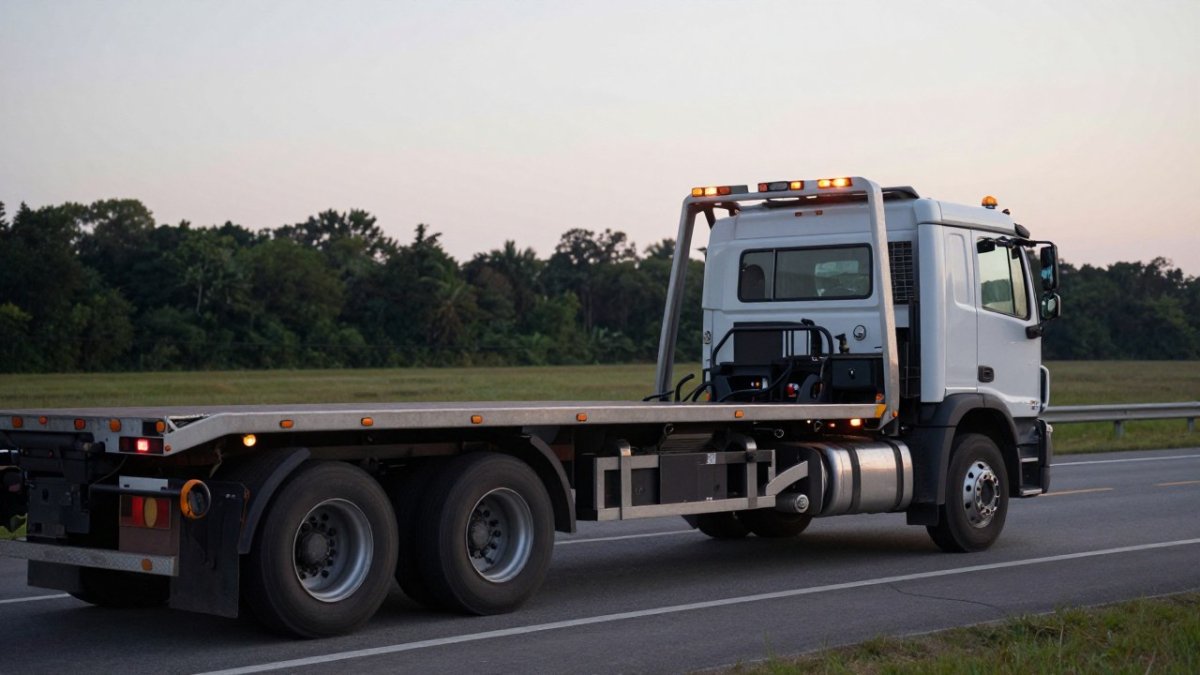
The basics include flatbeds long enough for your vehicles and equipment suited to recovery work where a vehicle is off the road or on its side. If a provider has to subcontract the recovery portion, you’re paying two companies and coordinating both.
Our technical breakdown of heavy-duty recovery equipment covers what each piece does and when you need it.
Heavy-Duty Truck Towing Cost: Budgeting for Small Fleets
Heavy-duty truck towing cost depends on several factors, including vehicle weight, distance, recovery complexity, and time of day. Pricing depends on the specifics of each job, so the most reliable figure is a quote for your own situation. Small fleets benefit from comparing quotes that include the same things.
Build your budget around the fee categories below, and ask every candidate to quote against the same list so the comparison is apples to apples.
A practical pattern is to build a one-page quote template with a line for each category above and require every provider to fill it in. That single step turns a vague rate conversation into a comparable total cost of ownership for each candidate.
Our cost transparency guide walks through how to build a realistic towing line into your fleet budget.
Fleet Towing Response Time: Setting Realistic Expectations
Fleet towing response time is the interval from your call to a truck arriving on scene, and it varies with distance, traffic, weather, and equipment availability. A provider who promises a fixed number for every call is guessing.
Ask instead for a dispatch commitment: how quickly they confirm a truck is assigned, and what they do when the nearest unit is already out. A provider with 24/7 dispatch and a clear escalation path is worth more than a fast promise that doesn’t hold.
Set your own internal expectation too. Build in time for the driver to secure the scene and for the tow to reach a shop.
Comparing Providers: A Scoring Framework for Small Fleets
Score candidates on paper so the decision survives a change in management. Use the same criteria for every provider and weight what matters most to your operation.
| Criterion | What to Check | Weight |
|---|---|---|
| Licensing and insurance | Certificate on file, coverage matches your heaviest unit | High |
| Equipment | Flatbeds, wrecker, rotator, winching gear in-house | High |
| Response terms | Dispatch commitment and escalation contact in writing | High |
| Pricing clarity | Quote process, included services, after-hours terms | Medium |
| Contract flexibility | Per-incident option, no unmeetable minimums | Medium |
| Reviews | Consistent pattern of on-time, careful service | Medium |
Score each provider from 1 to 5 per row, multiply by the weight, and total it. The highest score wins unless a high-weight row fails outright.
Common Mistakes Small Fleets Make When Hiring Towing Services
The most common mistake is waiting for a breakdown to look for a provider. The second is choosing on rate alone without confirming what the rate covers.
Others we see: skipping the insurance check, assuming a light-duty operator can handle a loaded tractor-trailer, and signing a contract with minimum call volumes a small fleet can’t meet. Each one costs money at the worst possible moment.
Next Step: Request a Fleet Towing Quote from Fox Recovery
Fox Recovery runs 24 hours a day, 365 days a year, with fully certified and licensed operators and state-of-the-art 19 ft. and 21 ft. flatbeds. We handle medium and heavy-duty vehicles, including buses and tractor-trailers, and we bring our expertise to high-value vehicles.
For fleet managers who want one dependable number, Fox Recovery is ready to help. Contact us to discuss your fleet’s needs.
Call (847) 587-6076 to request a fleet towing quote and get your recovery plan in place.
Frequently Asked Questions
What should a small fleet look for in a heavy-duty towing service?
Look for a provider with the right equipment for your vehicle weights, such as a 19 ft. or 21 ft. flatbed and a rotator for recovery work. Verify licensing and insurance, and ask about operator training. Ask about 24/7 dispatch, response time commitments, and contract flexibility. Check customer reviews and request a sample service-level agreement. Fox Recovery provides 24/7 towing and recovery services for heavy-duty, medium, and high-value vehicles.
How much does heavy-duty truck towing cost?
Heavy-duty truck towing cost depends on the specifics of each job. Ask for a written estimate before dispatch and confirm any additional charges. For a quote based on your fleet’s needs, call (847) 587-6076.
How quickly can a heavy-duty towing service respond?
Fleet towing response time varies by provider and location. Ask any provider whether it has trucks stationed nearby and how it handles peak demand. Confirm the response commitment in writing as part of your service agreement.
How can fleet managers compare towing providers?
Use a scoring framework: equipment capability, licensing and insurance, response time commitments, pricing transparency, contract flexibility, and customer reviews. Ask providers for references from similar-sized fleets. Ask each provider to walk through a recent heavy-duty recovery and explain how they handled scene safety and load transfer. Score each category and weight it by what matters most to your operation, such as uptime or cost predictability.
Your next breakdown is a question of when, not if. Fox Recovery is available around the clock with certified operators, heavy-duty flatbeds, and a dispatch team that answers. Call (847) 587-6076 and set up fleet support before the phone rings at 2 a.m.
