
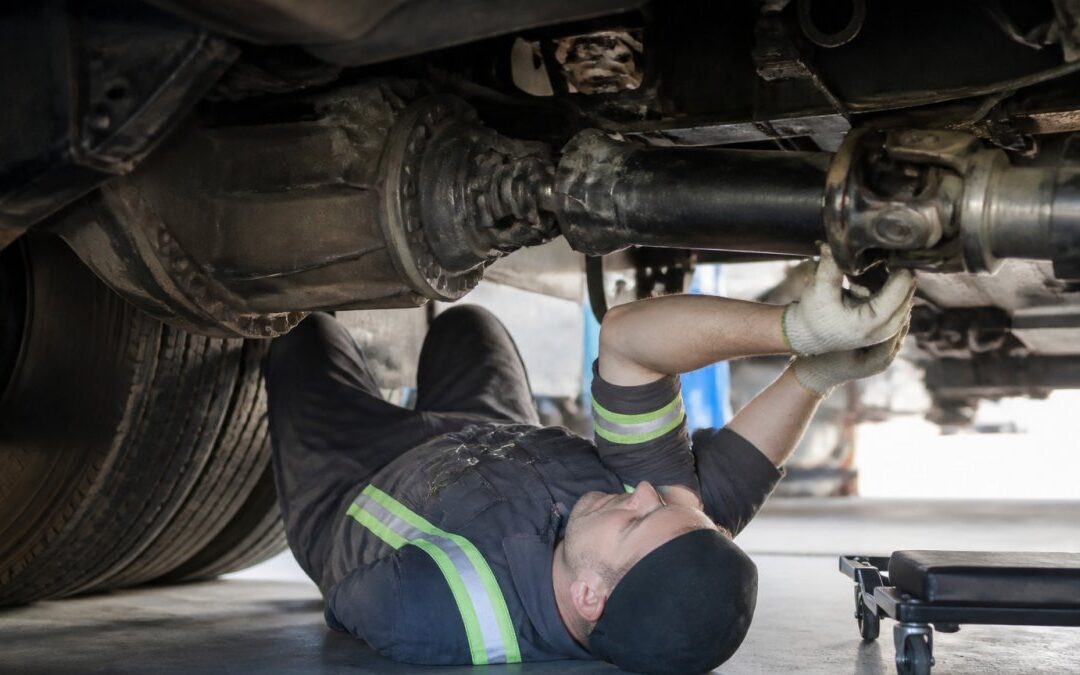
Table of Contents
- Understanding Your Truck’s Drivetrain Components
- Establish a Drivetrain-Specific Maintenance Schedule
- Truck Drivetrain Warning Signs to Watch For
- Perform a Truck Driveline Inspection Checklist
- Preventing Drivetrain Damage While Towing
- Safe Truck Recovery to Prevent Further Damage
- Driving Habits That Protect Your Drivetrain
- What to Do When Drivetrain Damage Occurs
- Frequently Asked Questions
Last Updated: October 10, 2026
Understanding Your Truck’s Drivetrain Components
Your truck’s drivetrain transfers engine power to the wheels through the transmission, differential, transfer case, driveshaft, and axles, understanding these components is essential to prevent truck drivetrain damage. The transmission converts engine power at different speeds; the differential allows wheels to spin at different rates during turns; the transfer case distributes power between front and rear axles on four-wheel drive trucks; and the driveshaft connects the transmission to the rear axle. These parts handle enormous forces, especially when towing or carrying heavy loads.
Drivetrain damage often starts small, a fluid leak today becomes a major repair tomorrow. Recognizing warning signs helps you seek professional help before catastrophic failure occurs.
Establish a Drivetrain-Specific Maintenance Schedule
Preventing truck drivetrain damage requires a tailored maintenance approach based on your truck’s specific needs and driving conditions, not generic schedules.
Start with your manufacturer’s recommendations in the owner’s manual. Many modern trucks recommend transmission fluid changes every 30,000 to 60,000 miles, though intervals vary by model and driving conditions.
Create a maintenance calendar:
- Every 1,000 miles: Check all fluid levels (transmission, engine oil, coolant, steering fluid, brake fluid)
- Every 5,000 miles: Inspect driveshaft for damage or unusual wear
- Every 15,000 miles: Check differential fluid condition
- Every 30,000 miles: Consider transmission fluid analysis
- Every 60,000 miles: Full transmission service (varies by truck type)
- Annually: Inspect transfer case seals and gaskets
If you tow regularly or drive in severe conditions (extreme heat/cold, dusty environments, stop-and-go traffic), reduce intervals by 25 percent. Document every service to protect your warranty and aid future diagnostics.
Truck Drivetrain Warning Signs to Watch For
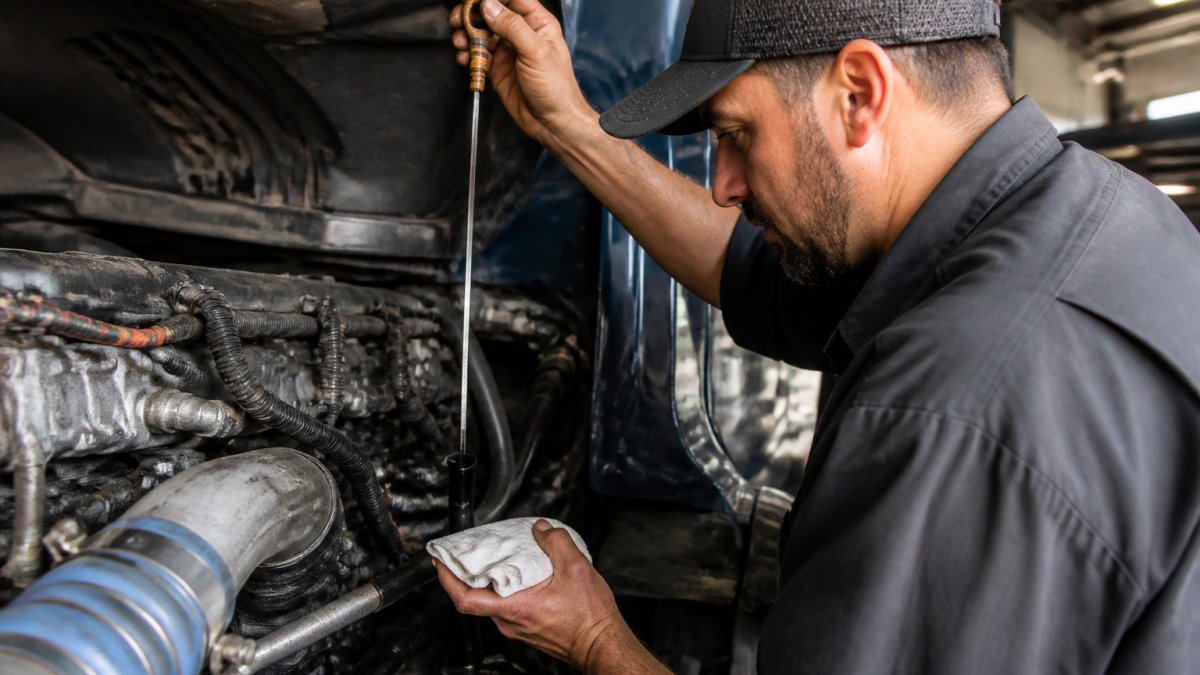
Your truck communicates problems through warning lights, sounds, and vibrations. Learning to interpret these signals prevents small issues from becoming catastrophic failures.
Dashboard Warning Lights and Gauge Behavior
Transmission temperature warning lights demand immediate attention. If the light appears (typically at 200-220°F), pull over safely, shift to neutral, and idle for 5-10 minutes. Do not continue driving under load. Overheating indicates excessive load, insufficient fluid, or internal wear. Check fluid level once cooled.
Transfer case warning lights indicate loss of engagement, fluid pressure loss, or internal gear damage. Avoid aggressive acceleration or turning until inspection. Continuing to drive risks unsafe lockup.
Check engine lights with transmission codes (P0700 series) indicate sensor, solenoid, or control module issues requiring professional diagnosis, but not necessarily mechanical transmission failure.
Noises and What They Indicate
Grinding during gear changes suggests worn clutch plates (manual transmission) or worn planetary gears inside the transmission (automatic).
Clunking from under the truck during acceleration or turning points to driveshaft U-joint failure, worn differential bearings, or loose motor mounts. U-joints typically fail after 100,000-150,000 miles if not serviced.
Whining from the transfer case (four-wheel drive trucks) usually means low fluid level or worn internal gears. Transfer case fluid should be checked annually; many owners neglect this component.
Whining from the differential (rear axle area) indicates low fluid level or worn bearings. Differential fluid should be dark but not black; if it appears metallic or contains visible debris, internal wear is advanced.
Burning smell from the transmission indicates fluid overheating. This is a critical warning. Pull over immediately, allow cooling, and check fluid level.
Vibrations and Their Sources
Vibration that increases with vehicle speed often indicates a worn U-joint on the driveshaft. When needle bearings wear out, the joint develops play, causing driveshaft wobble. U-joint replacement typically costs $300-$800.
Vibration during acceleration suggests engine or transmission mounts are failing. These components isolate engine vibration from the frame; when worn, vibration transfers directly to the chassis.
Shudder when shifting gears indicates the transmission is not engaging smoothly, resulting from low fluid, worn friction material, or a failing torque converter.
Vibration during turning (especially noticeable in four-wheel drive trucks) suggests differential wear or CV joint damage (on front-wheel drive or all-wheel drive trucks). CV joints allow the front axles to turn while transferring power; worn CV joints create a clicking or vibration during turns.
Fluid Leaks: Color and Location Matter
Red or pink fluid under the truck indicates transmission leak. Check fluid level immediately and identify the leak source (pan gasket, input shaft seal, or output shaft seal).
Dark brown or black fluid indicates differential leak from the pinion seal or cover gasket. Black fluid suggests overheating or severe degradation.
Clear or amber fluid under the transfer case indicates seal failure, though less common than transmission or differential leaks.
Any fluid leak means component damage is progressing. Do not simply top off fluid repeatedly; address leaks within 1-2 weeks to prevent internal components from running dry.
Shifting Problems and Loss of Drive
Delayed engagement (delay between shifting into Drive or Reverse and the truck moving) indicates low transmission fluid, worn clutches, or a failing torque converter. This is a warning sign that should prompt immediate fluid level check and professional inspection.
Slipping (engine RPM increases but the truck does not accelerate proportionally, or the truck loses power while driving) indicates worn friction material inside the transmission or low fluid level. Slipping causes rapid overheating and will destroy the transmission within hours of continuous driving.
Loss of drive (truck will not move in any gear) indicates complete transmission failure, broken driveshaft, or differential failure. Do not attempt to drive the truck. Call for professional towing immediately.
Perform a Truck Driveline Inspection Checklist
Regular inspections catch problems before they become emergencies. Start with a visual inspection under the truck: look for fluid stains, check the transmission pan for leaks, inspect the driveshaft for dents or cracks, examine U-joints for play, and check the differential housing for cracks or seeping fluid.
Check all fluid levels with the truck on level ground and engine warm: transmission, differential, transfer case, engine oil, and coolant. Listen while driving for new sounds or shifting changes. Check tire pressure and condition, underinflated tires increase drivetrain stress. Document findings to help mechanics diagnose issues.
Preventing Drivetrain Damage While Towing
Towing puts enormous stress on your truck’s drivetrain, making proper technique critical to prevent truck drivetrain damage. Safe towing requires understanding how load, gear selection, and cooling interact to prevent transmission failure, differential damage, and driveshaft failure.
Know Your Truck’s Actual Towing Capacity and Limits
Your truck’s towing capacity (in the owner’s manual and on the driver’s door placard) is the maximum trailer weight your truck can safely tow. Never exceed this limit; it accounts for engine power, transmission strength, differential durability, and brake performance working together.
Understand the difference between towing capacity (trailer weight only) and payload capacity (truck bed weight). Both limits apply when towing. For example, a 10,000-pound towing capacity with 1,500-pound payload capacity means you can tow only 9,500 pounds if you load 500 pounds in the bed.
Check your trailer’s actual weight before towing using a truck stop scale ($5-$15). A utility trailer that appears empty might weigh 2,000-3,000 pounds; a 16-foot enclosed trailer can weigh 4,000-5,000 pounds before cargo.
Understand Tongue Weight and Load Distribution
Proper tongue weight is 10-15 percent of total trailer weight (a 5,000-pound trailer needs 500-750 pounds). Too little causes trailer sway and loss of control; too much overloads the rear axle, reduces steering control, and stresses U-joints.
Use a weight-distribution hitch ($300-$600) to transfer tongue weight to the truck’s frame and front axle, improving stability and reducing drivetrain stress. This prevents transmission and differential damage costing $2,000-$5,000.
Gear Selection and Engine Braking
Proper gear selection is critical to preventing transmission damage while towing. On level ground or slight inclines, allow the transmission to select its own gear.
On moderate hills, the transmission downshifts to provide engine braking, which uses engine compression to slow the truck. This is critical on long downhills; relying only on service brakes causes overheating and fade.
On long downhill grades, manually shift to a lower gear before descending and allow engine braking to control speed. Do not coast in neutral; this removes engine braking and forces reliance on service brakes, which overheat and fail.
On steep hills or mountain passes, use low-range four-wheel drive if available. Low-range provides stronger engine braking and reduces transmission stress and brake overheating.
Transmission Fluid Temperature Management
Transmission fluid is designed to operate between 175°F and 220°F. Above 220°F, fluid breaks down; above 240°F, catastrophic failure is imminent. Monitor your transmission temperature gauge while towing. If temperature approaches 220°F, pull over and cool the truck.
Transmission overheating while towing usually indicates towing beyond capacity, inadequate transmission cooler, low transmission fluid, or prolonged climbing. If you tow regularly, upgrade to a larger transmission cooler ($400-$800 installed).
On long tows (more than 4 hours), pull over every 1-2 hours to cool for 10-15 minutes, allowing the transmission cooler to dissipate heat.
Proper Hookup and Equipment
Use a weight-distribution hitch with sway control ($400-$700) to reduce trailer sway. Install trailer brakes if your trailer weighs more than 3,000 pounds ($800-$1,500 installed). Use a safety chain rated for your trailer weight, crossing under the tongue.
Avoid Sudden Acceleration and Braking
Avoid jackrabbit starts and sudden acceleration, which create shock loads stressing the transmission, driveshaft, and differential. Avoid sudden braking; anticipate stops and brake gradually. Use engine braking on hills rather than relying on service brakes alone.
Safe Truck Recovery to Prevent Further Damage
Call professional recovery services immediately if your truck is in a dangerous location or severely stuck. Attempting DIY recovery often causes additional drivetrain damage. Do not attempt to drive out; spinning wheels generates extreme heat and stress on the transmission and differential.
For minor situations, use the lowest gear and steady, gentle throttle; avoid wheel spin. When recovery arrives, communicate clearly about your truck’s condition. Never allow dragging by the frame; proper recovery distributes force safely across the truck’s structure.
Driving Habits That Protect Your Drivetrain
Aggressive driving causes premature wear. Avoid sudden acceleration and braking, which create shock loads. Avoid aggressive turning at high speed. Don’t shift from drive to reverse while moving. Avoid unnecessary rough terrain driving. Address warning lights immediately. Shift to neutral at red lights. Let your truck warm up before driving hard.
What to Do When Drivetrain Damage Occurs
If you notice warning signs while driving, pull over and turn off the engine. Document what happened and call for professional help. Don’t attempt to drive to a repair shop; use professional towing. Describe symptoms clearly to mechanics. Ask about warranty coverage and get a detailed repair estimate before work begins. After repairs, ask about preventive maintenance intervals.
Preventing truck drivetrain damage requires attention, regular maintenance, and smart driving habits. Your truck’s drivetrain handles enormous forces, and small neglect becomes expensive repairs. When you do face a breakdown or need professional recovery assistance, trust experienced operators who understand trucks. Fox Recovery’s certified and licensed team operates 24/7 with state-of-the-art flatbed equipment designed specifically for medium and heavy-duty trucks.
Frequently Asked Questions
What are the most common causes of truck drivetrain damage?
Drivetrain damage typically results from overloading beyond payload capacity, towing with improper technique, aggressive acceleration and hard braking, neglected fluid maintenance, and driving on rough terrain without appropriate precautions. Poor shifting practices, wheel spin in mud or snow, and ignoring warning lights also accelerate component wear. Regular inspections and adherence to service intervals help catch issues before they become costly repairs.
How often should I check truck drivetrain fluid levels?
Check transmission fluid and differential fluid monthly as part of routine maintenance, or before long trips and heavy hauling. Most manufacturers recommend full transmission fluid service every 30,000 to 60,000 miles, depending on driving conditions and truck model. Severe-duty use, including frequent towing or off-road driving, may require more frequent checks. Consult your owner’s manual for specific intervals and fluid specifications for your truck.
Can improper towing really damage my truck’s drivetrain?
Yes. Towing beyond your truck’s rated capacity, using incorrect hitch setup, or accelerating aggressively with a load places excessive stress on the transmission, differential, and driveshaft. These components are engineered for specific load limits. Exceeding them causes accelerated wear, fluid breakdown, and potential failure. Always verify your truck’s towing capacity, use proper weight distribution, and maintain steady, smooth acceleration when towing to prevent drivetrain damage.
What should I do immediately if my truck breaks down with a drivetrain problem?
Stop driving immediately to prevent further damage. Do not attempt to limp the truck to a repair shop. Turn off the engine and assess the situation: listen for unusual noises, check for fluid leaks underneath, and note any warning lights on the dashboard. Call a professional towing service with experience handling heavy-duty trucks and drivetrain issues. Avoid towing the truck yourself or using inexperienced operators, as improper recovery can compound the damage and increase repair costs significantly.